

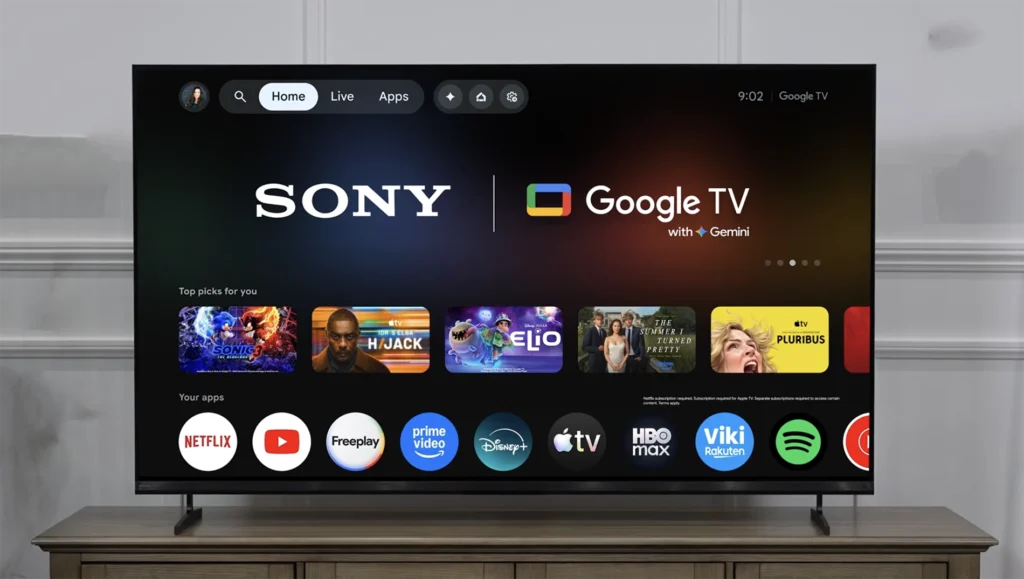
The Sony Bravia 3 II is a well processed television sold at a price its backlight cannot justify. Sony’s XR Processor, four full-bandwidth HDMI 2.1 inputs and a clean Google TV build are all worth having. But there is no local dimming anywhere in this range, and Mini LED sets from Hisense and TCL sell for ₹30,000 less with it. Buy this one for a bright room, not a dark one.
Pros
- Sony’s processing and upscaling at the lowest price Sony has offered it in India
- Four HDMI 2.1 inputs at full bandwidth, which the pricier Bravia 7 II above it does not have
- No blooming and no backlight pumping, because there is no dimming algorithm to misbehave
- Dolby Vision, Dolby Atmos and DTS:X, on Google TV
Cons
- No local dimming at any screen size
- Priced ₹30,000 above locally dimmed Mini LED rivals
- No HDR10+, so Prime Video HDR10+ titles fall back to HDR10
- Advertising on the Google TV home screen that cannot be switched off
Key facts at a glance
- Price: around ₹89,000 for the 55-inch (65-inch around ₹1,20,000, 75-inch around ₹1,65,000)
- Backlight: Direct LED. No local dimming at any size
- Refresh rate: 120Hz native, 4K at 120fps on all four HDMI inputs
- HDR: Dolby Vision, HDR10, HLG. No HDR10+
- Chipset: MediaTek Pentonic 800
- Software: Google TV, with Gemini promised through a later update
Sony Bravia 3 II price in India
| Size | Model | Street price | Launch price | Sony MRP |
|---|---|---|---|---|
| 55-inch | K-55XR35M2 | around ₹89,000 | ₹99,990 | ₹1,49,900 |
| 65-inch | K-65XR35M2 | around ₹1,20,000 | ₹1,24,990 | ₹1,89,900 |
| 75-inch | K-75XR35M2 | around ₹1,65,000 | ₹1,79,990 | ₹2,69,900 |
| 85-inch | K-85XR35M2 | around ₹2,99,990 | ₹3,05,990 | ₹4,99,900 |
Sony launched the range here in May 2026 and added the 85-inch in August, and street prices have already slipped ₹5,000 to ₹15,000 under launch, which is what every Sony television in India does as the festive season approaches. Nobody should be paying MRP for one of these.
I bought the 55-inch from Amazon (₹89,000, no exchange offer) and it has been in the house three months. The number that matters is not on Sony’s spec sheet, though: the Hisense E8S, a Mini LED with full-array local dimming and a 144Hz panel, sells at ₹57,990 in 55 inches, and the TCL Q6C we reviewed over a month of ownership trades at roughly ₹50,000 with 180 dimming zones. Sony wants ₹31,000 to ₹39,000 more for a television whose backlight cannot dim in sections at all.
XR35M2 or XR30M2: which Bravia 3 II are you buying?
Two Bravia 3 II families are on sale in India at once. The XR35M2 goes through Croma, Reliance Digital and general retail as well as Amazon, and it is the one we bought. The XR30M2 is the online-focused variant, and prices between the two move independently, with the XR30M2 sometimes the dearer of the pair.
Features and specs
| Sony Bravia 3 II | Feature |
|---|---|
| Screen size | 55 inches (also 65, 75 and 85 inches) |
| Type | 4K LCD |
| Backlight | Direct LED. No local dimming |
| Refresh rate | 120Hz native |
| HDR formats | Dolby Vision, HDR10, HLG |
| Colour | ‘XR Triluminos Pro’ |
| Processing | ‘XR Processor’, ‘XR Clear Image’ |
| Operating system | Google TV |
| HDMI inputs | 4, all HDMI 2.1 at 48Gbps, one doubling as eARC |
| Gaming | 4K/120fps, VRR including FreeSync, ALLM, Dolby Vision gaming |
| Audio out | eARC passing Dolby Atmos, TrueHD, DTS:X and DTS-HD MA |
| Sound | X-Balanced speakers, Dolby Atmos, DTS:X |
| Extras | Sony Pictures Core with 5 movie credits, AirPlay 2, HomeKit, Alexa |
Does the Sony Bravia 3 II have local dimming?
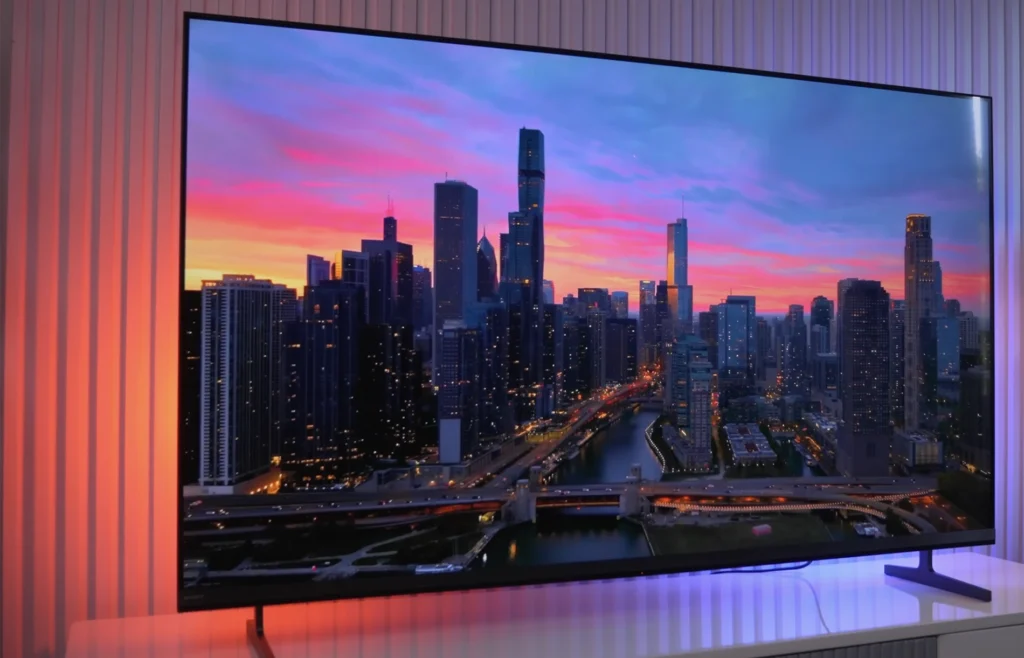
No, and I would call that the most important fact in this review. The backlight is direct-lit with no local dimming at any screen size, which means the panel runs at one brightness level across its whole surface at any moment, so a bright object in a dark frame cannot be lit without lifting the light behind everything around it.
One consequence of that goes in Sony’s favour and deserves saying out loud. With no dimming zones there is no blooming, no halo ring around subtitles in a night scene, and none of the brightness pumping you get when a cheap Mini LED algorithm chases a highlight across a dark background. What you get instead is a black level that sits wherever native contrast puts it and stays there for the whole film. we measured that native contrast at 1,195:1 which is the sort of figure a plain LED television has always produced, and it is exactly why local dimming became the thing every manufacturer chased.
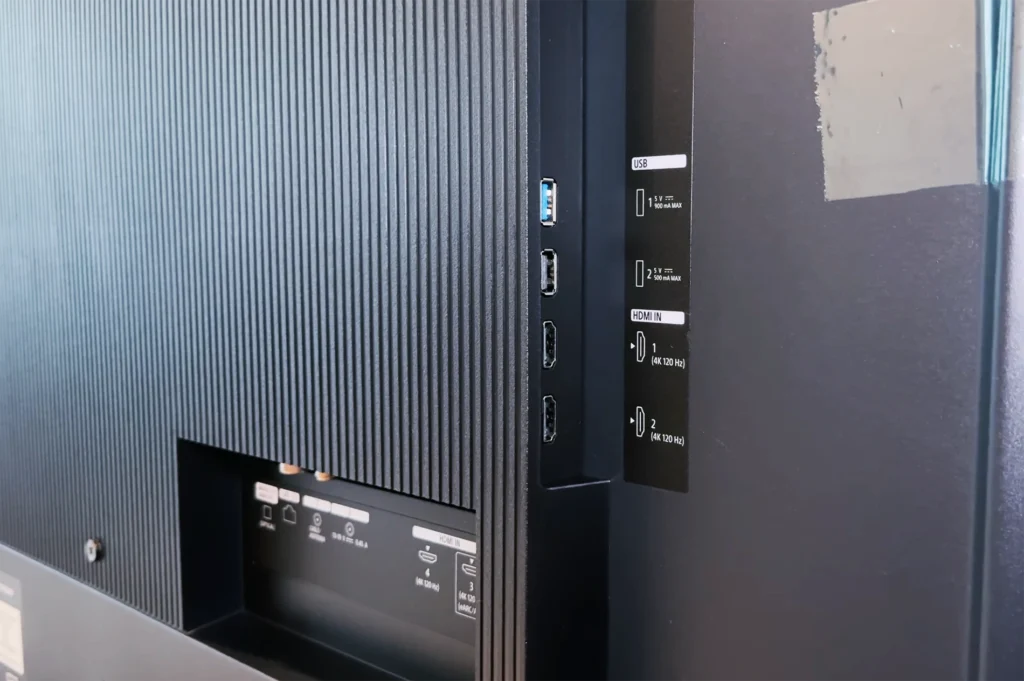
Why does this Sony have four HDMI 2.1 ports when the Bravia 7 II has two?
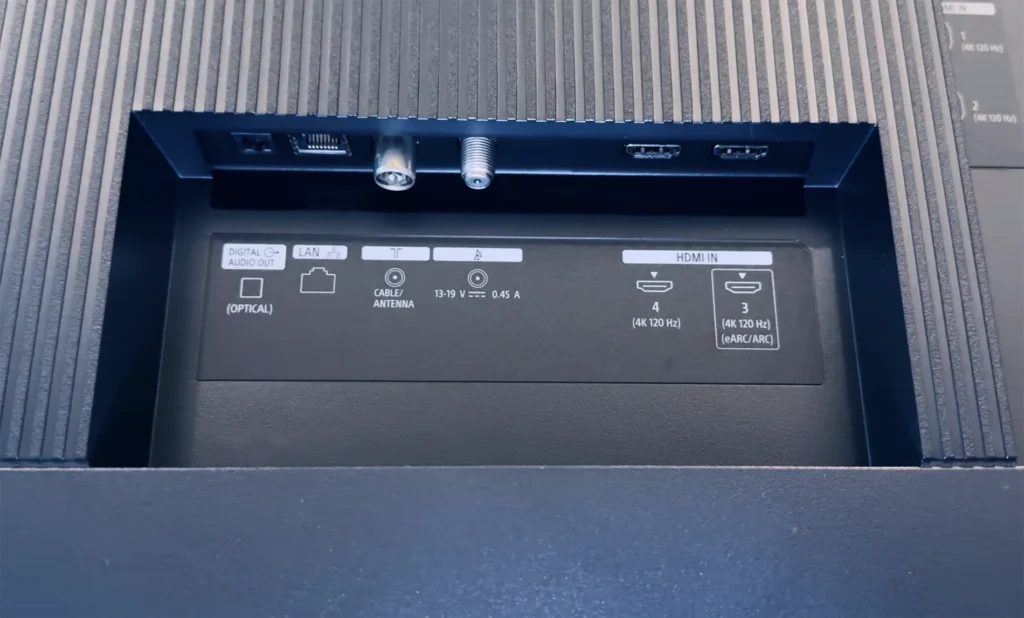
Because of the chipset, and I find the situation genuinely odd. The standing complaint against Sony televisions for years has been two full-bandwidth HDMI 2.1 sockets against LG’s four, and we have made it ourselves often enough. Here it does not apply, because all four inputs run at 48Gbps while the more expensive Bravia 7 II and Bravia 9 II above it still do not.
The chip is the MediaTek Pentonic 800, which matters for a reason nobody at Sony has commented on: it was the first silicon to integrate Dolby Vision 2, which we covered when we wrote up the Dolby Vision 2 rollout. Sony has announced nothing about Dolby Vision 2 on any 2026 model, so buy this television for what it does today rather than what its processor might one day allow.
Does the Sony Bravia 3 II support HDR10+?
No. Sony has never supported HDR10+ and its 2026 range still does not, so Prime Video HDR10+ titles play as ordinary HDR10 here, and the same goes for the HDR10+ Advanced catalogue that launched in August. Dolby Vision is supported, and between Netflix, Disney+ and Sony Pictures Core I would say that covers most of what an Indian household actually watches in HDR. Our HDR formats explainer sets out which service carries what.
Of course, no format badge adds brightness a panel does not have. That cuts against Sony rather than for it, because dynamic metadata helps a dim television more than a bright one: a 3,000-nit set has headroom to spare while a 500-nit set has to compress every scene it plays. A panel at this brightness level is precisely where HDR10+ would have earned its keep.
Picture quality
Black levels
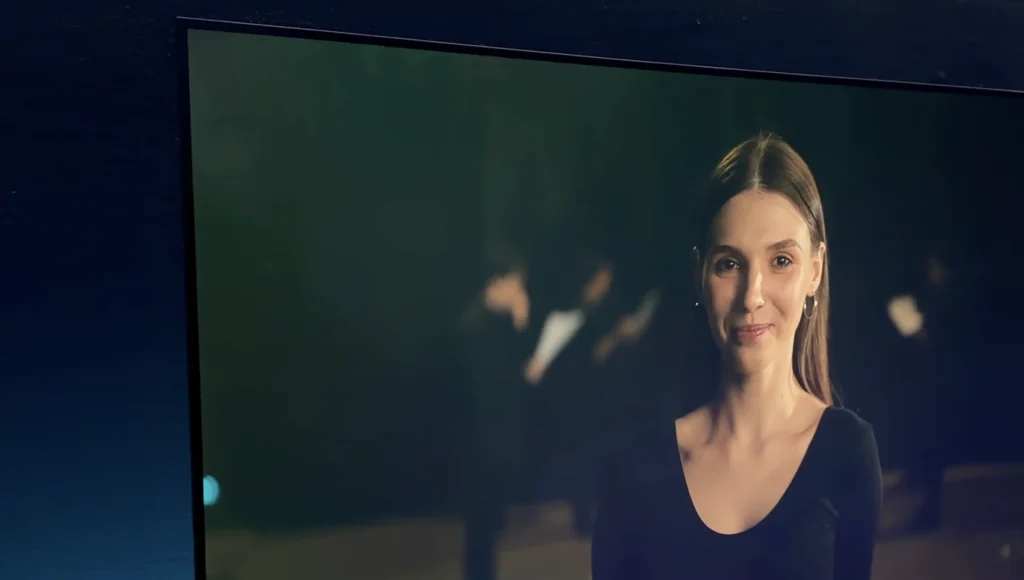
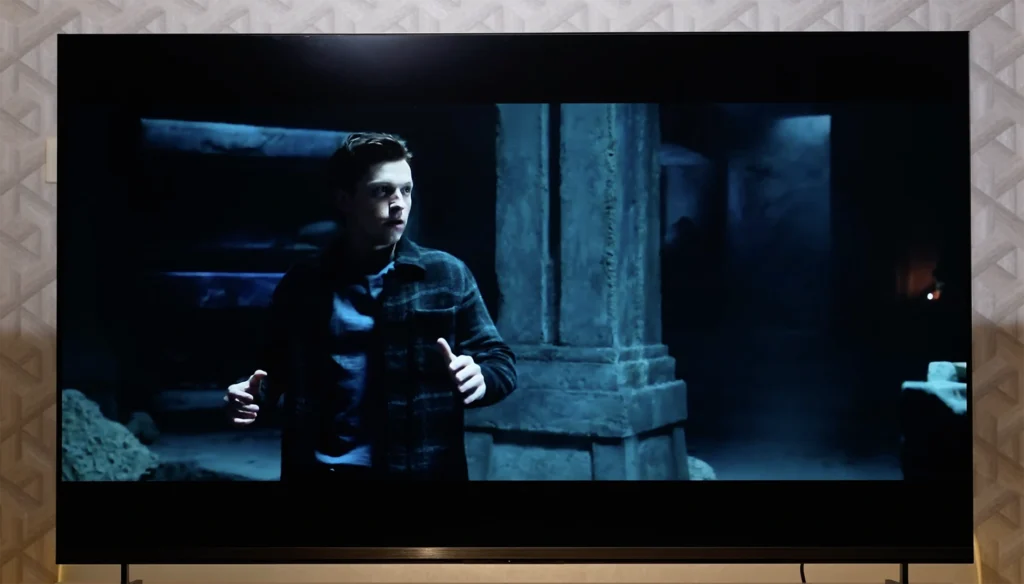
Black level is where I think this television loses the argument, and it loses it on physics rather than on tuning. With native contrast near 1,200:1 and nothing to improve on it, blacks lift towards grey once the room goes dark, and the letterbox bars on a scope film sit lighter than the bezel around them. This is not a set for watching films at night, and no picture mode changes that.
Brightness and HDR
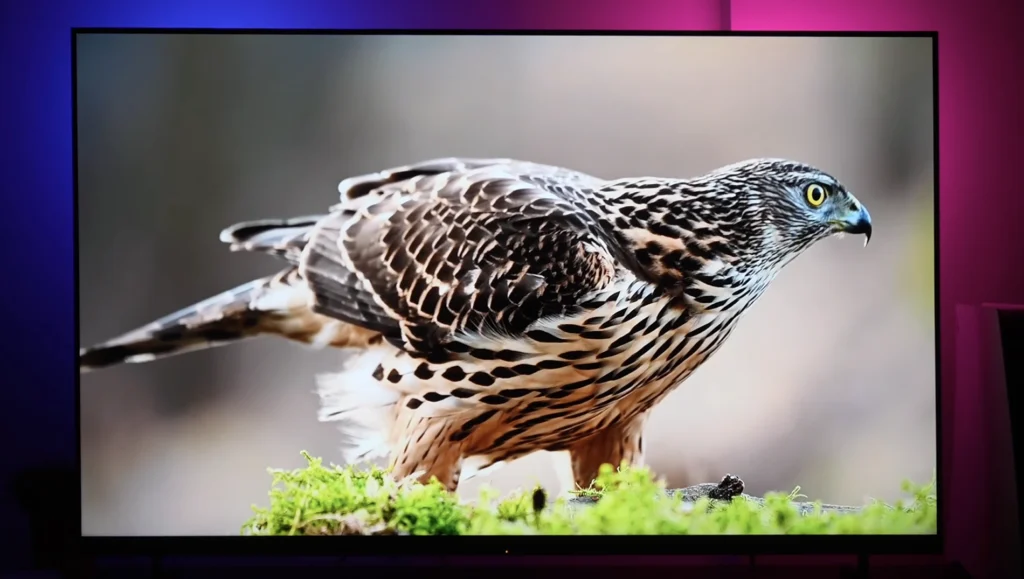
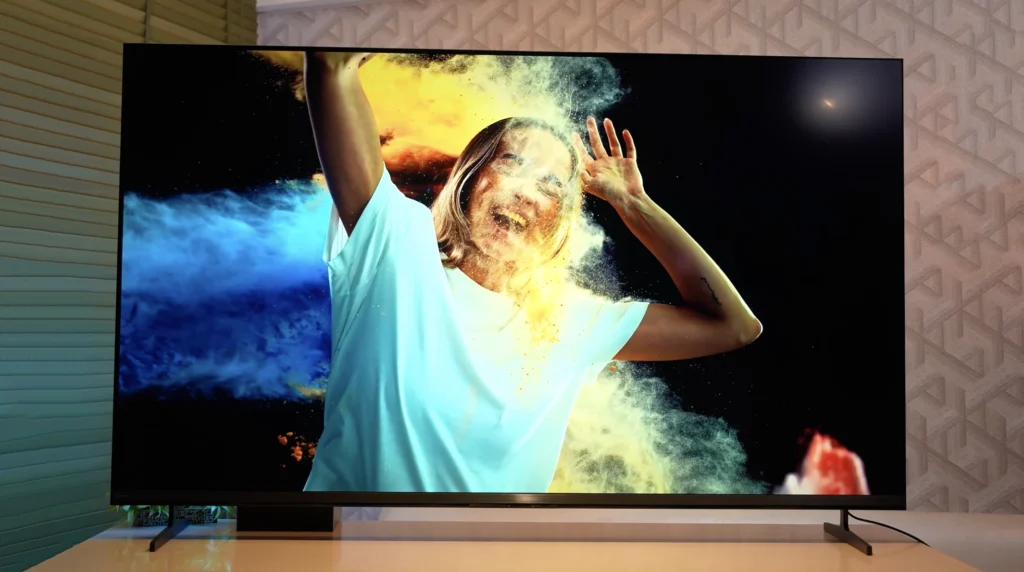
Peak brightness lands somewhere around 540 cd/m², more revealing than the number itself, it barely moves between a small window and a full white field, which tells you there is no dynamic tone mapping and nothing held back for highlights. So moderately lit HDR scenes come through fine, and small specular highlights (the glint on a windscreen, a lamp filament) fall flat.
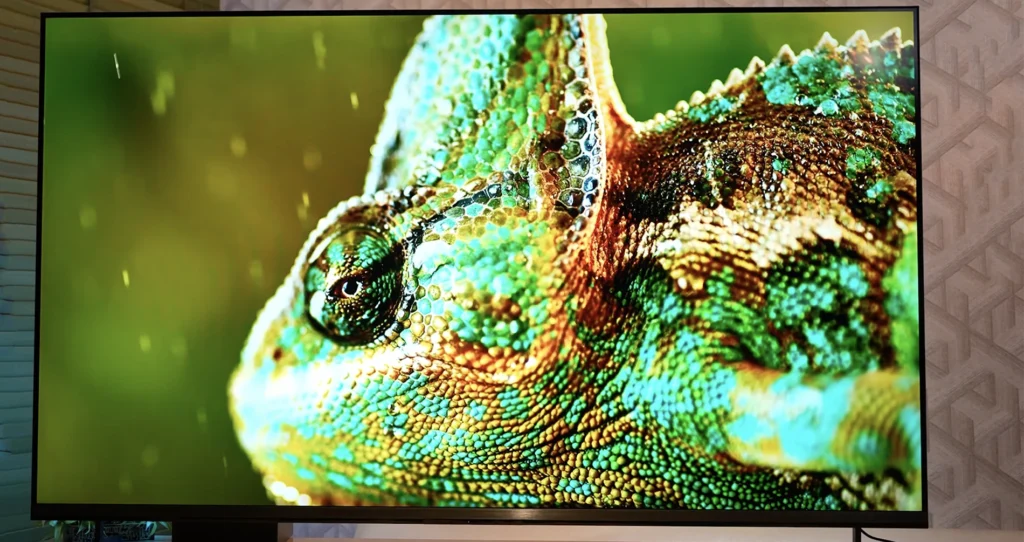
Set that against mastering targets of 1,000 or 4,000 nits and you can see what happens to every HDR film this television plays, which is compression, scene after scene. In a daylit Indian living room that ceiling is enough to fight moderate glare, but in a home cinema it is not, and no amount of processing changes that.
Motion and cricket
Motion is the strongest thing here after the upscaling. Judder comes off 24p sources without changing a setting, which I have watched more expensive televisions fail at, and Cinemotion needs switching on for 60p material. The one timing fault worth knowing is with 25p content, which covers a good deal of European broadcast.
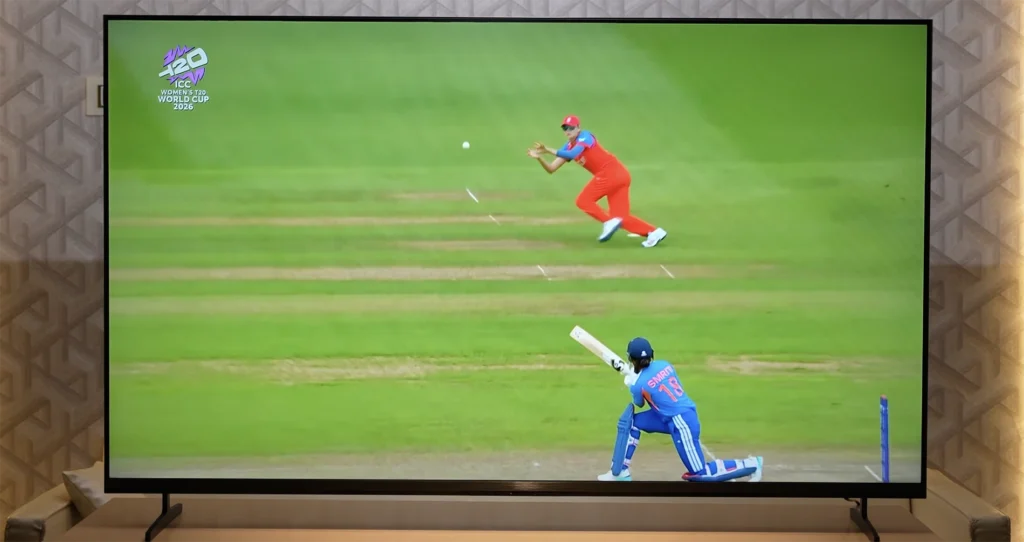
For cricket, a 120Hz panel and Sony’s motion processing is the right foundation. But I would turn Motionflow down or off before a match rather than leave it where Sony ships it, because interpolation on a moving ball has produced a visible trail on every set we have tested.
Upscaling
Upscaling is the reason to consider this television at all, and I think it is the one part of the argument Sony wins outright. Compression artefacts get cleaned up properly and low-resolution material comes out sharp without the crunchy over-sharpening most brands apply.
In India that matters more than most reviews admit. If a large share of your viewing is cable, older catalogue titles, or 720p streams over a weak connection, Sony’s processing is doing visible work every hour the set is on, and I do not think either Hisense or TCL is close to it at this price. So that is a real argument for the extra money, and it is also nearly the only one.
Viewing angles and gaming
Viewing angle is good, and it is the one place where I would say the panel choice pays a dividend rather than costing you something, so a wide seating arrangement (most Indian living rooms) works here in a way it does not on most cheap Mini LED sets.
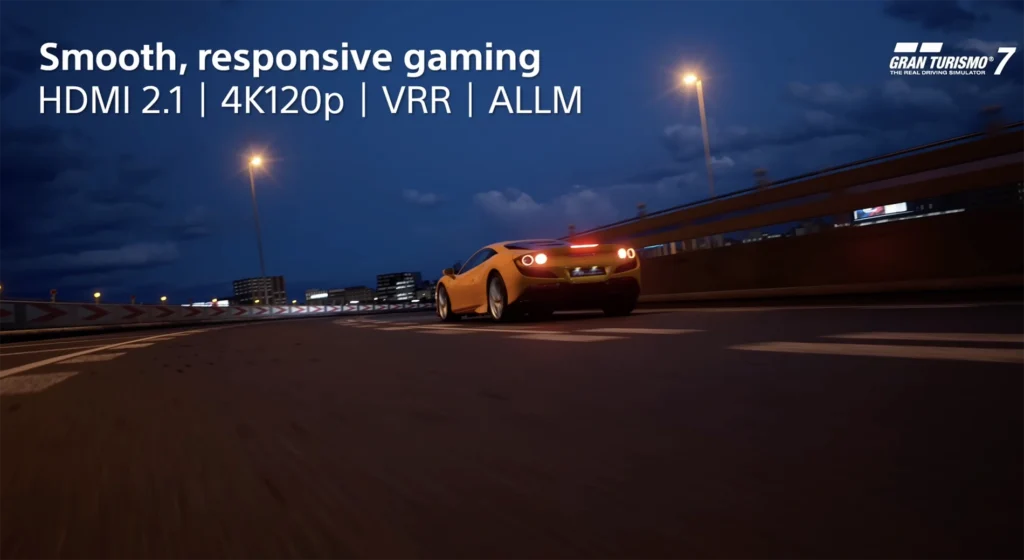
Gaming is the least compromised part of the television. Four HDMI 2.1 inputs at full bandwidth means a PS5 and an Xbox Series X can each have a proper socket, which is not true of the TCL Q6C, where only two of four are 48Gbps. Input lag in Game Mode is low (5.1ms at 4K/120), VRR covers HDMI Forum, FreeSync and G-Sync Compatible, and ALLM engages Game Mode without you reaching for the remote. Two limits: response time at 60Hz is considerably worse than at 120Hz, which affects most console titles, and lag outside Game Mode runs high enough that a set-top box feels sluggish to navigate.
Settings worth changing
- Picture mode: Professional, with Expert 1 colour temperature. It is the most accurate starting point out of the box and needs very little help.
- Cinemotion: on for 60p sources, unnecessary for 24p discs.
- Motionflow: down or off for cricket and fast sport.
- Game Mode: essential, and let ALLM handle it.
- Calibration: there is no colour management system, so a paid calibration buys less here than on most televisions. SDR tightens up nicely, HDR barely moves.
Sound quality
The X-Balanced speakers are adequate for the news and thin under a film score, with no real bass and not much volume held in reserve. Dialogue stays clear at moderate levels, which is the part most people care about.
I recommend a dedicated sound system with every television I review and this one changes nothing. The eARC port is the good news, since it passes Dolby Atmos, TrueHD, DTS:X and DTS-HD Master Audio, so a soundbar or a receiver gets everything a 4K disc can send.
Alternatives in India
| Model | Backlight | 55-inch price | Notes |
|---|---|---|---|
| Sony Bravia 3 II | Direct LED, no dimming | around ₹89,000 | Best processing here, weakest backlight |
| Hisense E8S | Mini LED, local dimming | around ₹57,990 | 144Hz, Dolby Vision IQ, HDR10+. VIDAA, not Google TV |
| TCL Q6C / C6K | QD-Mini LED, 180 zones | around ₹50,000 | Our pick under ₹50,000. Only two HDMI 2.1 sockets |
Verdict: who should buy the Sony Bravia 3 II?
Judged on what it does rather than what Sony charges, this is a television built on the right processing and the wrong backlight. The XR Processor, the upscaling and the motion handling are all real, and four full HDMI 2.1 inputs on a mid-range Sony is a change worth applauding after years of two on the flagships.

The limitation is not subtle and no firmware update will reach it. There is no local dimming at any size, native contrast sits where plain LED televisions have always sat, and the competition at ₹30,000 less has a backlight that dims in sections rather than one that lifts the whole screen at once. And that gap is not closing this year. Sony’s price assumes you value processing above contrast control, and in my book that is the wrong way round for anyone who watches films after dark.
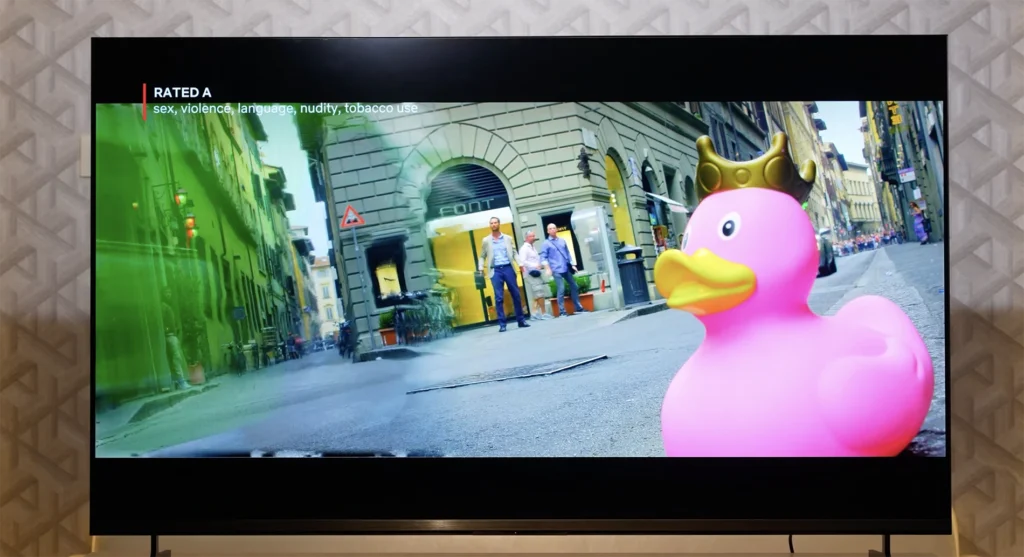
Buy it if the set lives in a bright room, if a lot of what you watch is cable and standard definition, if two consoles each need a full HDMI 2.1 socket, and if you would rather have no blooming than deeper blacks with some.
Don’t buy it if you watch films in the dark, if HDR10+ is a large part of your streaming, or if you were weighing this against a locally dimmed Mini LED at ₹30,000 less, because for now, at least, that comparison does not go Sony’s way.
Sony Bravia 3 II FAQ
No. It is direct-lit with no local dimming at any size, so the whole panel shares one brightness level. There is no blooming as a result, though black levels are capped at native contrast of roughly 1,200:1.
Yes on features. All four HDMI 2.1 inputs run at 48Gbps, it does 4K at 120fps, input lag in Game Mode is low, and VRR includes FreeSync. Motion at 60Hz is the weak spot.
No. It supports Dolby Vision, HDR10 and HLG, so HDR10+ titles play back as HDR10.
They are the same hardware sold through different retail channels, with a software colour setting as the only reported difference. Check the model number on the box, since prices between the two vary.
Sony Bravia 3 II
Sony's processing on a backlight that cannot dim. Right for a bright living room, wrong for films after dark, and priced well above Mini LED sets that do more of what matters.
- Picture
- Sound
- Connectivity
- Gaming
- OS
- Value For Money

2 Comments
is it common for brand new direct lot LED’s like for this bravia 3 ii to have blooming ? also, is it a VA or IPS panel?
i just bought 65 inch bravia 3 ii and it has couple of blooming patched around the bottom edge. and thin one on the side.
Technically what you’re seeing probably isn’t blooming. Sony’s own spec sheet for the 65-inch Bravia 3 II (K-65XR30M2) lists it as a Direct LED panel with Frame Dimming, not zone-based local dimming. No dimming zones means no halo around bright objects, which is what blooming actually is. Fixed patches that sit in the same spot at the bottom edge and one thin one on the side is backlight uniformity, usually clouding or flashlighting from panel pressure during assembly or transit. Mild unevenness on a full black slide is normal for any direct-lit LCD, but distinct patches you can notice in regular content on a brand new set are not something you should have to live with.