
HDR10+ Advanced launched on 4 August 2026 on Samsung’s 2026 televisions with Prime Video content, and Dolby Vision 2 followed on 6 August on select Hisense sets. Dolby Vision 2 is the more ambitious specification and improves Dolby Vision content you already own from the moment it installs. HDR10+ Advanced is royalty-free but needs new content. Neither should decide which television you buy this year.
For eleven months this was a phoney war. Two announcements, two CES demonstrations, no hardware, and a great deal of noise about which format your next television absolutely had to have.
Then both arrived in the same week. Samsung and Prime Video switched on HDR10+ Advanced globally on 4 August. Dolby and Hisense confirmed Dolby Vision 2 was live on shipping televisions on 6 August. Forty-eight hours apart, after almost a year of nothing at all, which I struggle to believe was a coincidence.
What that timing revealed is more interesting than the specifications ever were.
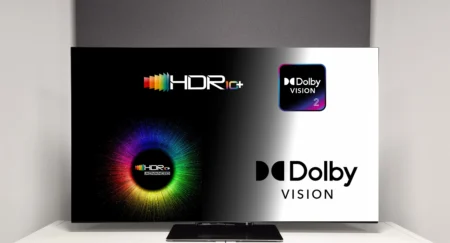
HDR10+ Advanced vs Dolby Vision 2 at a glance
| HDR10+ Advanced | Dolby Vision 2 | |
|---|---|---|
| Announced | November 2025 | September 2025 |
| Shipped | 4 August 2026 | 6 August 2026 |
| First TVs | Samsung 2026 lineup | Hisense UX, UR9, UR8, U7 |
| Optimisation | AI-assisted tone mapping | Metadata only |
| Works with existing content | No, needs new masters | Yes, immediately |
| Content at launch | Prime Video, select titles | All existing Dolby Vision material |
| Licensing | Royalty-free | Licensed from Dolby |
| Bit depth | 10-bit | Up to 12-bit |
| Filmmaker Mode | Not supported | Supported |
| Brands to follow | None announced | TCL, Philips |
What is Dolby Vision 2?
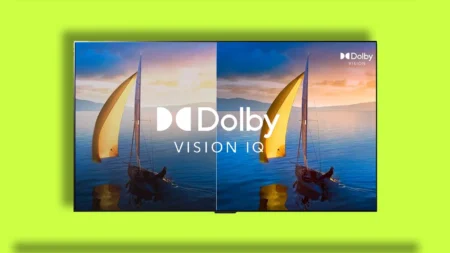
Dolby Vision 2 is built around a new image engine that Dolby calls ‘Content Intelligence‘, which combines the existing scene-by-scene metadata with information about your display’s capabilities and the conditions in the room.
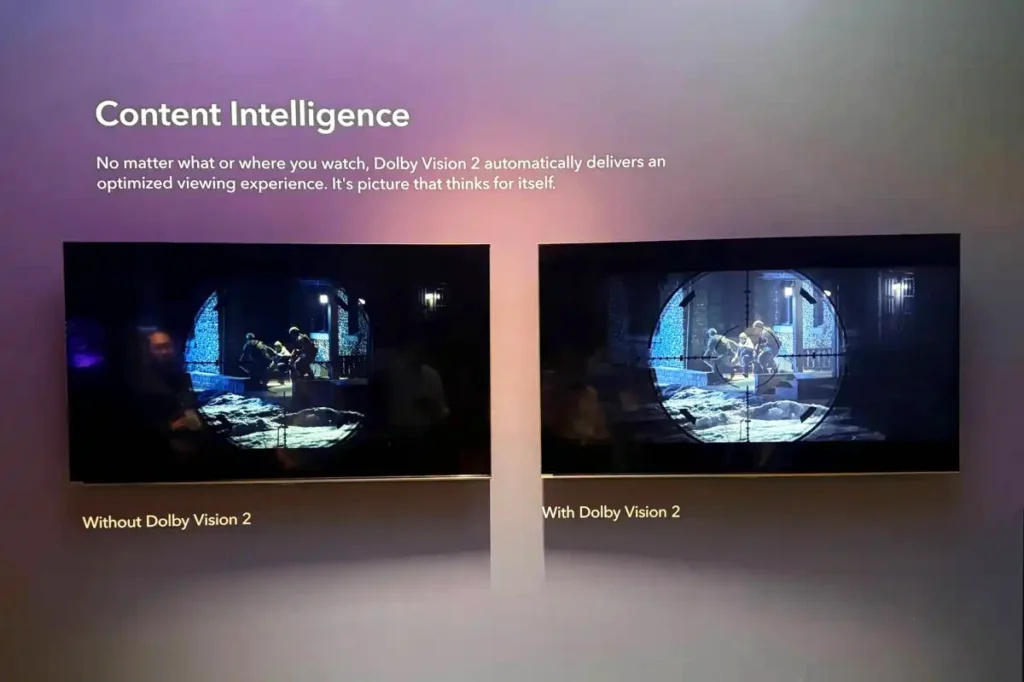
Precision Black targets the long-running complaint that Dolby Vision renders dark scenes too dark (probably the most common criticism the original format has attracted, and the one I hear from readers more than any other). Light Sense 2 handles ambient adaptation continuously rather than reacting to a single sensor reading, and bi-directional tone mapping lets very bright televisions use their full capability without drifting away from the grade, which matters far more now than it would have done a decade ago. An intensity slider gives you some say in how much of it you want.
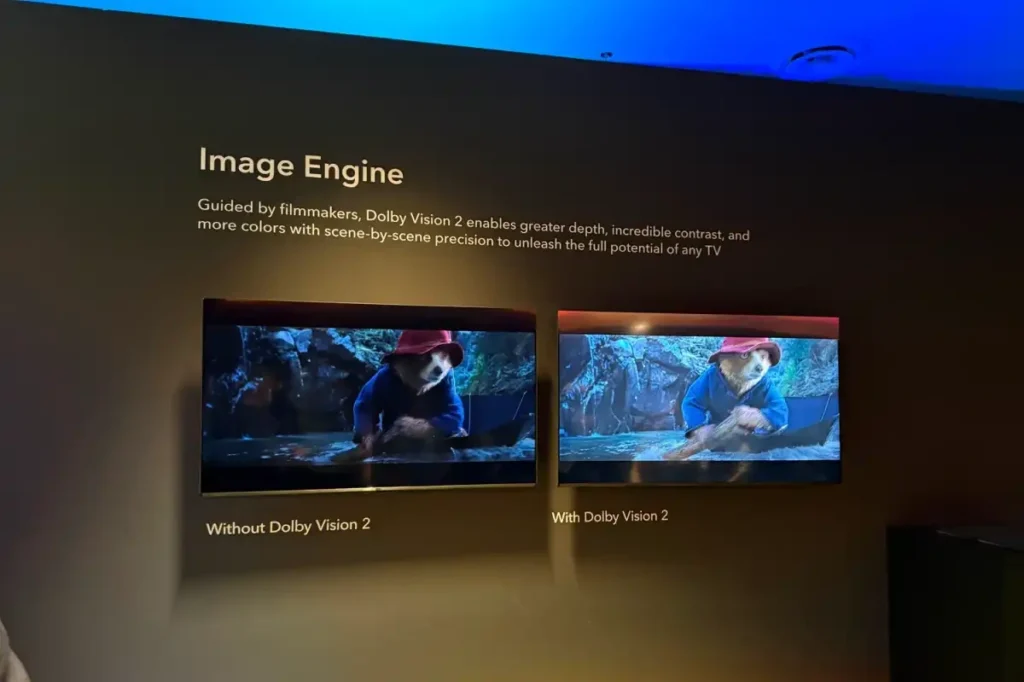
The Max tier adds ‘Authentic Motion’, which hands filmmakers shot-by-shot judder control rather than leaving motion to whatever preset your television happens to be sitting in. I had expected that to be held back for flagship sets. In the event, all four Hisense series receiving the update support Max, including the mainstream U7.
What is HDR10+ Advanced?
HDR10+ Advanced comes at the same targets from the opposite direction, and stays royalty-free while doing it.
Enhanced Overall Brightness uses extended statistical metadata and AI-assisted tone mapping to push capable displays closer to their real brightness potential without crushing shadow detail in the process, while Intelligent Motion Smoothing varies motion processing scene by scene. There is local tone mapping too, and genre-based optimisation that adjusts the presentation depending on whether you are watching drama, sport or something else.
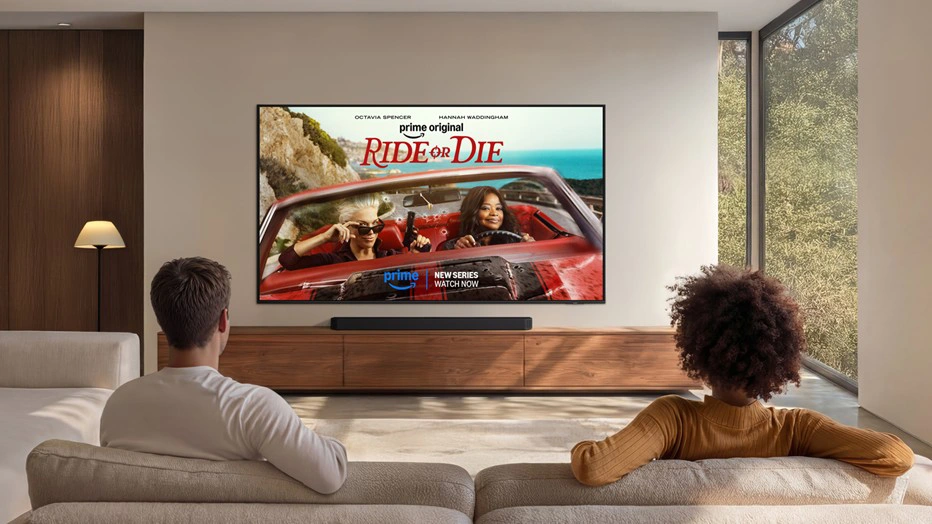
Samsung’s argument is that the format was designed for modern panels specifically, meaning bigger screens, higher peak brightness and more processing headroom, which is also its convenient explanation for why only 2026 televisions get it.
Metadata versus AI: the difference nobody is talking about
Here is the distinction I find most revealing, and it went round the internet wrongly on launch day.
Content Intelligence does not use AI. Dolby confirmed the system relies solely on metadata for its optimisation.
HDR10+ Advanced, by contrast, describes its tone mapping as AI-assisted, and its genre optimisation works by inferring what sort of content you are watching.
That is not a small difference in wording. One format follows instructions that travelled with the film. The other makes an educated guess about what the film needs. Both approaches can produce a better picture, and I would not pretend the metadata route is automatically superior. But when a format’s entire pitch rests on creative intent, it matters a great deal whether the decisions originate with the creator or with the television.
Which one can you actually use today?
Both, and on completely different televisions.
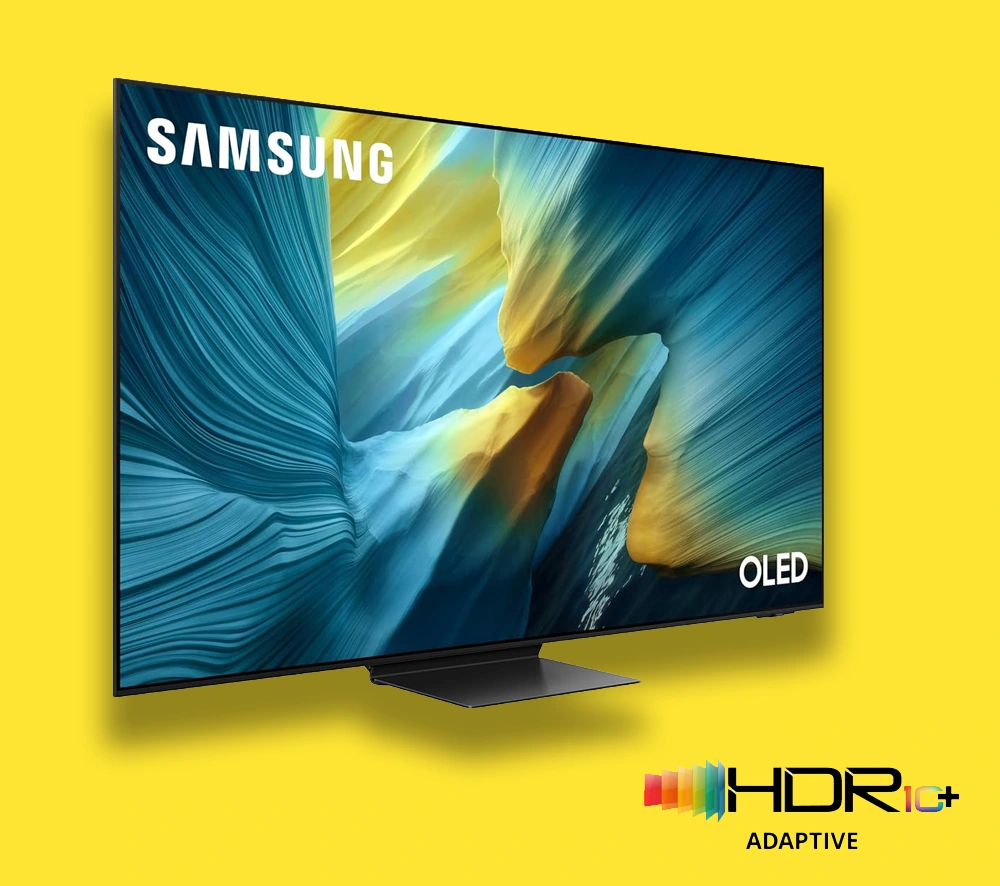
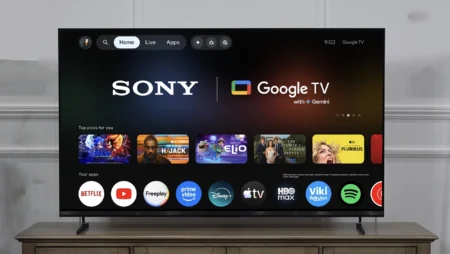
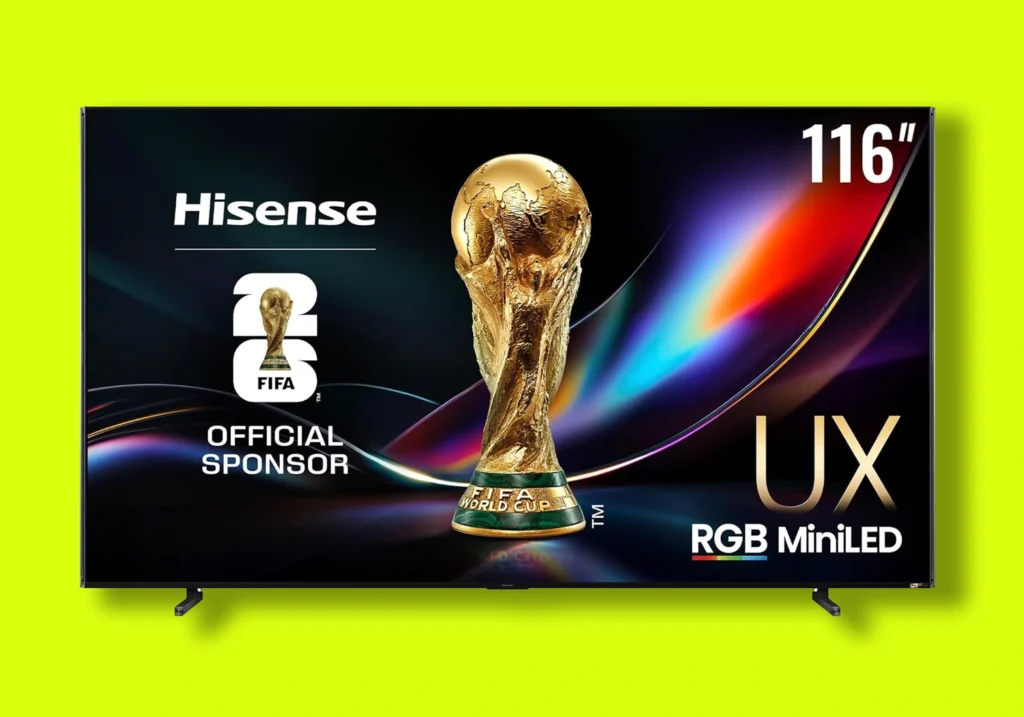
HDR10+ Advanced runs on Samsung’s 2026 lineup, arrived as a free feature update rather than a paid upgrade, and takes its content from Prime Video. Dolby Vision 2 runs on Hisense’s 2026 UX, UR9, UR8 and U7 series, sold as the U7 Pro in some regions, working across both Google TV and VIDAA, and it reached buyers in North America, Europe and Asia-Pacific on the day of announcement.
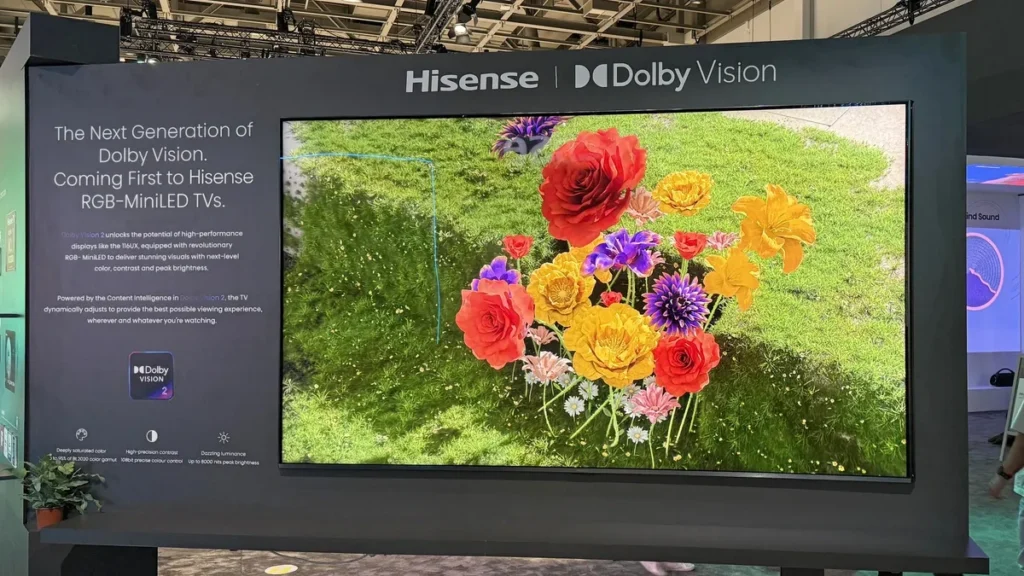
One manufacturer each, in other words, which is a considerably narrower field than either announcement implied and means the format question in 2026 is really a brand question wearing a technical disguise.
The content problem, reversed
This is where the story turned out differently from how it looked in the spring.
Dolby Vision 2 reprocesses material that already exists, which means every film, series, game and live broadcast already mastered in Dolby Vision gets the new engine applied the moment the firmware installs, with no new discs to buy and nothing whatsoever to wait for. Given the enormous Dolby Vision catalogue on streaming and 4K Blu-ray, that is a substantial library on day one.

HDR10+ Advanced needs new content, and at launch that means select titles on Prime Video. The phrase ‘select titles’ is doing quiet work in that announcement.
So the licensed, more expensive format is the one giving you something to watch immediately, while the free one asks you to wait for a catalogue to be built. I would not have predicted that in January.
Native Dolby Vision 2 grading is still some way off, mind. TCL Europe’s Marek Maciejewski explained at a launch event in Warsaw that the first phase converts existing Dolby Vision titles rather than mastering anything natively, with genuine native grading arriving once production tools mature. No movie studio has confirmed plans. That is realistically a 2027 conversation.
Which TVs will support each format?
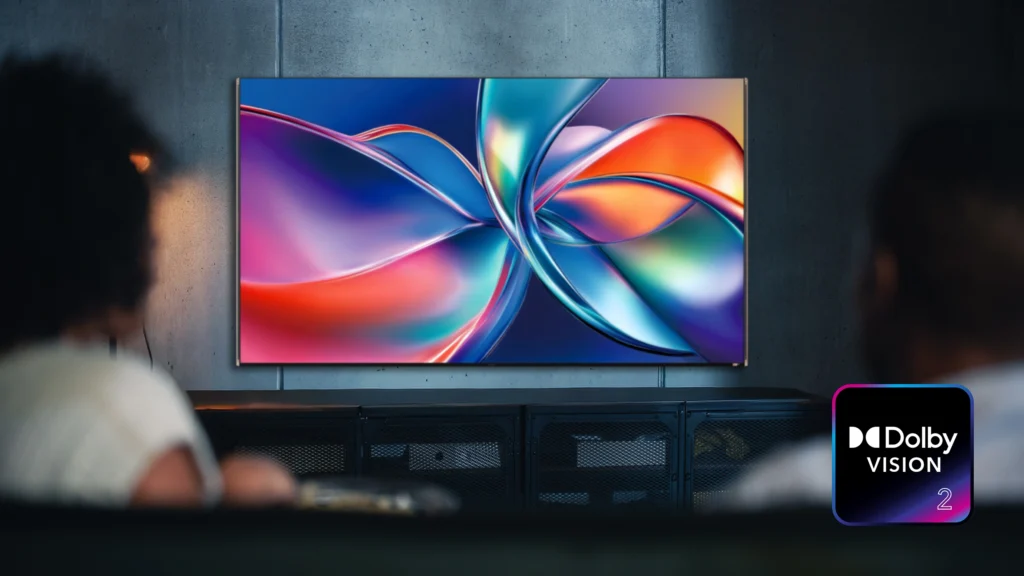
Dolby Vision 2 has more brands lined up. TCL has confirmed its X QD-Mini LED series and 2026 C-series, and Philips is bringing it to the OLED811, OLED911 and flagship OLED951. And Samsung has announced no television partners for HDR10+ Advanced beyond itself, though MediaTek, Panasonic, Roku and TP Vision are among the companies backing the format’s development.
There is a hardware constraint on the Dolby side worth understanding. Dolby Vision 2 depends on newer silicon, with MediaTek’s Pentonic 800 among the first chips to integrate it, so 2026 models received a firmware update while every Dolby Vision television sold between 2014 and 2025 did not, and will not.
Two large brands are absent from both camps. LG has declined Dolby Vision 2 across its entire 2026 range, which for the brand most associated with Dolby Vision is genuinely surprising. Samsung has never supported any version of Dolby Vision and never will while the licence fee exists.
The Filmmaker Mode problem

One detail has gone almost unremarked in the coverage, and it bothers me more than any of the availability arguments.
HDR10+ Advanced does not operate while Filmmaker Mode is switched on. Samsung confirmed it in a footnote to its own launch announcement, and has published no technical explanation. A format marketed on delivering the picture as intended switches itself off in the preset built specifically to deliver the picture as intended, which is a difficult circle to square.
The likely reason is not mysterious, since Filmmaker Mode exists to disable motion interpolation and automatic scene-type adjustment, which is precisely what Intelligent Motion Smoothing and genre-based optimisation happen to be.
Dolby Vision 2 has no such conflict, and that is a real advantage rather than a debating point.
Does either format matter in 2026?
Less than the announcements suggested, though rather more than they did a fortnight ago.
Of course, if you already own a compatible Samsung or Hisense, you have received a free upgrade to a television you already bought, and there is nothing to decide. Dolby Vision 2 owners get the better end of that, since their existing library improves immediately.
But if you are shopping, I would still buy on the picture the panel produces today. One manufacturer per format, a Prime Video catalogue described as ‘select titles’, and native Dolby Vision 2 content that does not exist yet is not enough to reorganise a shortlist around. The brightest, best-controlled television you can afford will do more for what you watch than either badge will.
Which format will win?
Neither, in the sense that neither is going to eliminate the other, because the last war between Dolby Vision and HDR10+ never resolved and there is no obvious reason this one should behave differently.
But the balance has shifted since the spring. Dolby Vision 2 shipped with a working library, a second and third manufacturer already committed, and no Filmmaker Mode conflict. HDR10+ Advanced has the advantage that has always mattered most in this rivalry: it costs manufacturers nothing, and Samsung ships an enormous number of televisions.
The question I keep coming back to is whether LG stays out. Its refusal remains the strangest element of the whole story, and if it holds through 2027, Dolby has a problem that no amount of Content Intelligence will solve.
FAQs
On specification, yes, with up to 12-bit support, creator-controlled motion and metadata-driven optimisation. It also improves existing content immediately, which HDR10+ Advanced does not.
Samsung’s 2026 lineup, with Prime Video the only content source at launch.
Hisense 2026 UX, UR9, UR8 and U7 series, on Google TV and VIDAA, with TCL and Philips models to follow.
No. Samsung has confirmed the format is not supported while Filmmaker Mode is enabled.
For HDR10+ Advanced, yes. Dolby Vision 2 reprocesses Dolby Vision material you already own.
The verdict
A format war needs two formats in the field, and until this month there was only one. Now there are two, on two brands, forty-eight hours apart.
HDR10+ Advanced got there first and costs nothing. Dolby Vision 2 arrived with a decade of content already compatible, more manufacturers behind it and no argument with Filmmaker Mode, which for a format that charges a licence fee is a stronger opening than I expected.
Buy the brightest, best-controlled television you can afford. The war has barely started.