

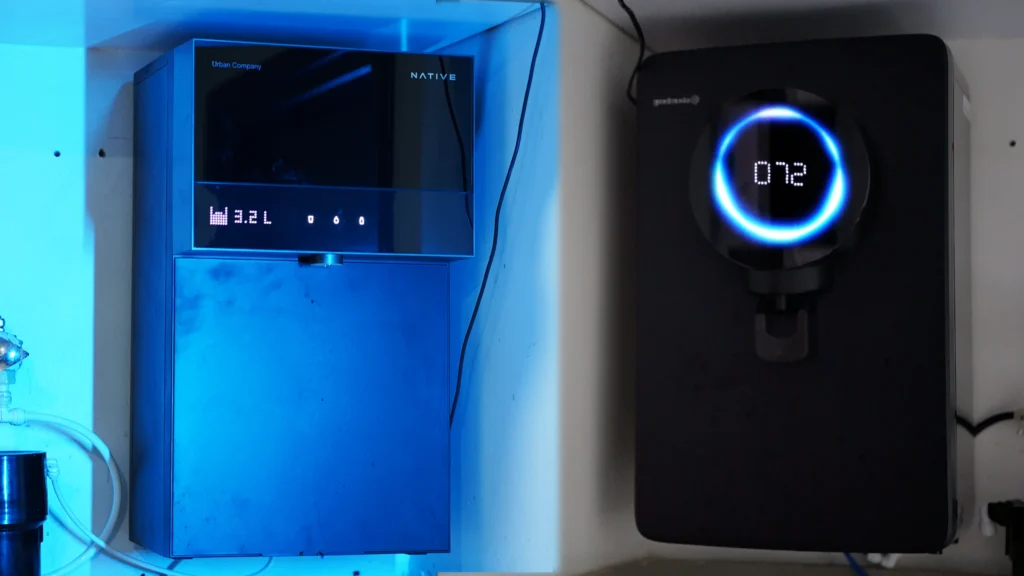
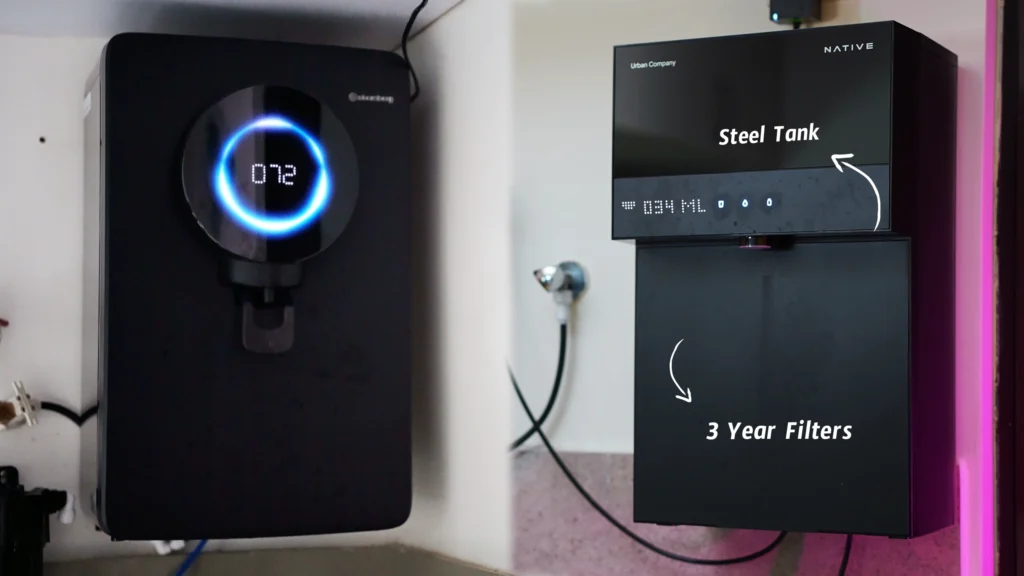
The Urban Company Native M3 Pro is the best water purifier in India right now. Three years of filters and service visits are paid for the day it arrives. Nothing more until 2029. The Atomberg Intellon does the same for two years and costs less. In a small town we would take the Pureit Eco Elite 2X instead, because service reaching your door matters more than anything on a spec sheet.
We buy and test every purifier on this page. No brand paid for a place on it. If you buy through our links we may earn a small commission, at no extra cost to you. Affiliate Disclosure.
Best Water Purifier Comparison Table (2026)
| Water Purifier | Filter Replacement Cost | Filter Life | Best For | Purification | Tank Capacity / Material | Warranty |
|---|---|---|---|---|---|---|
| Urban Company Native M3 Pro | ₹7,000 for 3 years, includes service | 3 years or 18,000 L, no cap enforced | Best overall | RO + UV + Mineraliser | 6L, SS 304 steel | 3 years, unconditional |
| Atomberg Intellon | ₹4,000 per set, lasts 2 years | 2 years or 12,000 L | Lowest running cost | RO + UV + UF + Mineraliser | 8L, ABS plastic food safe | 2 years, unconditional |
| Pureit Eco Elite 2X | Germ kill kit, around ₹5,500 | 2 years or 12,000 L | Borewell water, villages and small towns | RO + UV + MF + Mineraliser | 10L, food grade plastic | 1 year machine, 2 years filters |
| Urban Company Native M2 Pro | ₹5,000 for 2 years, includes service | 2 years | Best under ₹18,000 | RO + UV + Mineraliser | 8L, food grade plastic | 2 years, unconditional |
| Aquaguard Delight Aquasaver | AMC around ₹6,000 a year | 2 years or 10,000 L, whichever is first | Steel tank under ₹15,000 | RO + UV + UF + Mineraliser | 5L, SS 304 steel | 1 year machine, 2 years filters |
| Kent Supreme Alkaline | AMC ₹5,500 a year | One year | Alkaline water at pH 8, has TDS Controller | RO + UV + UF + Mineraliser + TDS controller | 8L, food grade plastic | 1 year |
| AO Smith Z9 Pro | AMC around ₹6,000 a year | One year | Hot water on tap | RO + SCMT + Mineraliser | 10L plastic, steel hot tank | 1 year |
| Livpure Glo Pro++ | AMC ₹5,499 a year | One year | Best under ₹8,000 | RO + UV + UF + Mineraliser | 7L, food grade plastic | 1 year |
| V-Guard Zenora | Around ₹4,000 a year | One year | Best under ₹10,000 | RO + UV + MF + Mineraliser | 7L, food grade plastic | 1 year, whole machine |
Warranty length is where these brands now compete. Native covers three years, most of the rest cover two, and Aquaguard advertises four on one model, which we are treating as a claim until somebody actually reaches year four.

What matters is what the number means. Aquaguard’s two years ends at 10,000 litres, whichever comes first. Native’s three years are unconditional, filters and membranes and electrical parts, whatever your water does to them. And once the cover runs out, Native and Atomberg cost ₹2,000 to ₹2,500 a year to keep running. The rest want ₹5,000 to ₹7,000.
How did we test these models?
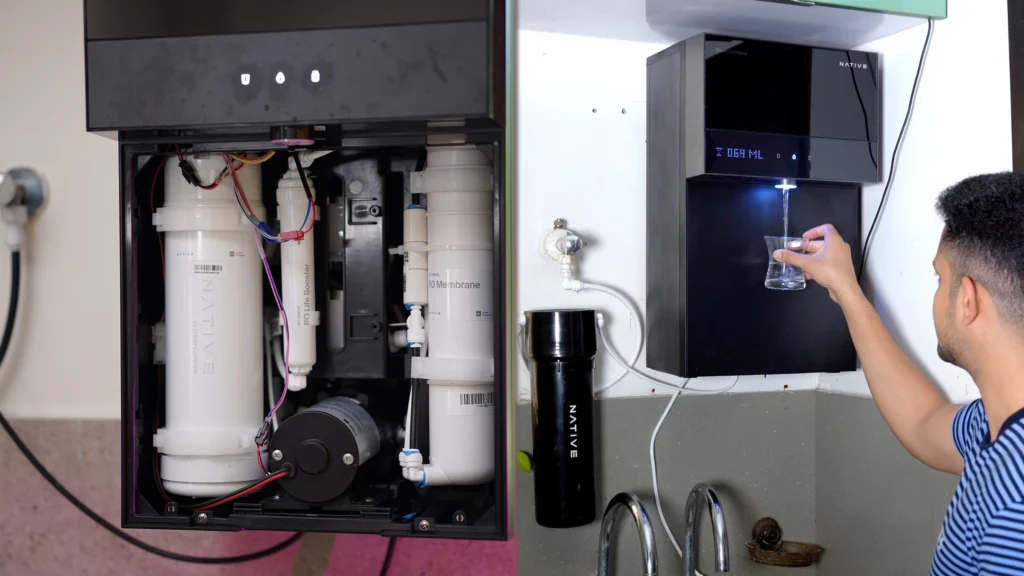
We purchased and installed these models in our office and home kitchens and matched them to the water source.
We connected RO purifiers to borewell/groundwater lines and used UV/UF models on municipal supply. We tested each model for one year before reviewing its performance, features, pros, and cons.
Besides testing their performance levels, we checked the longevity of the filters and membranes. That gave us an idea of each model’s maintenance costs and AMC pricing. We also dealt with installations and service visits first-hand, which gave us a clear idea of how each brand handles support after the sale.
Do you actually need an RO purifier?
Municipal water in many cities falls around 50 to 300 ppm, so a UV UF purifier is enough and you can avoid RO water wastage. Borewell water TDS is commonly above 300 ppm, so an RO purifier is the better choice.
You can quickly check your water’s TDS using a simple TDS meter, but TDS alone doesn’t confirm safety. Your water can have 200 TDS and still have issues like fluoride or heavy metals in small amounts, and a TDS meter won’t tell you that. If you are not sure about the water quality in your area, check local water reports or do a basic lab test.
A Mineraliser and a TDS controller are not the same thing. The mineraliser puts calcium and magnesium back after purification, while a TDS controller lets some raw water bypass the membrane, which means fluoride, arsenic or heavy metals come through with it. Check your district in our groundwater quality report before you let a technician set one up.
Best Water Purifiers in India 2026
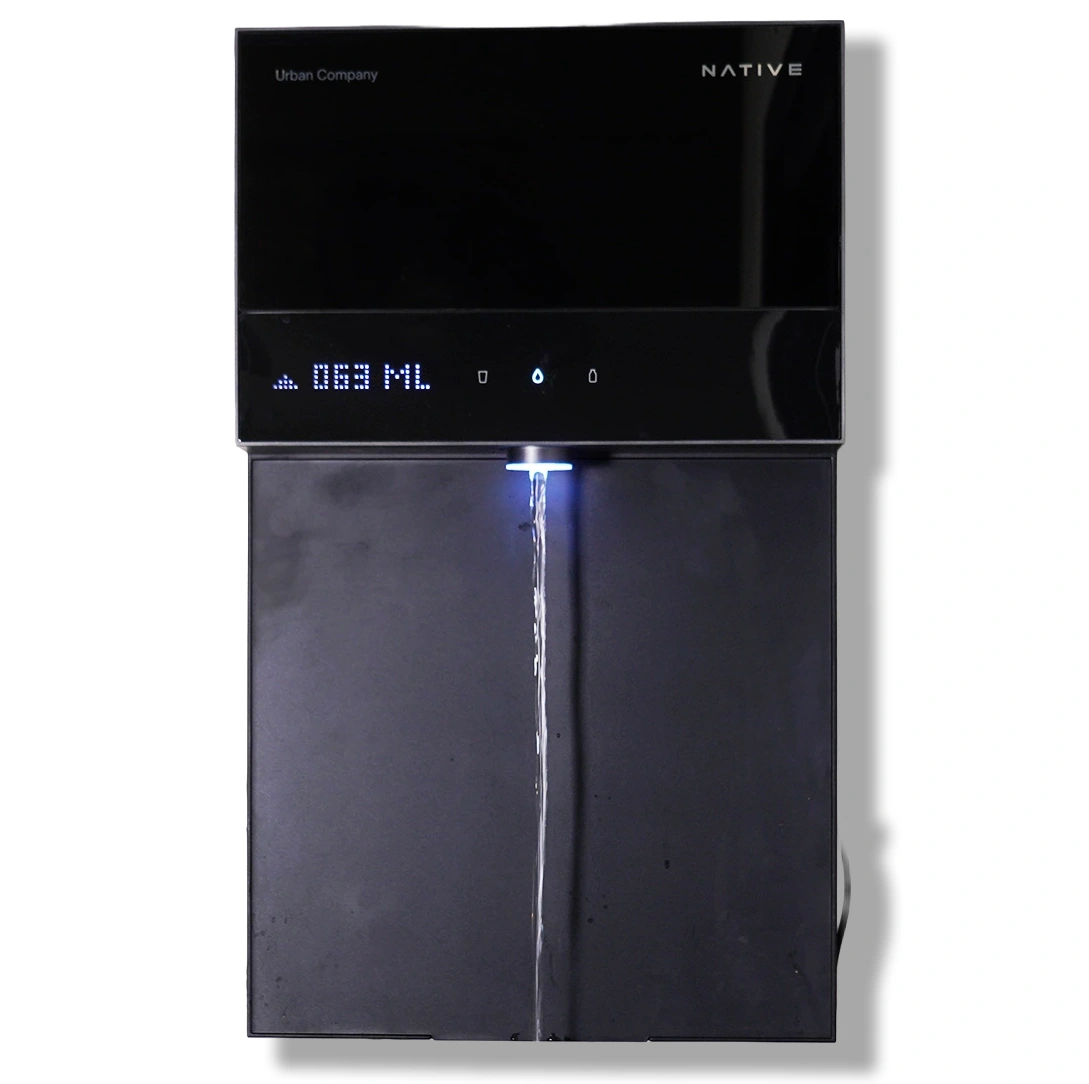
1. Urban Company Native M3 Pro
Best water purifier under ₹25,000 and the lowest maintenance cost in this list.
Pros
- No service cost and no filter cost for three years
- AMC is ₹7,000 for three years, the lowest here
- Unconditional warranty at any input TDS, with no litre limit
- SS 304 tank with a 10-year warranty
- Keeps dispensing during power cuts
- Around 60% water recovery below 500 TDS
- Filter life is worked out from live sensors, not a countdown
Cons
- Service is thin outside the larger cities
- No drip tray in the box
- Dispensing slows to about half speed on battery
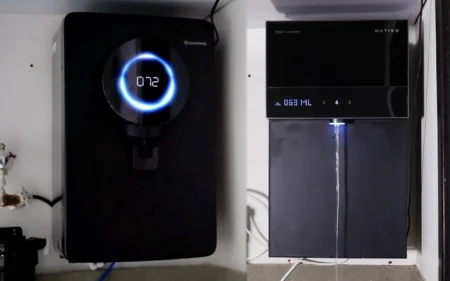
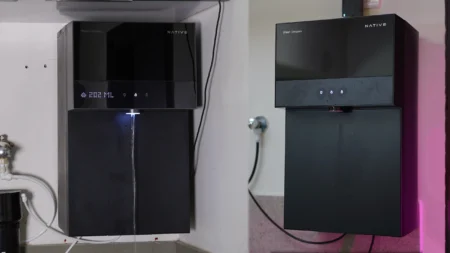
We tested the M3 Pro and the M3 side by side for two months, one on 300 ppm municipal water and the other on 750 ppm borewell. Neither has asked for anything since, no alerts and no service visits. The machine works out filter life from inlet pressure, pump load and input and output TDS rather than counting down days, which is the reason a three year claim holds up at all.
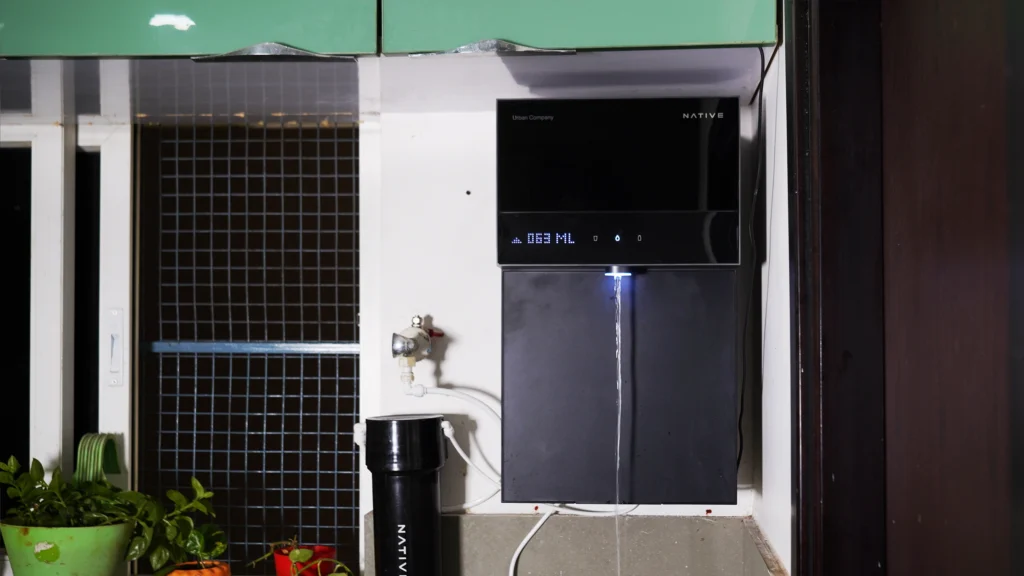
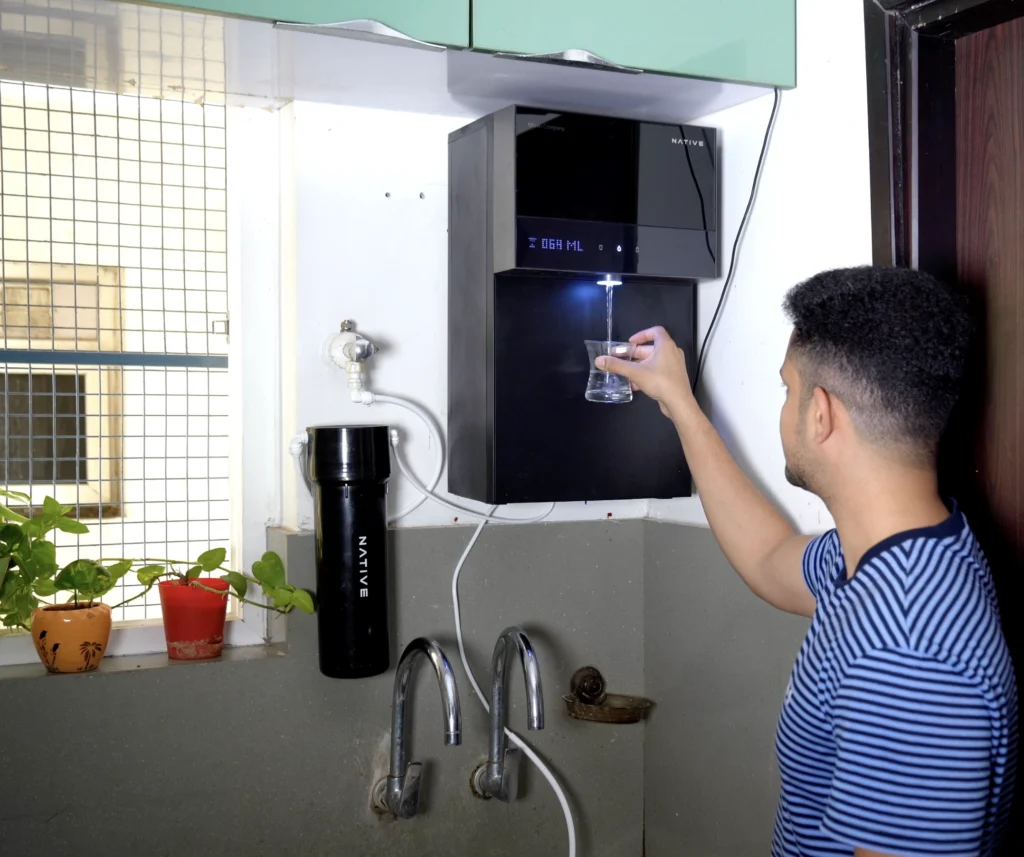
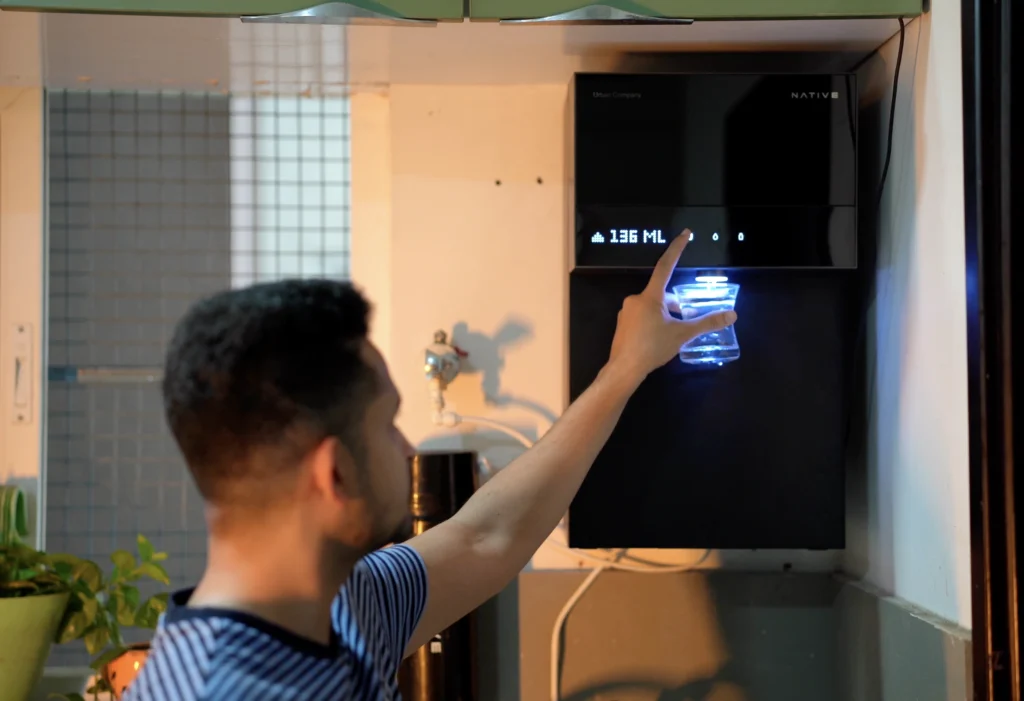
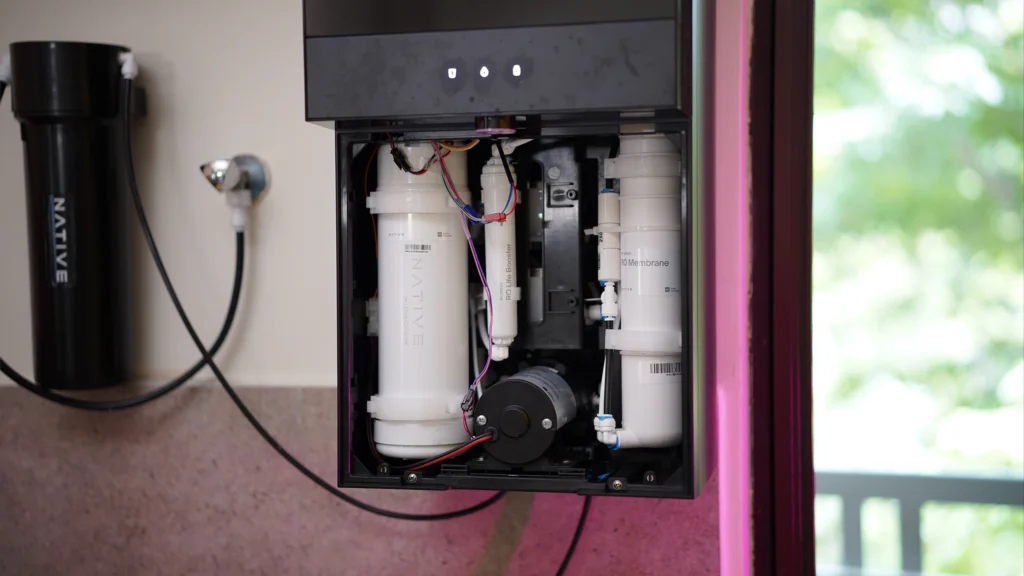
As a low maintenance water purifier for home use, nothing here comes close. Three years cost nothing, then ₹7,000 covers all the filters, the servicing and another three years of warranty. Most brands in this list want ₹5,000 to ₹7,000 every single year once their cover ends.
Service is the one thing to settle before you pay. Urban Company runs its own technicians in the larger cities and hands everything else to partners. Open the app and try booking a water purifier service at your address first. On a three year filter cycle you will not find out whether your area is covered until you badly need it, so in a village or a small town this matters more than any specification on the box.
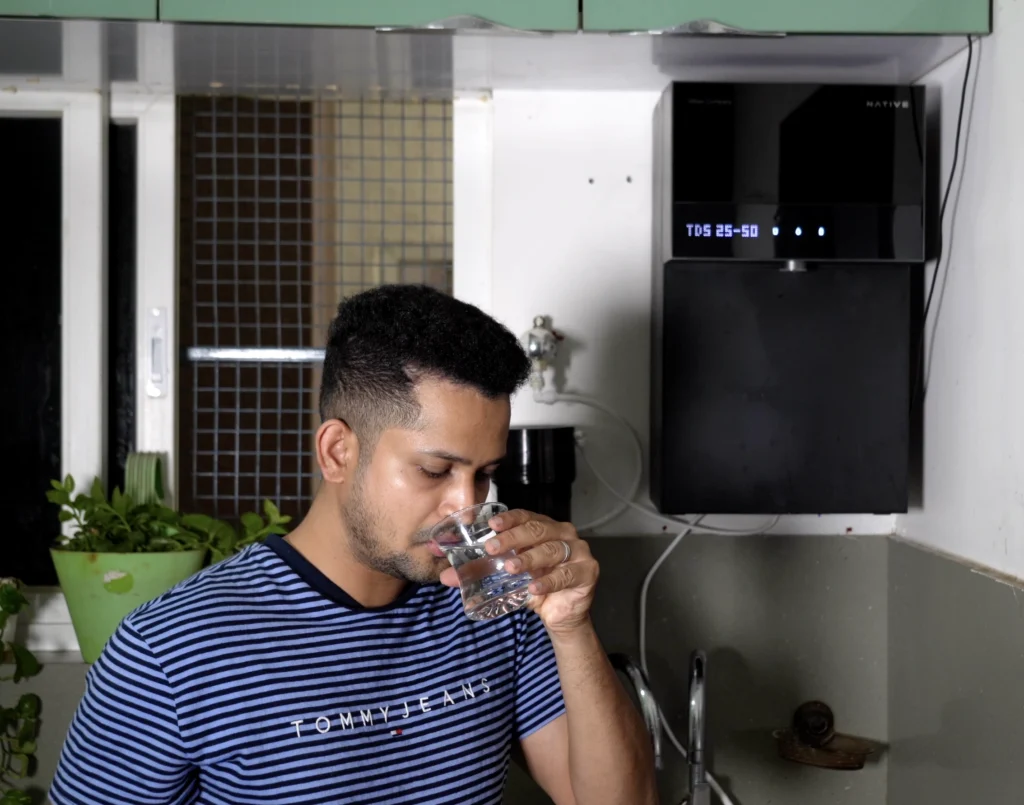
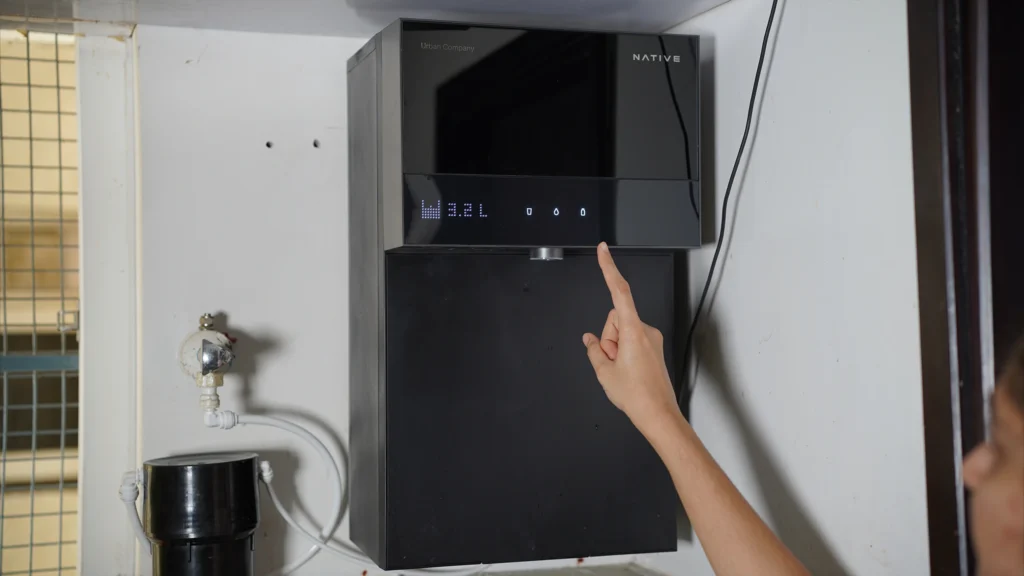
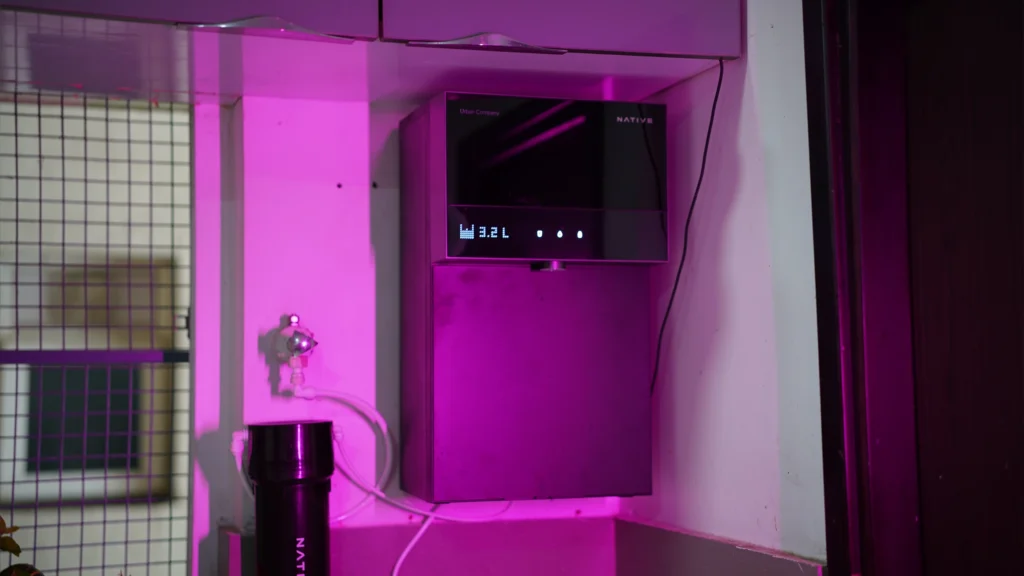
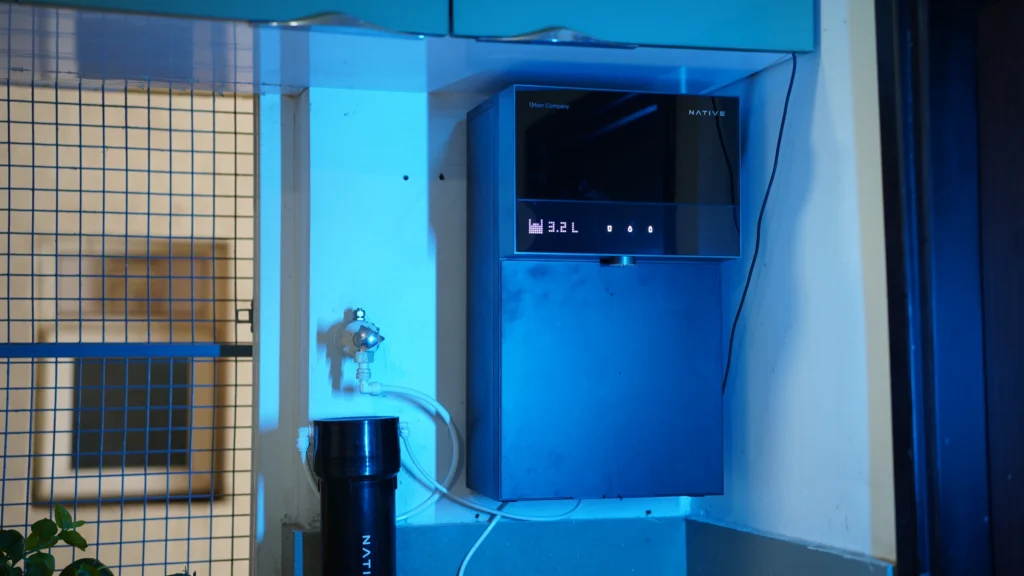
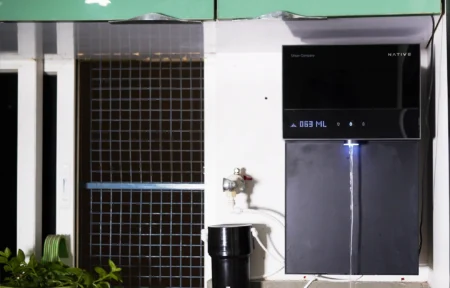
The warranty holds at any input TDS with no litre limit, so hard borewell water does not quietly void it the way it can elsewhere. It covers filters, pump, PCB, display, adaptor, cable, tap and brackets. Native tests the filters to 18,000 litres but does not treat that as a ceiling, which is where this parts company with the two year covers that end at 10,000 or 12,000 litres, whichever comes first.
The Native M3 is around ₹20,000 with identical purification, tank size, filter life and warranty. It uses food grade plastic instead of the SS 304 tank, indicator lights instead of the dot matrix display, and the older Health Booster instead of the DualFlow Mineraliser. You can find the full two month test on both here, Urban Company Native M3 Pro Review.

2. Atomberg Intellon
Best water purifier in India, suitable for all water sources, with low filter prices and manual TDS setting via app
Pros
- Output-TDS can be adjusted from the app to control taste and quality.
- Four modes, Adaptive Flow, RO-UV, Taste Tune, and Vacay, for different needs.
- No compulsory AMC; replace filters only when required.
- Two year warranty on all filters, and a fresh two years on any filter you replace.
- Water taste is clean and consistent.
Cons
- Service availability varies by city.
- Water wastage exsits if the TDS in your water is high
- TDS on the app and the display reads 20 to 25 points off a handheld meter
- Adaptive Flow is disabled in most of India.
Atomberg RO is the most versatile model we have tested because it lets you set the output TDS to match your source. It is suitable for homes that switch between borewell, tanker, and municipal water during the year.
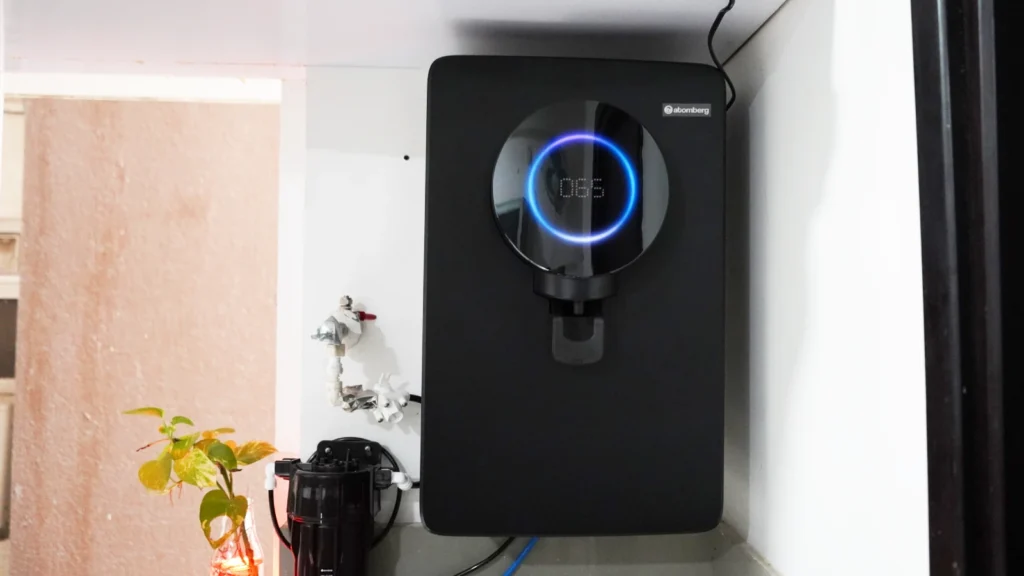
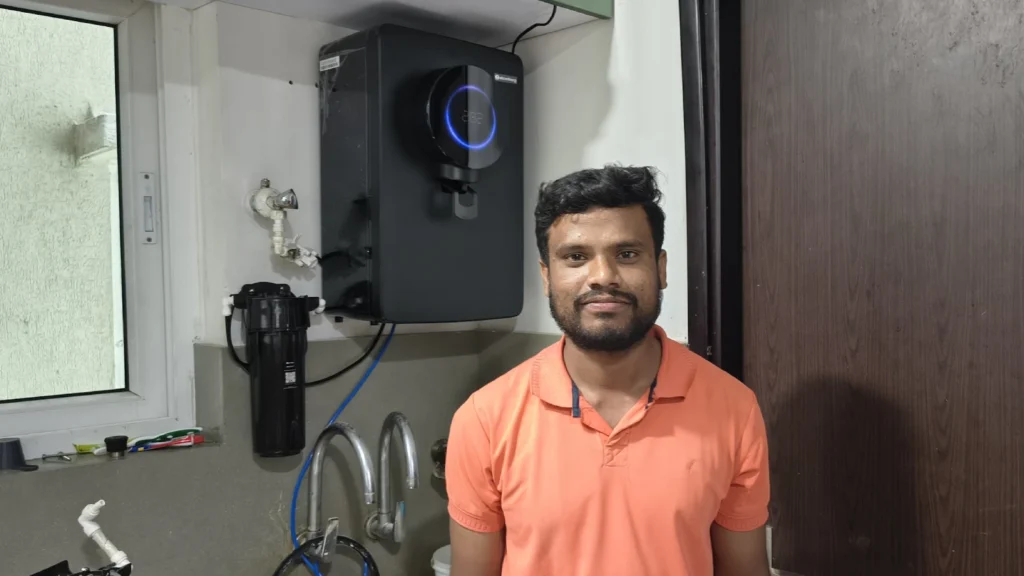

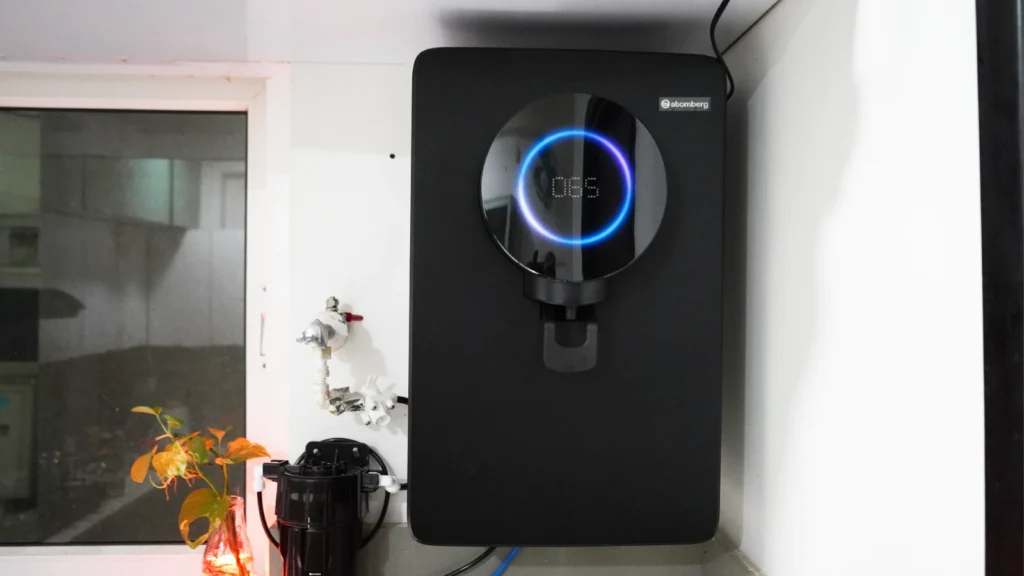
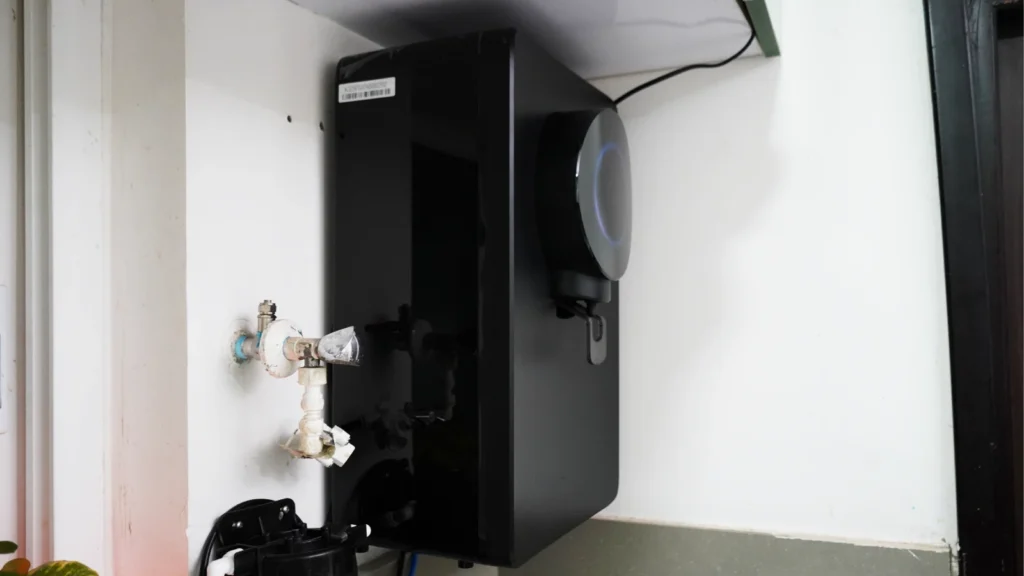
The Intellon is ideal because it gives full control over water taste without relying on a technician. Adaptive Flow mode works for everyday use, while RO-UV mode provides full RO treatment when needed. Taste Tune lets you make small adjustments if the taste changes with a new water source, and Vacay mode reduces wear when usage is low.
In our testing, we switched between municipal water at 150 ppm TDS and borewell water above 600 ppm. Adjusting the output-TDS from the app kept the taste consistent in both cases, without needing any hardware changes. This is a clear advantage over fixed-TDS systems, where taste can swing noticeably when the source changes.
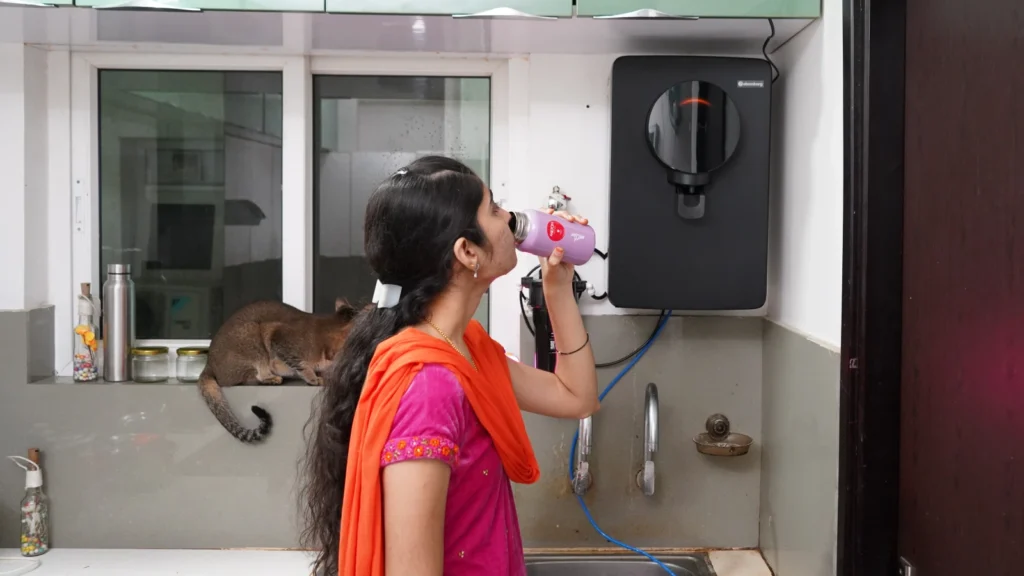
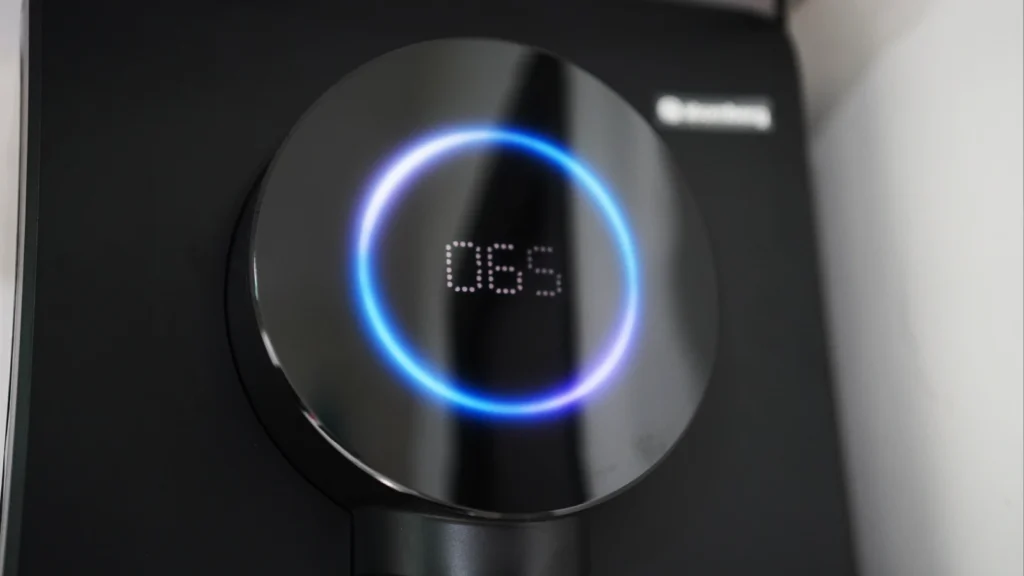
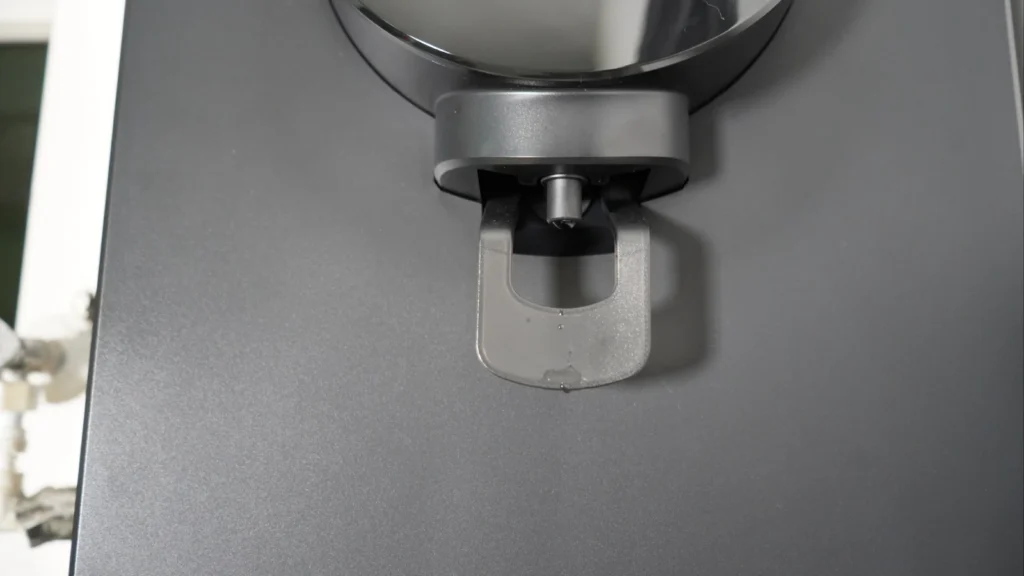
Filter tracking is the weak spot. We left the pre-filter disconnected for a few months and the app still showed 90% life on it, so treat it as a reminder rather than a measurement. There is no forced AMC though.
Buy it for the upkeep. Every part is priced openly and a full set runs about ₹4,000, which is the cheapest here by some distance and even the renewed filters carry a 2 year warranty. Filter charges and the rest of the detail are in our Atomberg Intellon Review.
3. Pureit Eco Elite 2X
Best water purifier under ₹12,000, and the one we would put in a village or a small town.
Pros
- 10L tank, the largest in this list
- Water tastes close to packaged water
- Handles up to 2000 ppm from any source
- Filters last noticeably longer than the previous model
- Pureit service reaches villages and small towns
Cons
- Filters will not see two years above 700 ppm, closer to 14 to 18 months
- Germ kill kit costs around ₹5,500 a year afterwards
Service is why this Pureit model sits here rather than three places lower. Pureit turns up in towns and villages where half this list will not, and after six months on it the filters have held up better than the Eco Water Saver’s did. Ask locally before you buy though, because Pureit is dealer run like the rest and quality changes from one town to the next.
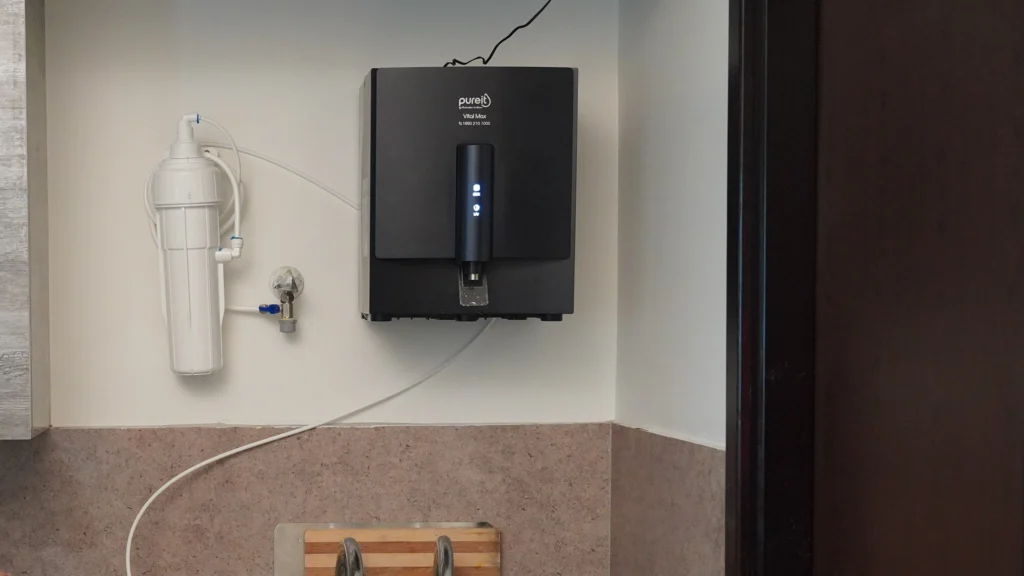
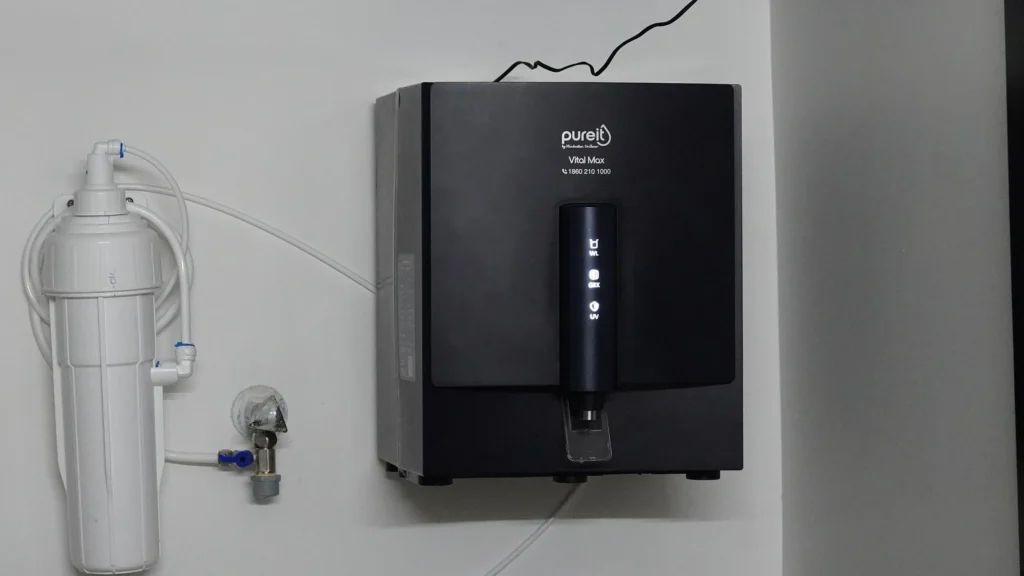
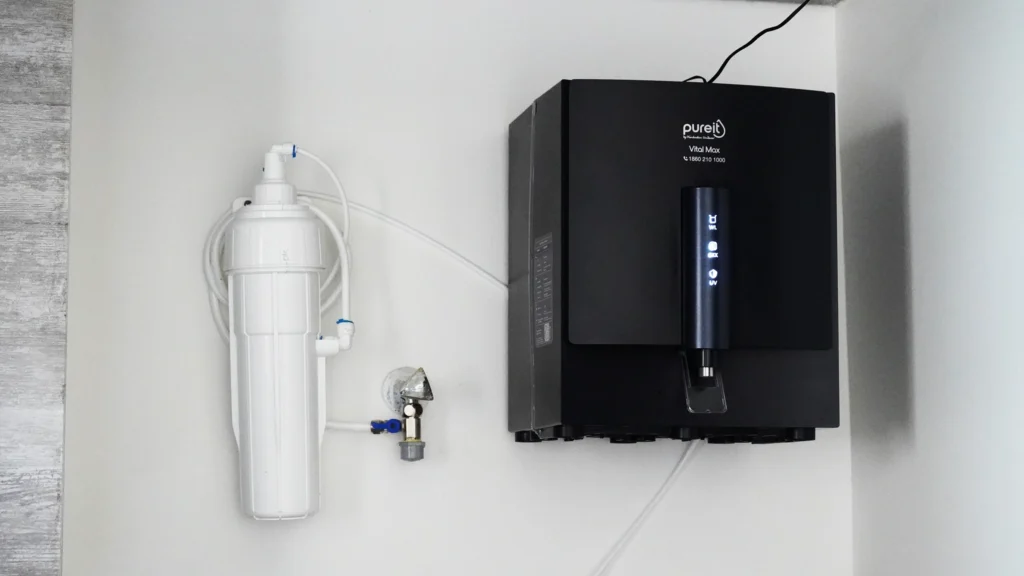
The two year filter life comes with an asterisk and a T&C apply line. The only number Pureit publishes is 12,000 litres, qualified as internal lab testing. In practice, anything above 800 ppm will not get you two years out of these filters. Fourteen to eighteen months is more realistic on hard borewell water supply, which is still respectable, just not what the box says.
Pureit does not sell an AMC. It sells germ kill kits, and a year of filters works out to about ₹5,500.
The eight stages run pre-sediment, pre-RO carbon, mesh, RO membrane, UV chamber, post-RO carbon, alkaline mineraliser and a micro filtration membrane. There is no TDS controller and no bypass, so nothing raw reaches the tank, and the mineraliser puts calcium and magnesium back afterwards. The water tastes close to Bisleri.


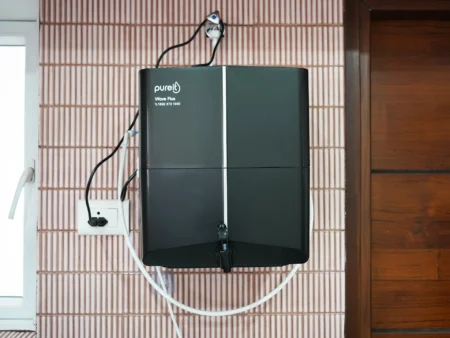
The Pureit Eco Water Saver costs about ₹2,000 less and runs seven stages instead of eight with the same 10L tank. Its filters do not last as long as the Eco Elite 2X’s, so the saving disappears at the first kit change. Buy it only if the gap matters today. If you are looking for a budget model, the Pureit wave plus is a nice one under ₹8,000.

4. Urban Company Native M2 Pro
Best water purifier under ₹18,000, and the lowest AMC here after the M3 Pro.
Pros
- AMC is ₹5,000 for 2 years, including all filters, service visits and a fresh 2-year warranty
- 2-year unconditional warranty at any input TDS
- 8L tank with 10-stage RO + UV + copper + alkaline purification
- Dispenses during power cuts, unlike the M2 it replaced
- Tray for holding bottles or glasses while filling
- Touch presets for a measured glass or bottle
Cons
- Service is good in cities and larger towns, slower in rural areas with third-party technicians
- Water wastage is high
Urban Company dropped the M2 and replaced it with the M2 Pro, and the reason was the one real complaint about it. The M2 could not dispense water without electricity. The M2 Pro has a battery and pours either way. If you still find an M2 listed cheap somewhere, skip it.
The maintenance cost is fixed and predictable, which is the whole appeal of this series. ₹5,000 covers two years of filter changes and service visits, and renews the warranty for another two. In two years of use the build has stayed solid and the taste has been consistent across seasons. Service is the same caveat as the M3 Pro, so check your pin code in the app before you buy.


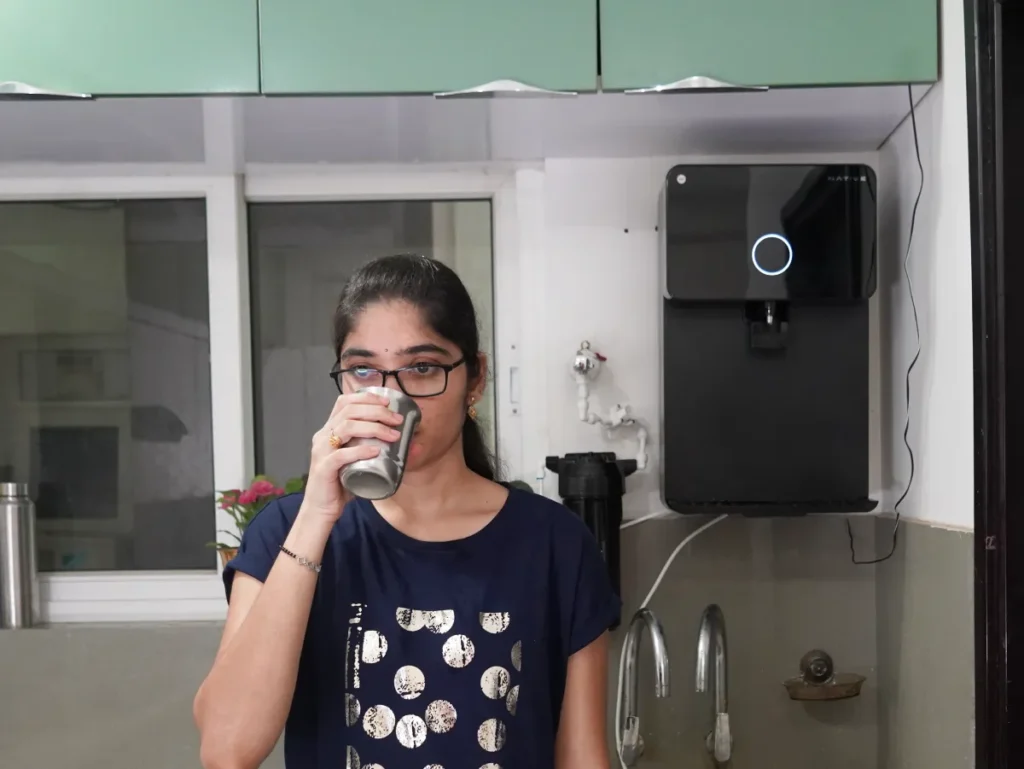


The 10-stage stack handles borewell and tanker water well, but these models are only worth it above 300 ppm. If your TDS is low, you do not need an RO at all unless your water carries fluoride, arsenic or lead.
The Native M1 Pro is under ₹15,000 and the Native M1 around ₹13,000, both with the same 8L tank, the same two year unconditional warranty and the same ₹5,000 renewal. The M1 Pro adds real-time tracking through the app. If that is the only difference that matters to you, the M1 is the better buy. Read Urban Company Native M1 and M2 Review.
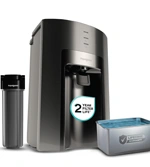
5. Aquaguard Delight Aquasaver
Best water purifier under ₹15,000 with a stainless steel tank.
Pros
- 5L SS 304 steel tank
- 9-stage RO + UV + UF with a mineraliser for calcium and magnesium
- Larger sediment filter than most, which helps on tanker and borewell water
- Two free cleaning services in the first year
Cons
- Machine warranty is only 1 year, it is the filters that get 2
- Filter life ends at 10,000 litres or 2 years, whichever comes first
- Unlimited repair visits apply to the first year only
- After-sales service needs improvement
- AMC is around ₹6,000 a year once the cover ends, and it covers filters, not much else
The steel tank is the reason to buy this one. An SS 304 tank under ₹15,000 is rare, and the oversized sediment filter is a sensible touch for anyone on tanker or borewell supply.
The 2-year filter life has a catch. It is 2 years or 10,000 litres, whichever comes first. That works out to about 14 litres a day, and a family of four drinks more than that. So plan for filters in 18 months, not 24.


This Aquaguard machine warranty is only one year, and the free repair visits stop after year one as well. After that the AMC is around ₹6,000 a year, and it pays for filters, not the pump or the board.
Aquaguard prints a 60% water saving on the box. What you actually save depends on your input TDS, and on hard borewell water it comes nowhere near that. Every RO rejects more as the TDS climbs.
Service is where this one loses. Aquaguard advertises 19,500 pin codes, but Kent and Pureit reach small towns just as well, and of every brand in this list Aquaguard has been the least dependable for us.
The Aquaguard Enrich Ritz Pro sells at around ₹20,000 with a four year unconditional warranty, which sounds like the best deal in this article. We could not find a single published line about what happens in year five, not on the listing, not on the Eureka Forbes site, and not from asking Aquaguard. Their own service staff did not know either.

6. Kent Supreme Alkaline
Alkaline water at pH 8, and the only machine here with a TDS controller.
Pros
- TDS Output settled around 150 ppm in our testing
- Mineral cartridge adds calcium, magnesium, zinc and copper
- In-tank UV LED keeps stored water clean between fills
- 8L tank suits a medium sized family
- Kent service reaches villages and small towns
Cons
- AMC runs ₹5,500 a year
- TDS controller is wrong on arsenic or fluoride groundwater
Two years with the Kent Supreme Alkaline and the verdict has not moved. Good machine, expensive habit. Kent fits a mineral cartridge that puts calcium, magnesium, zinc and copper back after purification, which lifts the pH to around 8 and gives the water that bottled-mineral taste people pay for. Our output sat near 150 ppm, which is squarely where WHO and BIS both want it.


The in-tank UV LED is the part we would miss. Most purifiers clean the water on the way in and then let it sit in a tank all day. This one keeps working on it while it sits.
The TDS controller is the problem. It lifts output TDS by letting a share of raw water slip past the membrane, so whatever your borewell carries arrives with it (fluoride and arsenic included, neither of which the technician will mention while he sets it). On municipal supply that is fine, and in a fluoride belt it is the wrong machine.


Then the money, and Kent makes that harder to work out than it needs to be. There are three AMC plans, they cover different things, and what one includes the next leaves out. The number that matters is the one at the end of it: keeping this machine in filters costs ₹5,000 to ₹6,000 a year, which is high for a purifier at this price.
Note: Kent has started putting two year cover on its newer machines. Kent Supreme IoT at around ₹23,000 and the Supreme Plus Neo at around ₹21,500 both include two years of filters and service, which is roughly ₹7,000 more up front to skip two AMC bills.

7. AO Smith Z9 Pro
Best water purifier with hot water dispensing, at 45 and 80 degrees.
Pros
- Hot water at two temperatures, plus ambient
- No bypass, every drop goes through RO Filter
- Side stream membrane spreads the load and lasts longer
- Silver charged membrane stops growth inside the machine
- Copper mineraliser after purification
Cons
- One year of cover on a ₹21,000 machine
- AMC around ₹6,000 a year
- Bulky, and it wants the counter space
- Hot water dispense won’t work during power cut
Buy the Z9 Pro for the tap, not the filter. Ambient, 45 degrees for a baby bottle or a quick cup, 80 degrees for everything else. Nothing else in this list does it, and if you are boiling water twice a day it changes the kitchen more than any purification spec will.
The filtration is sound. The side stream membrane feeds water in from the sides instead of one face, so salts do not pack into a single spot and the membrane lasts longer for it, and there is no bypass at all. The copper mineraliser does the putting back of minerals like calcium, magnesium and copper afterwards.
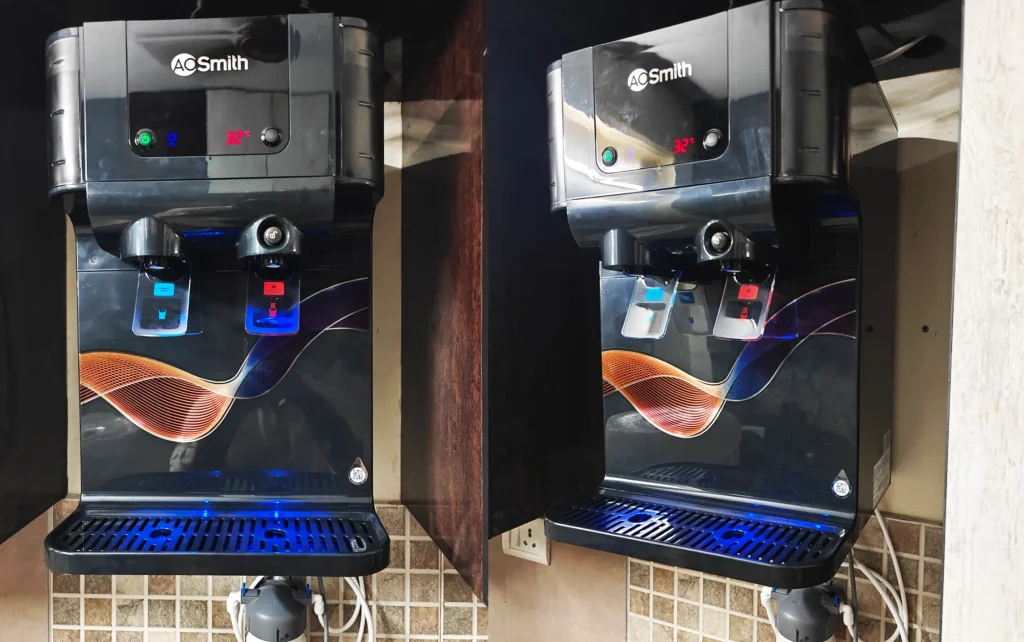
AO Smith’s water saving claim held up when we tested it, though not to the letter. It saves more than an older RO does, and the figure moves with your input TDS, which is true of everything on this page.
Service is what we would check first. We have been asked for money to do an installation the company advertises as free. Ask locally before you commit ₹21,000 to it.
The rest is cost, and it is the ordinary kind. One year of cover, then about ₹6,000 a year, on one of the most expensive machines in this article. The 10 litre storage tank is plastic whatever the styling suggests (only the small hot tank is steel).
Note: The AO Smith Z10 at around ₹23,000 looks like the newer machine and reads like the same one. Both list eight stages, 100% RO with the silver charged membrane, the copper mineraliser, 45 and 80 degree water out of a stainless steel hot tank, touch dispensing, a 10 litre storage tank and one year of cover. We went through both spec sheets and could not find anything that separates them. Unless a shop has the Z10 cheaper on the day, there is no reason to pay more for it. The Aquaguard Aspire Blaze at around ₹22,500 is the other hot water machine worth a look, and only worth it if Aquaguard service is dependable where you live.
8. Livpure Glo Pro++
Best water purifier under ₹8,000, if somebody local can service it.
Pros
- It can handle all water types, even with TDS levels up to 2000 ppm.
- Cheapest machine in this list
- Taste Enhancer adds minerals instead of bypassing raw water
- Tank fills in 15 to 20 minutes
Cons
- Service is the weakest here after Aquaguard
- No pre-filter in the box
- The membrane is expensive and goes at 12 to 24 months
- AMC is ₹5,499 a year on an ₹8,000 machine
Under ₹8,000, and the price is the whole argument. You get RO, UV and UF, a 7 litre tank, and a machine rated to 2000 ppm, which covers most borewell supplies in the country.


Livpure calls its mineraliser a Taste Enhancer, which is a silly name for the right approach. It adds minerals back after purification rather than letting raw water past the membrane, so nothing untreated reaches the glass, and on fluoride or arsenic groundwater that matters more than anything else on the sheet.
Two costs arrive later. There is no pre-filter in the box and you want one, because it catches the grit that would otherwise shorten membrane life. The membrane itself is not cheap and lasts 12 to 24 months depending on what you feed it.
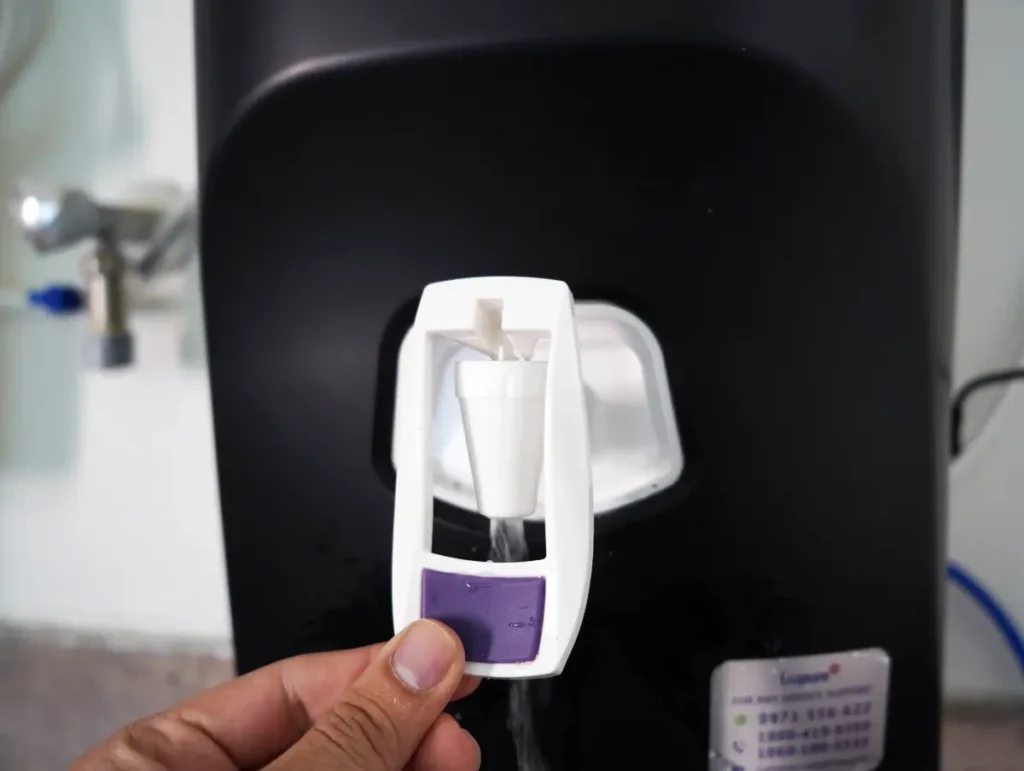


Service is the question that decides this purchase. Livpure is thinner on the ground than Kent or Pureit, and installation is where the complaints gather. At ₹5,499 a year the AMC costs most of the machine’s price every two years, which is a strange bill to carry on the cheapest purifier in the list. Ask a neighbour who owns one before you order. Read Livpure Glo Pro++ review.
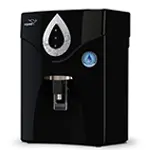
9. V-Guard Zenora
Quality RO Water Purifier with No fancy features. Suitable for High TDS Water.
Pros
- Ideal for water with TDS levels up to 2000 ppm
- Two free pre-filter changes and two maintenance visits
- One free re-installation if you move house
- UV lamp sits behind glass, so water never touches it
- Easy to mount and good faucet arrangement
Cons
- One year filters only, unless you pay up for the 2X
- Filters and membrane cost about ₹4,000 a year
- No app, no display, nothing smart
The V-Guard Zenora took our source water from above 600 ppm down to under 50. It tastes like Bisleri, which is the compliment most people are really after. V-Guard skips the TDS controller and fits a calcite mineral balancer instead, so nothing raw gets past the membrane and the minerals go back in afterwards.


The warranty is better than the price deserves. One year on every filter, the membrane and the electrical parts, two free pre-filter replacements, two maintenance visits, and a free re-installation when you shift house. Kent and Aquaguard charge for pre-filter changes at this money.
V-Guard handled delivery and fitting directly in our case, promised two days and took two days, and charged nothing for it. That is not a sentence we get to write often in this category.
The UV lamp sits inside a glass channel, so purified water never touches it. Better disinfection, longer lamp life, one less thing to replace.

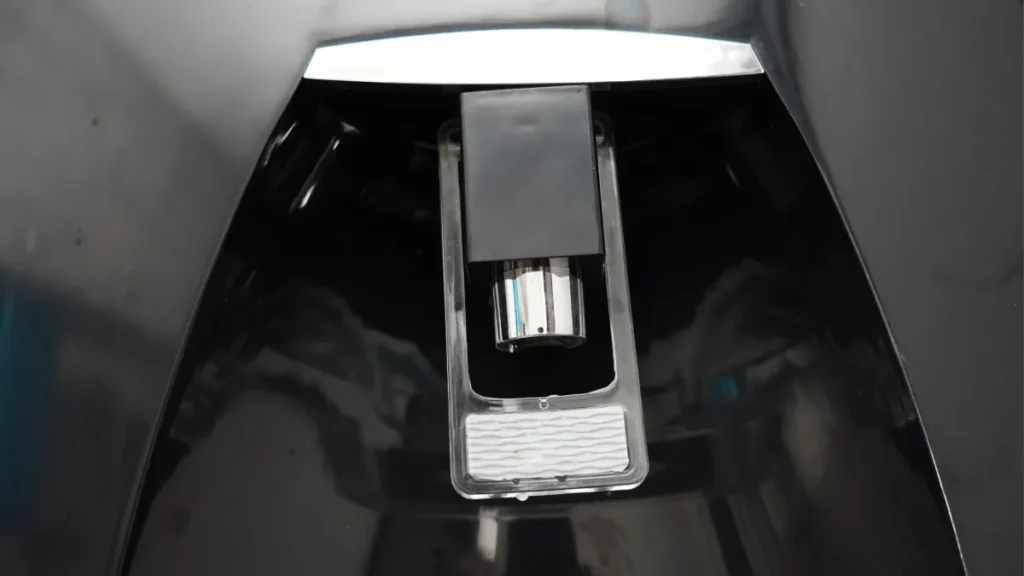

Two things to know before you order. It will not run below 4 psi and the booster pump is a separate purchase. And filters plus membrane come to about ₹4,000 a year, which is the second cheapest here, behind Atomberg.
Note: The V-Guard Zenora 2X at around ₹11,000 stretches the same cover to two years on filters, membrane and electrical parts, with pre-filter changes at month nine and month eighteen. Worth the difference only if V-Guard service is dependable where you live.
Best UV UF Water Purifiers
If your water source is like municipal supply (has TDS below 300 ppm) and is free from harmful metals such as arsenic, lead, or fluoride, you can go for a UV UF water purifier instead.
UV UF models are easier to maintain and do not waste any water. They are ideal for apartments or homes with clean, low-TDS water.
Good UV UF options
- Pureit Wave UV
- Havells Aquas Lite UV UF
- Aquaguard Sure Delight UV+UF 2X Stainless Steel Tank
- KENT Ultra Storage UV
- KENT Maxx Plus UV Water Purifier
- V-Guard Rejive UV UF
Water Purifier Buying Guide
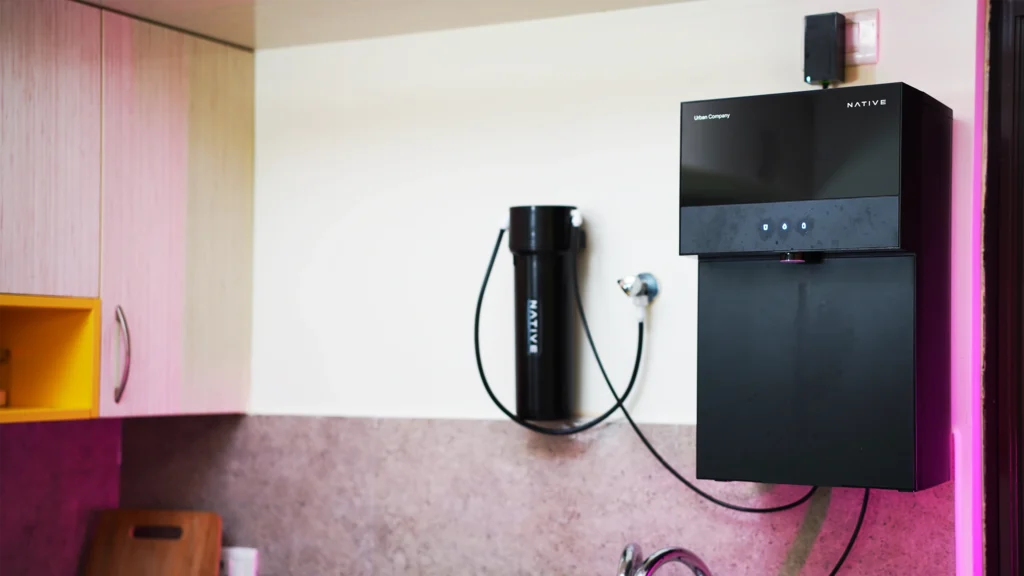
The water that is available in our taps is not exactly the best one to drink directly. This water contains all kinds of contaminants one can imagine. It explains why many people boil water before drinking it.
Boiling kills the germs, viruses, and bacteria from the water. At the same time, it kills the taste and flavour, as well but does not remove the salts from the water.
Therefore, one can resort to using water purifiers that can deliver high-quality drinking water that surprisingly, tastes good, as well.
Test the tap water
Water that smells and tastes good is not necessarily the healthiest to drink.
Tap water contains soluble and insoluble impurities. Despite the municipalities purifying groundwater, the water can pick up contaminants on its way to your home.
It has to pass through pipes and tanks. Pipelines and tanks can be corroded. They can also have a mineral build-up. Both of these factors affect the quality of water.
Secondly, groundwater can have impurities like arsenic, antimony, lead, and so on. It can also contain Dissolved Solids.
TDS can comprise organic and inorganic salts including calcium, magnesium, potassium, chlorides, bicarbonates, and sulfates. Thus, it is good to use a TDS meter to determine the extent of TDS.
How do you use the TDS meter?

A digital TDS meter should not cost more than a few hundred rupees. Invest in one, as it will prove useful to you for life. Here is how you use the TDS meter.
- Just Remove the protective cap of the TDS meter and turn the TDS meter on.
- Immerse the TDS meter in the glass of water up to the maximum immersion level marked on the device.
- Wait for about 10 seconds and allow the reading to stabilize.
- Press the HOLD option and remove the device to note down the TDS reading.
Now, you have the reading. What should you do now? This table will give you a good idea about what the reading conveys.
| TDS Level | Reasons for acceptability or Non-acceptance |
|---|---|
| Less than 50 | Tastes flat and insipid. WHO says water with extremely low TDS may be unacceptable for that reason. Not a safety problem though. Modern RO purifiers add calcium, magnesium, copper and zinc back after purification, which lifts both the mineral content and the taste. |
| 50 to 150 | WHO States that TDS is mainly a taste/palatability factor (not a safety test). Most people find lower TDS more pleasant |
| 150 to 200 | This level is acceptable. |
| 250 to 350 | Most of the Indian homes have tap water in this range. It is an acceptable range |
| 350 to 500 | BIS (IS 10500) States that TDS 500 ppm is Acceptable. |
| 500 to 900 | Above the BIS acceptable limit of 500 ppm, though WHO still rates the taste here as good to fair. Use an RO water purifier with a mineraliser. |
| 900 to 1200 | WHO rates the taste poor in this band. Use a good quality RO water purifier with a mineraliser. |
| 1200 to 2000 | WHO calls anything above 1200 unacceptable on taste, and BIS permits up to 2000 only where no other source exists. You need an RO rated to handle 2000 ppm. |
| Above 2000 | Most of the RO water purifiers in the market cannot handle such a high level of TDS. |
Now, you know the TDS level as well as the water quality. Let us now find the difference between RO, UV, and UF Purifiers.
RO vs UV vs UF
| RO Water Purifier | UV Water Purifier | UF Water Purifier |
|---|---|---|
| Requires electricity to operate | Requires electricity to operate | No Electricity required |
| Kills and Removes all the Bacteria and Viruses from the Water. | Kills all Bacteria and Viruses but their Dead Bodies remain in the Water. | Removes bacteria and cysts. Not reliable against viruses, which are smaller than the membrane pores. |
| Requires Electricity to Boost the Tap Water Pressure | UV Water Purifiers can work with Normal Tap Water Pressure. | UF Water Purifiers can work with Normal Tap Water Pressure. |
| Removes the Dissolved Salts | Cannot remove Dissolved Salts | Cannot remove Dissolved Salts |
| RO Purifiers has a Prefiltration system to work with Dirty Water. | Water should be clear for UV to work. | Works with Dirty Turbid Water. |
If you have any queries reading the selection of water purifiers, post them in the comments section below, and we will be glad to answer them.

12 Comments
Is blue shell water purifier good to buy
No idea about this one.. better to go for the brand that provides good service at your place.
Thank you Srinivasa for the detailed review.
Could you please share your personal favourite, M1 or atomberg.
For TDS Above 300 PPM, I will consider Native M1.. AMC Cost is fixed 5000 for 2 Years and service is good (but make sure if they provide service at your place, install UC App and try to book something and you will know..) Atomberg is also good and it is suitable for multiple water sources including low TDS water.
Annaya…tds 700 undhi….lg water purifier tiskovachaa leka urban m2 pro ki vellaala..edho best antaru ?
LG is Suitable and has Stainless Steel tank
Hi chiatanya garu,
Thank you for your detailed explanation of water purification and models. We need your suggestion.
We are in bangalore and our water source is both muncipal and bore. In summer it will be more of bore water due to shortage of municipal water. Which model would be good?
Currently municipal water tds is showing 200.
In Banglore Atomberg Service is available, Atomberg Intellon model is suitable for both high and low TDS water.. Maintenance cost is also low compared to other brands. Don’t buy RO as your municipal water TDS is already good.
Quite meticulous analysis and guidance dear Srinivas. Kindly suggest me a purifier for small family 2-3, with main problem of hard water, salt, it’s partially processed from canal water in region of mewat. I want mineralizer & alkalinizer. Any other useful addable feature to this ?
For Hard Water, an RO Water purifier is required..Mineralizer feature is present in all top brands.. it adds minerals like calcium and magnesium to improve water taste.. Alkaline water is nothing but water that has more minerals.. it just a marketing gimmick in water purifiers.. If you have service, Urban company native models are better.. otherwise go for Pureit Revito but yearly maintenance will be around 5000, there is also a new model pureit eco elite which has better filter life
Hi, I currently have aquaguard royale water purifier. The issue is that it has a few gaps that allow cockroaches to enter the purifier and the water tank.
Based on your experience, which purifier has a sealed water tank that does not allow pests to enter, i.e., pest-proof?
All the models i tested, we never faced such problem.. You can try Native M3 Pro