
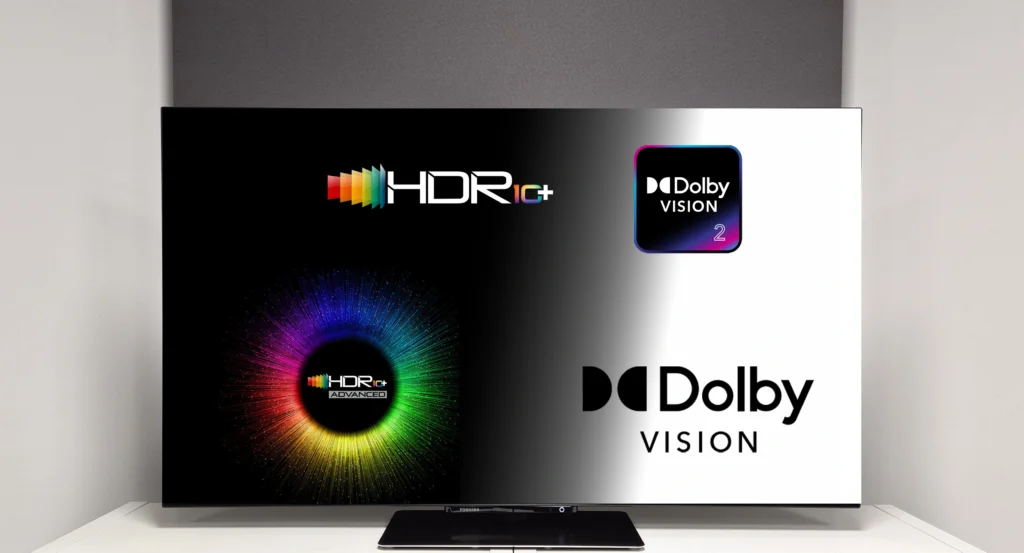
There are four HDR formats you will actually meet. HDR10 is the universal baseline and uses static metadata, so the picture instructions are set once for a whole film. HDR10+ and Dolby Vision add dynamic metadata that changes scene by scene. HLG is built for live broadcast and carries no metadata at all. Dolby Vision has the widest content support, but your TV’s brightness and tone mapping matter far more than which badge is printed on the box.
Open the specification page of almost any 2026 television and you get handed a list that runs something like this: HDR10, HDR10+, Dolby Vision, HLG, then some combination of Dolby Vision IQ, HDR10+ Adaptive, HDR10+ Gaming and, depending on the brand, Dolby Vision 2 or HDR10+ Advanced. Eight names, all capitalised, all apparently urgent.
I have lost count of the number of people who have asked me which of those they genuinely need, and the honest answer is that the list is far less dramatic than it looks, because nearly every format on it is built on the same foundation, being the PQ transfer curve, a wide colour container and at least 10 bits of precision per channel, and differs only in the instructions layered on top.
Those instructions do matter. They matter a good deal less than the panel underneath them, which is the part of this that almost nobody tells you.
The timing is worth noting. Both of this year’s new formats reached actual living rooms in the same week, after eleven months of announcements: HDR10+ Advanced went live on Prime Video on 4 August 2026, and Dolby Vision 2 arrived on Hisense televisions on 6 August. Forty-eight hours apart, after almost a year of nothing at all, which I struggle to believe was a coincidence.
HDR formats compared
| Format | Metadata | Bit depth | Licensing | Where you meet it |
|---|---|---|---|---|
| HDR10 | Static | 10-bit | Open, free | Every HDR TV, every 4K disc, every service |
| HDR10+ | Dynamic | 10-bit | Royalty-free | Prime Video, Netflix, Apple TV+, some discs |
| Dolby Vision | Dynamic | Up to 12-bit | Licensed | Netflix, Disney+, Apple TV+, Max, most discs |
| HLG | None | 10-bit | Open, free | BBC iPlayer, NHK, HDR on YouTube |
| HDR10+ Advanced | Dynamic, extended | 10-bit | Royalty-free | Prime Video, Samsung 2026 TVs |
| Dolby Vision 2 | Dynamic, extended | Up to 12-bit | Licensed | Hisense 2026 TVs, all existing Dolby Vision content |
What is HDR, actually?
High dynamic range widens the gap between the darkest and brightest parts of an image and widens the range of colour in between, which sounds obvious until you remember that standard dynamic range was designed around the physical limits of cathode ray tubes and has been quietly constraining what films look like at home ever since.

Three things make HDR work: the PQ curve, which maps a signal value to an absolute brightness level rather than a relative one, a wider colour container, and enough bit depth that gradients don’t band.
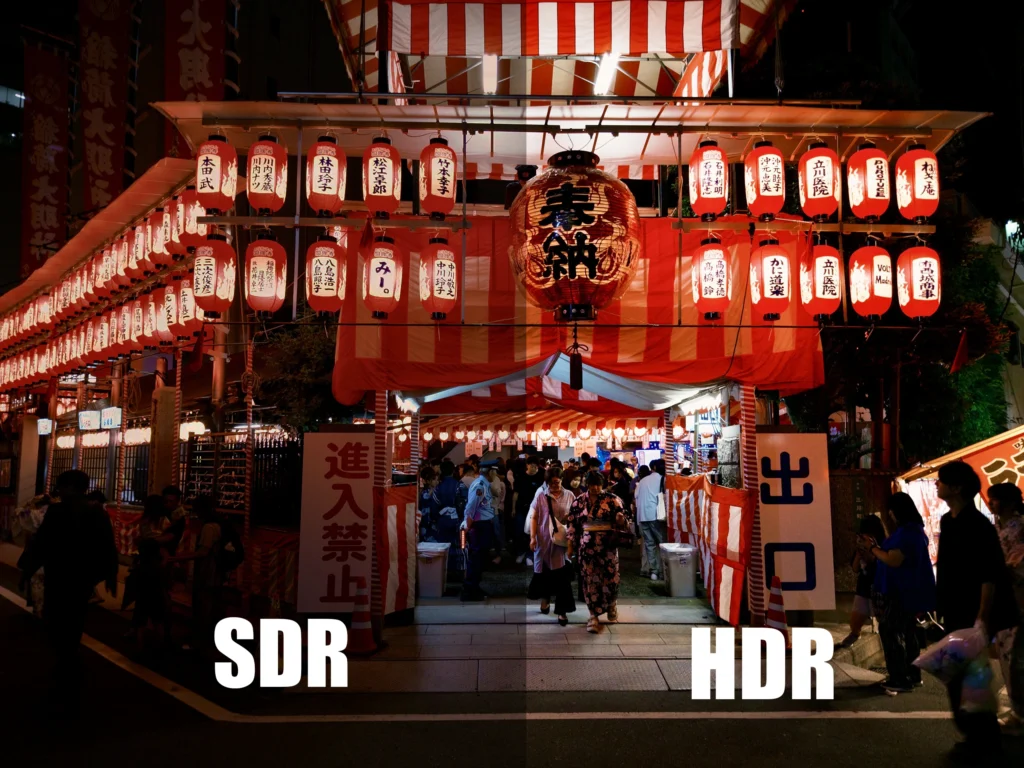
To my eye the jump from SDR to HDR is a bigger visible upgrade than the jump from 1080p to 4K, and it isn’t especially close. But it only holds if the TV is bright enough to do something with the signal. Below roughly 400 nits, HDR content is barely distinguishable from SDR whatever the sticker on the bezel says.
Static vs dynamic metadata: the one thing worth understanding
Every argument about HDR formats comes down to this distinction, so it is worth getting straight before any of the brand names mean anything.
Static metadata sends one set of instructions covering an entire film. If that film contains a candlelit interior and a sunlit desert, and most decent films contain both, the television receives a single tone-mapping brief that has to serve the two of them, which works acceptably on a very bright, very capable display and compromises one of those scenes on everything else.
Dynamic metadata updates the instructions scene by scene, sometimes frame by frame. The candlelit interior gets its own brief. The desert gets another.
And here is the bit that gets left out of most explainers: dynamic metadata helps most on the televisions that need help most. A set capable of 3,000 nits has enough headroom to render nearly anything sensibly without detailed guidance, whereas a 700-nit set does not, and dynamic metadata is largely what stops it flattening every highlight into a sheet of undifferentiated white.
HDR10: the baseline
HDR10 is an open, royalty-free standard using static metadata and 10-bit colour, and it is genuinely universal, since every HDR television decodes it, every 4K Blu-ray carries it, every streaming service delivers it.
It is also the fallback, which is why a Samsung TV playing a Dolby Vision title on Netflix still produces a perfectly respectable HDR picture rather than throwing up an error.
HDR10 is not a bad format, and I think it gets unfairly dismissed by people who have read the specification sheets and not much else. It’s a floor, and a reasonably high one.
HDR10+: dynamic metadata without the licence fee
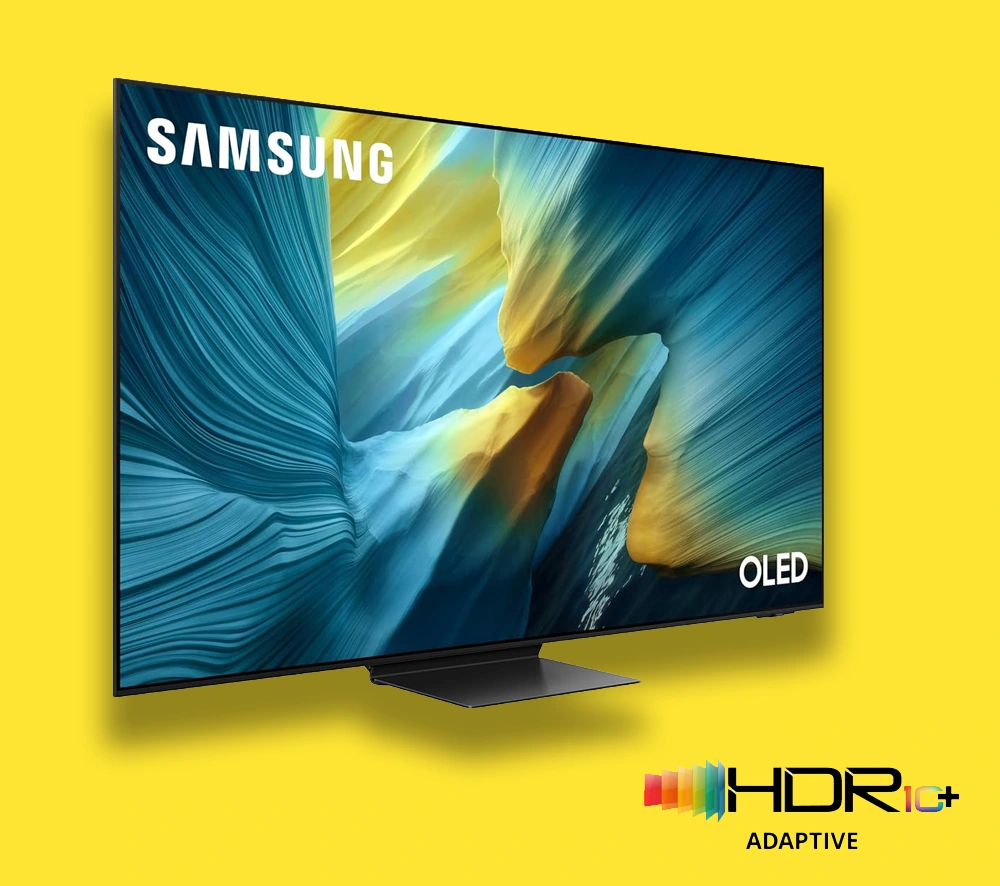
HDR10+ launched in 2017, backed by Samsung, Panasonic and 20th Century Fox, as an open alternative to Dolby Vision that adds dynamic metadata on top of the HDR10 base while staying royalty-free (which is, in commercial terms, the entire point of it).
HDR10+ Technologies now counts 183 adopter companies and more than 22,000 certified products.
Its practical brightness ceiling sits around 4,000 nits, which lines up with what the best current televisions can actually do rather than with a theoretical future. I find that the more useful number of the two, though, because a specification written for hardware nobody sells tells you very little about tonight’s film.
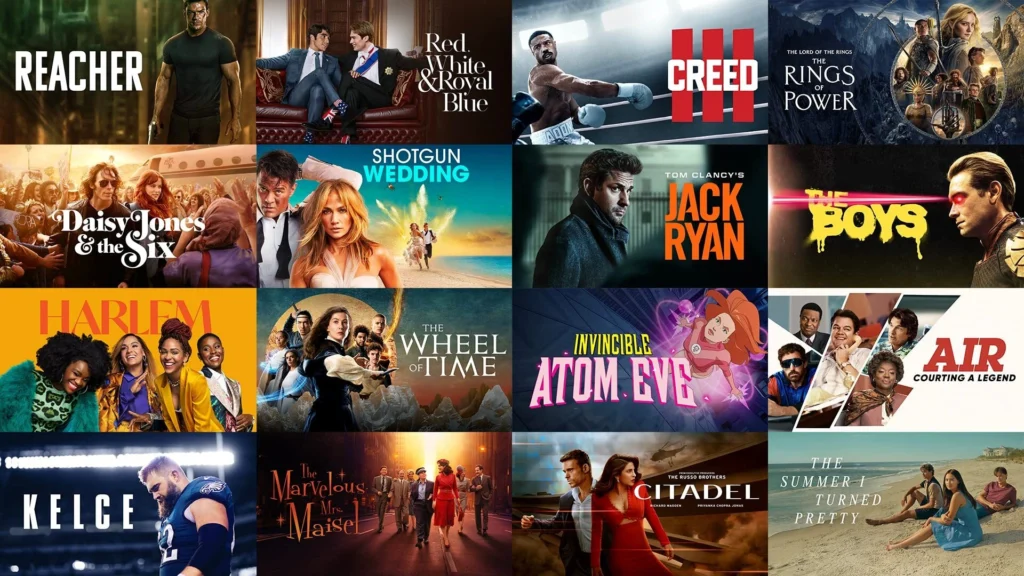
And content availability, once its obvious weakness, increasingly isn’t. Prime Video has carried HDR10+ from the start, Netflix added it in March 2025 for Premium subscribers through the AV1 codec with the stated aim of covering its full HDR catalogue, Apple TV+ supports it on the third-generation Apple TV 4K, and Disney announced support at CES 2025.
But Netflix still accepts only Dolby Vision masters from studios and downconverts them to HDR10+, HDR10 and SDR, which means the HDR10+ stream you are watching is a derivative of a Dolby Vision grade rather than something a colourist signed off in its own right. Worth knowing before you treat the two as equals, in my book.
Dolby Vision: the premium option
Dolby Vision uses dynamic metadata, supports up to 12-bit colour and was specified against a 10,000-nit ceiling that no consumer television has come remotely close to more than a decade later. Which sounds like overreach until you realise that headroom is exactly why a format written in 2014 has aged as well as it has.

But the trade-off is licensing. Manufacturers pay Dolby, and that single fact explains why Samsung, the biggest television brand in the world, has never supported Dolby Vision on a single set and shows no sign of starting.
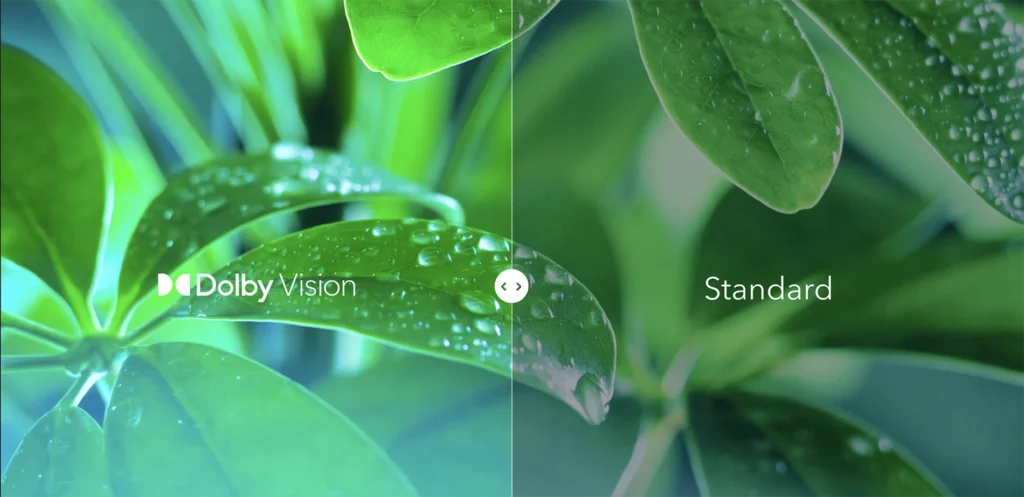
Content support is the widest of any dynamic format: Netflix, Disney+, Apple TV+, Max and the great majority of 4K Blu-ray releases. Disney has now moved its 4K discs to Dolby Vision after years of releasing them in HDR10 only, which HDTVTest has linked to Sony taking over Disney’s physical media production.
HLG: the one you use without knowing
Hybrid Log-Gamma was developed jointly by the BBC and Japan’s NHK for live broadcast, and it solves a problem the other three never had to: how do you send one HDR feed to millions of televisions of wildly different age and capability without breaking the picture on the old ones?

The answer was to carry no metadata whatsoever and design a curve that degrades gracefully to something watchable on an SDR set. Elegant, and completely invisible to the people using it. You meet HLG on BBC iPlayer, on NHK and on HDR-tagged YouTube, almost certainly without noticing.
It can’t do much about black levels, so it’s the weakest of the four on shadow detail. For live sport, which is what I mostly use it for, that has never been the point.
What about Dolby Vision IQ and HDR10+ Adaptive?
Neither is a separate format, whatever the spec sheet implies. Both take the dynamic metadata that is already there and factor in a reading from the television’s ambient light sensor, adjusting the picture for a bright room rather than leaving you to wind the brightness slider up and ruin the grade yourself.
Dolby Vision Gaming and HDR10+ Gaming aren’t new formats either. They’re low-latency implementations for consoles and PCs, generally at 4K120.
Dolby Vision 2 and HDR10+ Advanced: The 2026 formats
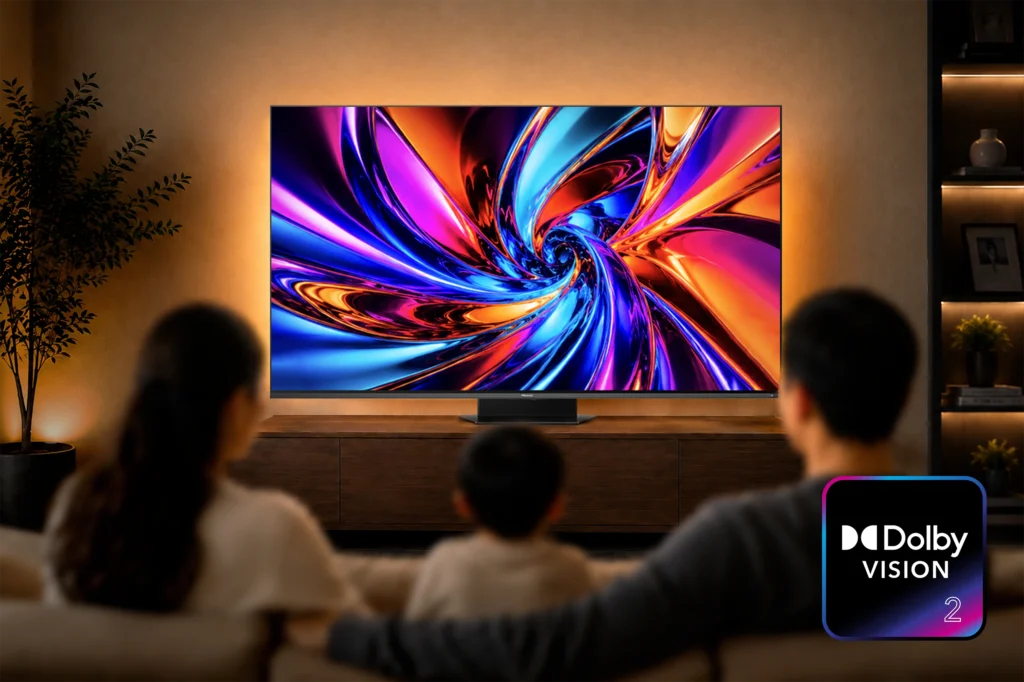
Both push past HDR into general picture enhancement, and both arrived with a great deal of noise attached.
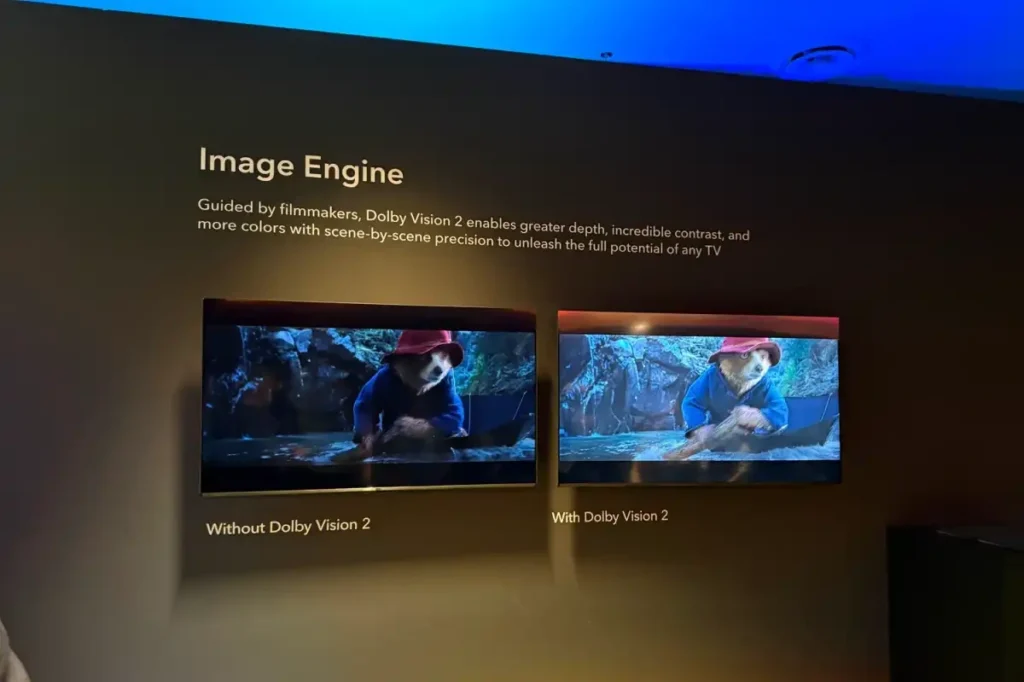
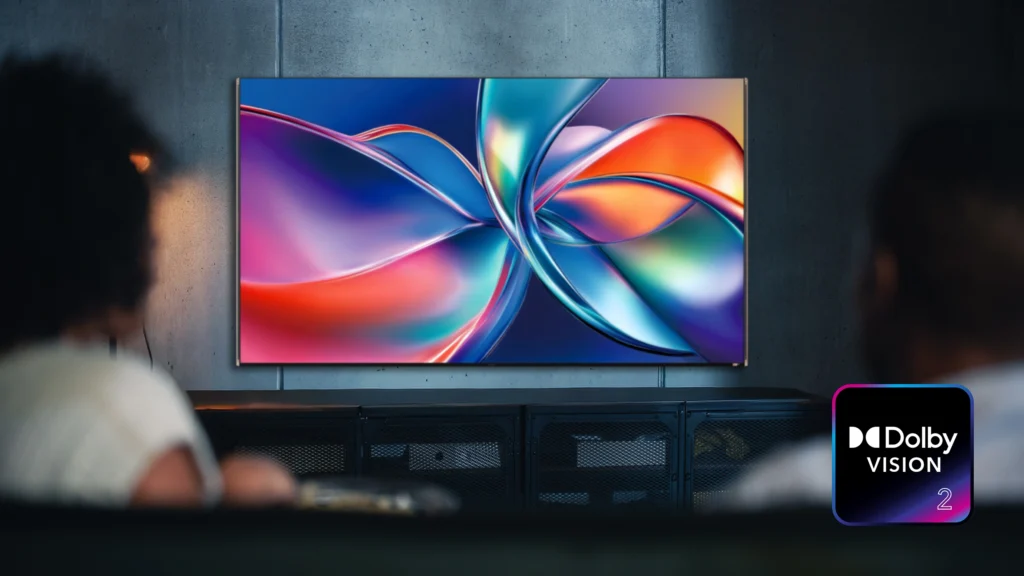
Dolby Vision 2 is built on a new image engine Dolby calls ‘Content Intelligence‘, adding Precision Black (aimed squarely at the long-running complaint that Dolby Vision renders dark scenes too dark), Light Sense 2 ambient adaptation, and bi-directional tone mapping so that brighter televisions can use their full capability without drifting away from the grade.
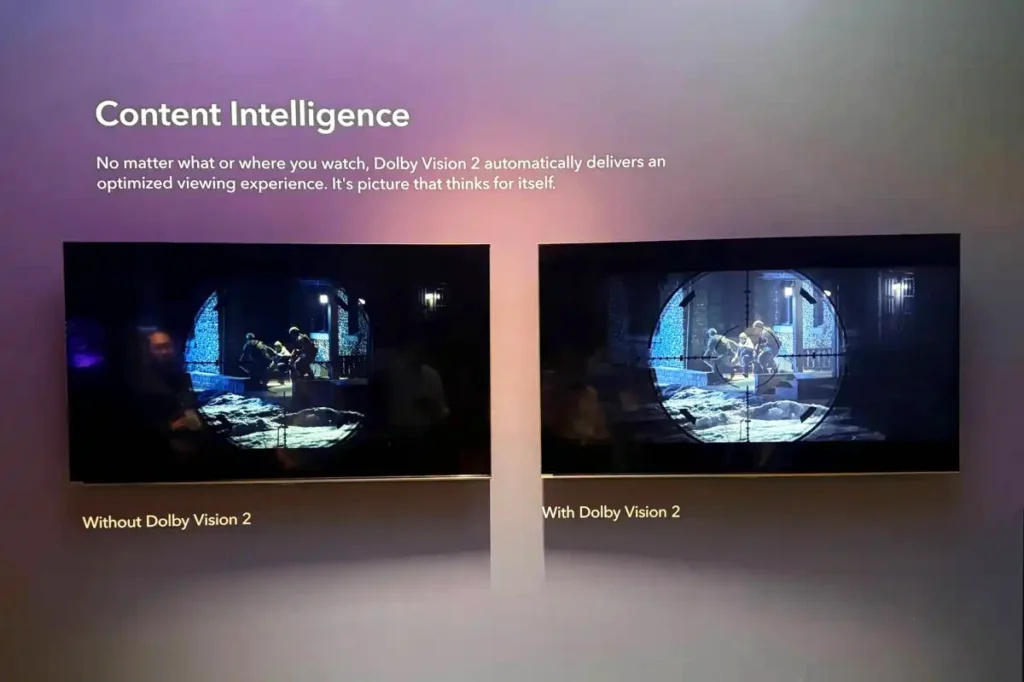
A higher tier, Dolby Vision 2 Max, adds ‘Authentic Motion’, meaning shot-by-shot judder control specified by the creator rather than left to whatever motion preset your TV happens to be sitting in. I had assumed Max would be held back for flagship sets. In the event, all four Hisense series receiving the update support it, including the mainstream U7.
HDR10+ Advanced answers with Enhanced Overall Brightness, AI-assisted local tone mapping, genre-based optimisation and Intelligent Motion Smoothing, which varies motion processing scene by scene. It stays royalty-free.
The meaningful gap between them isn’t the specification. It’s what each one gives you on the day it installs.
HDR10+ Advanced runs on Samsung’s 2026 sets and takes its content from Prime Video, where the announcement says select titles. Dolby Vision 2 landed on Hisense’s 2026 UX, UR9, UR8 and U7 series, across both Google TV and VIDAA, and it reprocesses Dolby Vision material you already own, which given the size of that catalogue is a substantial library on day one. TCL and Philips have both committed for later in the year, and CANAL+, iQIYI and Peacock have committed content built around the new capabilities.
One clarification worth making, because it went round the internet wrongly on launch day. Content Intelligence does not use AI, and Dolby confirmed it relies solely on metadata. HDR10+ Advanced, by contrast, describes its tone mapping as AI-assisted and infers genre from what it can see. One format follows instructions that travelled with the film, and the other makes an educated guess about what the film needs. Both can produce a better picture, but for a technology whose entire pitch rests on creative intent, I think the distinction matters.
LG has declined Dolby Vision 2 across its entire 2026 range, which for the brand most closely associated with Dolby Vision is genuinely surprising. Samsung, as ever, supports no version of Dolby Vision at all.
Which TV brands support which HDR formats?
| Brand | HDR10 | HLG | HDR10+ | Dolby Vision |
|---|---|---|---|---|
| Samsung | Yes | Yes | Yes, plus Advanced | No |
| LG | Yes | Yes | No | Yes, not DV2 in 2026 |
| Sony | Yes | Yes | No | Yes |
| Panasonic | Yes | Yes | Yes | Yes |
| Philips | Yes | Yes | Yes | Yes, DV2 late 2026 |
| TCL | Yes | Yes | Yes | Yes, DV2 Q4 2026 |
| Hisense | Yes | Yes | Yes | Yes, DV2 live now |
TCL and Hisense are the two brands that refuse to take sides, and if leaving nothing on the table is what you care about, that’s where I’d look first.
Which streaming services use which formats?
- Netflix: Dolby Vision on Premium, plus HDR10+ via AV1
- Prime Video: HDR10+, HDR10+ Advanced and Dolby Vision
- Apple TV+: Dolby Vision, plus HDR10+ on Apple TV 4K third generation
- Disney+: Dolby Vision, with HDR10+ announced
- Max: Dolby Vision where the master supports it
- Peacock, CANAL+ and iQIYI committed to Dolby Vision 2 content
- BBC iPlayer and YouTube: HLG
On 4K Blu-ray, HDR10 is mandatory and always present, with Dolby Vision or HDR10+ layered on top and a small number of discs carrying both.
Does the HDR format actually matter?
Less than the specification sheet wants you to believe.
A 700-nit television receiving a beautifully graded Dolby Vision stream will still hand you a dimmer, flatter, less convincing image than a 2,500-nit television receiving nothing more exotic than HDR10, because format support only tells you which instructions your set can read. Peak brightness, contrast control and the quality of the tone mapping, though, determine what it can actually do with them.
Of course, once you have narrowed things down to two similar televisions, format support is a perfectly sensible tie-breaker, and it does decide which streaming catalogue plays at its best. Buying Samsung means every Dolby Vision title on Netflix and Disney+ drops back to HDR10.
I just wouldn’t let a badge count stand in for picture quality. In my book that gets the order of importance exactly backwards.
FAQs
Dolby Vision, on technical specification and content support. In practice the difference between Dolby Vision and HDR10+ on the same television is small, and both pull away from HDR10 most clearly on mid-range sets.
Yes. Same foundation, but the dynamic metadata adjusts tone mapping scene by scene instead of once per title.
It’s convenient rather than necessary. TCL, Hisense and Panasonic support both, so nothing falls back to HDR10.
There is nothing left to wait for. It is live on Hisense 2026 sets and improves Dolby Vision content you already own, with TCL and Philips models due later in the year.
Live broadcast and YouTube. It carries no metadata and stays watchable on SDR televisions, which is precisely what makes it work for broadcasters.
The verdict
Eight names on the box, four formats that matter, one shared standard underneath, and two new arrivals that spent eleven months as press releases before turning up in the same week.
Buy the brightest, best-controlled television your money will stretch to, check that it reads the format your main streaming service uses, and stop worrying about the rest of the list.
The list on the box was never the picture.