
RGB Mini LED replaces the blue or white LEDs in a Mini LED backlight with separate red, green and blue emitters, cutting out the colour-conversion layer. The gain is mostly colour purity and volume, not brightness – the best standard Mini LED TVs already hit 5,000 nits or more. Right now RGB Mini LED costs roughly twice as much for a modest picture upgrade, so for most buyers a top-tier Mini LED set is still the better value.
Almost every explainer on this subject leads with brightness. That is the wrong place to start, and it is why so many people come away expecting a bigger difference than they get.
Here is the more useful framing: RGB Mini LED is a colour upgrade that happens to be marketed as a brightness upgrade.
RGB Mini LED vs Mini LED: the quick comparison
| Mini LED | RGB Mini LED | |
|---|---|---|
| Backlight | Blue or white LEDs plus a conversion layer | Independent red, green and blue LEDs |
| Colour volume | Very good | Wider, particularly at high brightness |
| Peak brightness | Up to ~5,000–6,500 nits on flagships | Up to ~5,000–8,000 nits on halo models |
| Blooming and black levels | Depends on zone count and processing | Broadly similar – same LCD limitation |
| Energy efficiency | Lower | Higher |
| Price, 65in | From around $630 | From around $2,000 |
| Maturity | Five-plus generations | First or second generation |
How a Mini LED TV works
A Mini LED TV is an LCD television with a backlight made of very small LEDs, divided into dimming zones that brighten and darken independently. Those LEDs emit blue or white light, which then passes through a quantum dot or phosphor layer that converts part of it into red and green.
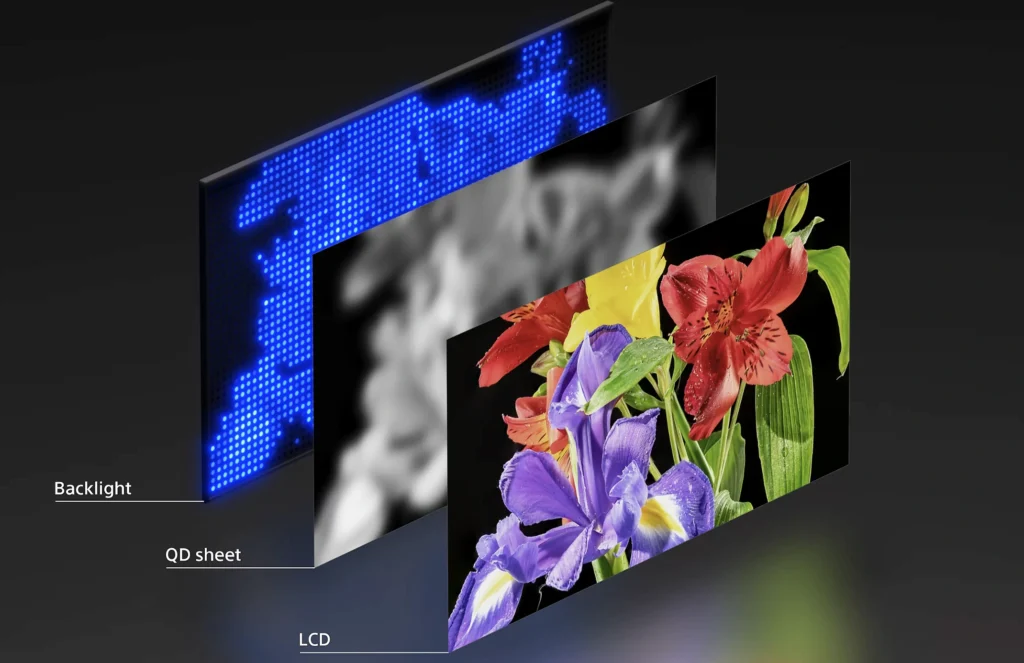
That conversion step is where light and colour purity get lost. It works, and it has worked well enough to power the best-value TVs of the past five years. But you are always producing one colour of light and then filtering it into three.
How RGB Mini LED changes it
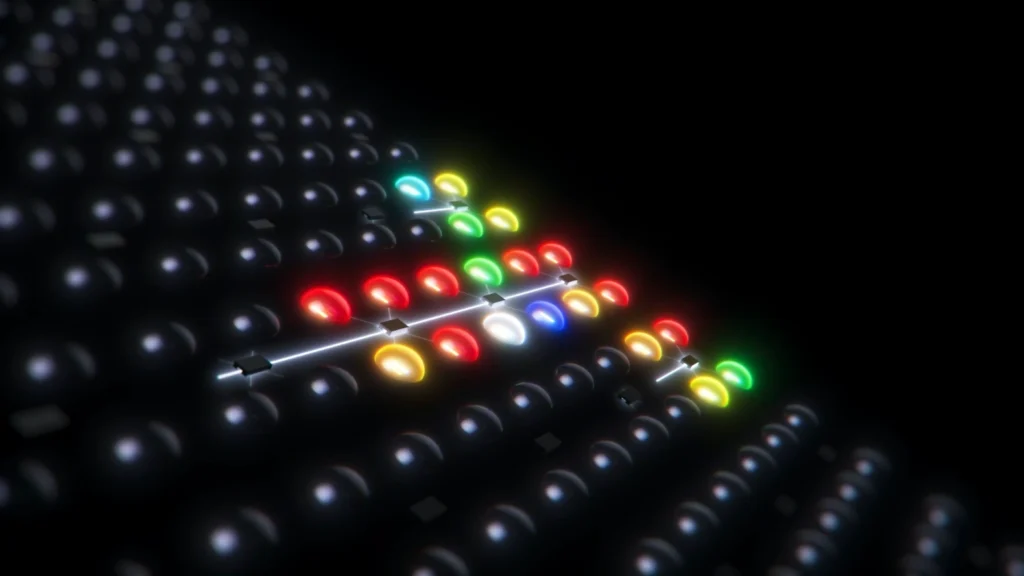
RGB Mini LED puts red, green and blue emitters directly in the backlight and controls each colour independently. No conversion layer, no filtering losses.
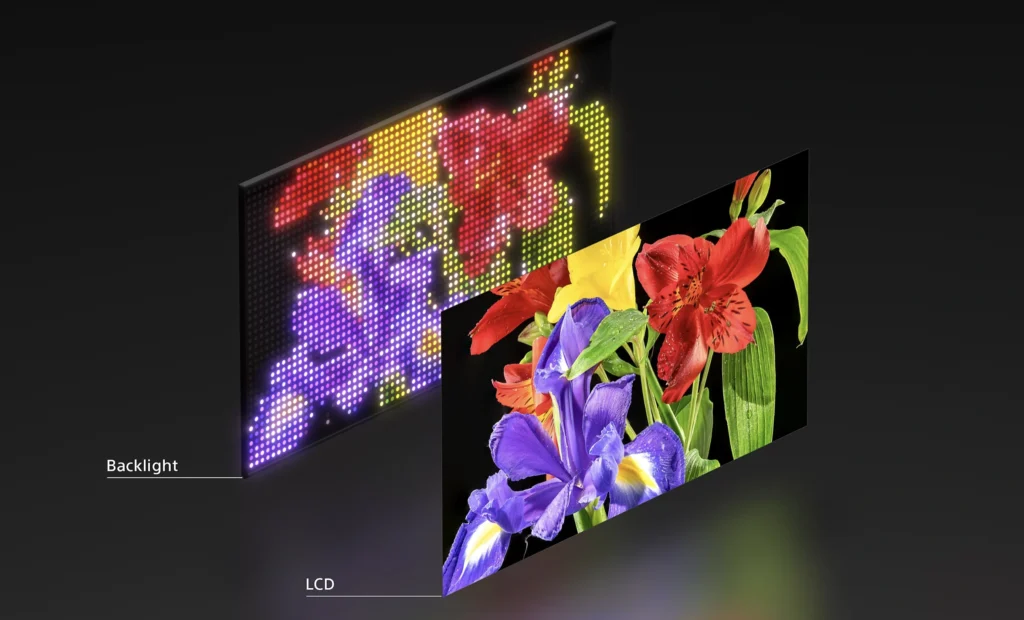
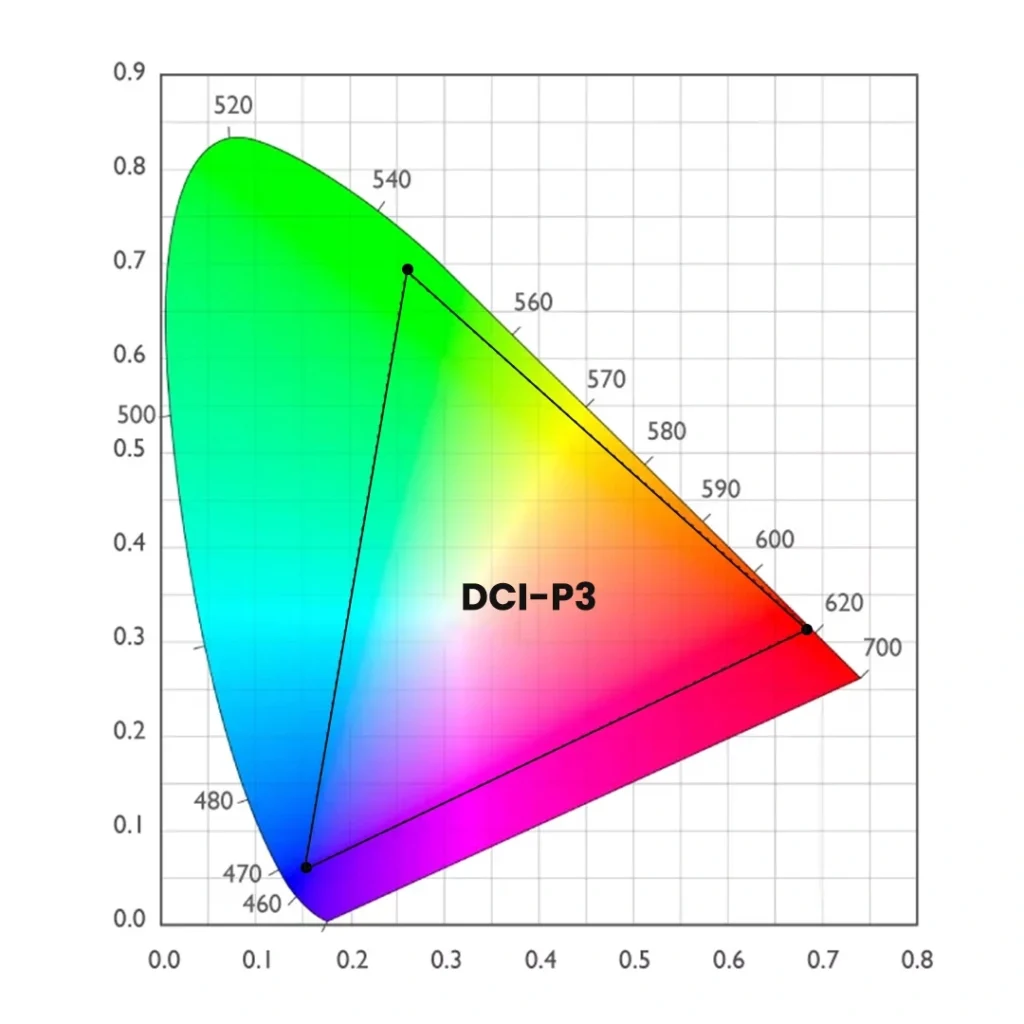
Three things follow. Colour gets purer, because red light starts as red rather than as converted blue. Coverage of the wide colour spaces used for HDR mastering – DCI-P3 and BT.2020 – improves, particularly in bright highlights where conventional backlights start to desaturate. And efficiency improves, because less light is thrown away on the way to your eyes.

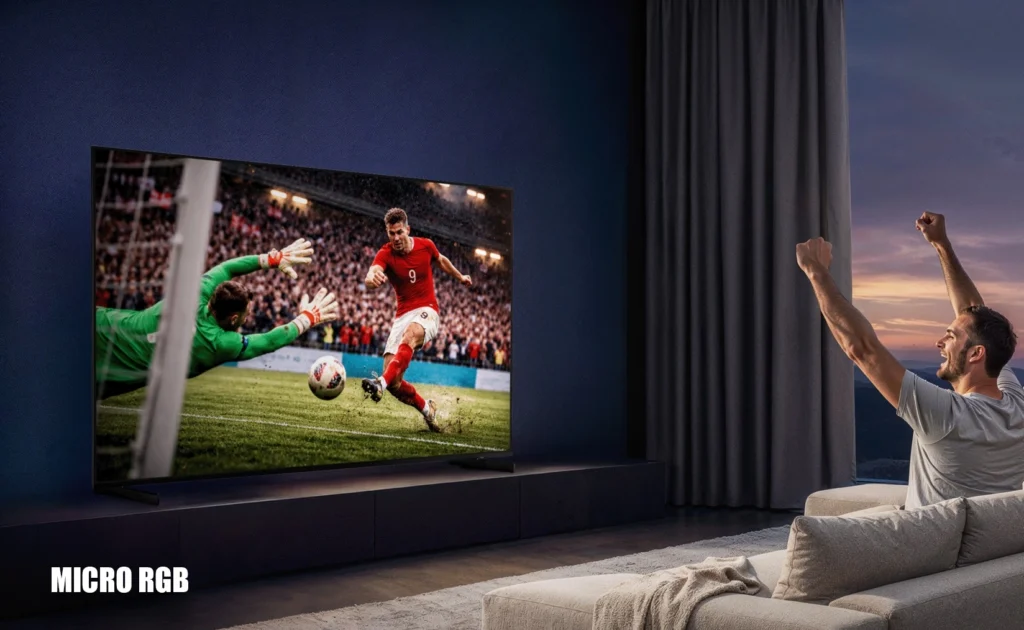
Samsung brands its version ‘Micro RGB‘, on the grounds that its diodes measure under 100 microns against the 100–400 microns typical of Mini LED. Sony calls its take ‘True RGB’. Hisense uses ‘RGB Mini LED TriChroma‘. The engineering underneath is the same idea.
Colour is the real upgrade
This is the honest headline. A good RGB Mini LED TV holds saturation in bright highlights better than a conventional Mini LED can – a sunset, a neon sign, a red dress under stage lighting. Skin tones tend to hold up better at high brightness too, because the set isn’t stretching a converted colour to its limit.
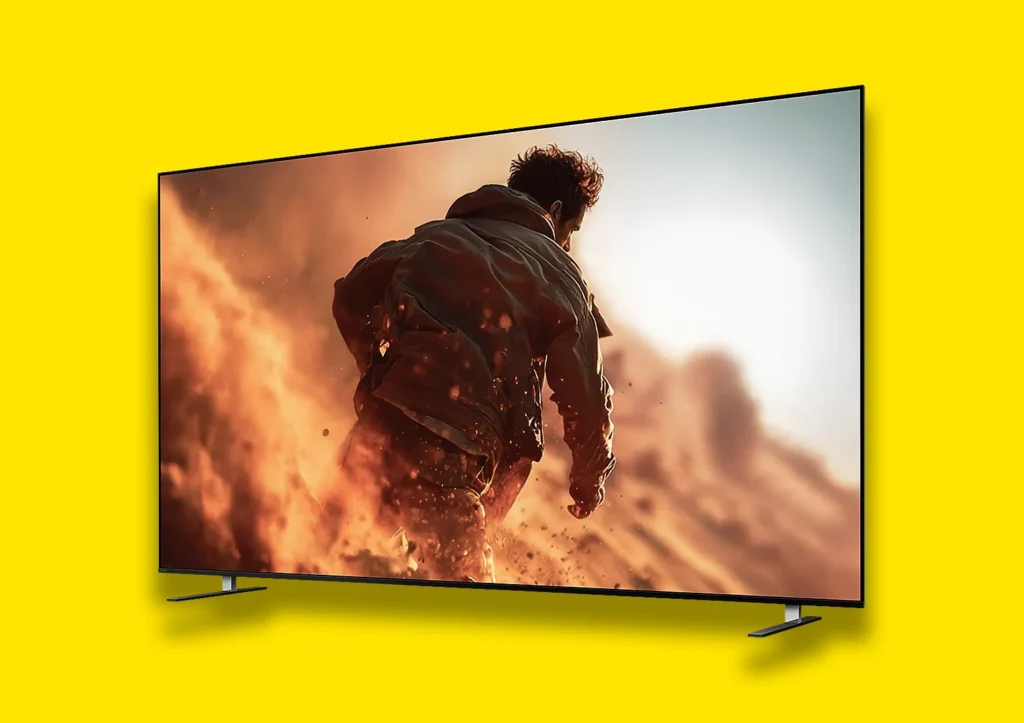
It is a real improvement. It is also a subtle one on most content, and you are most likely to notice it in a side-by-side comparison rather than sitting down alone with a film on a Tuesday night.
Brightness: a smaller gap than the marketing suggests
Here is where the story gets complicated for RGB Mini LED.
Standard Mini LED is already extremely bright. CNET measured the Hisense U8QG at around 5,000 nits, calling it the brightest TV that reviewer had tested at the time, and TCL has claimed up to 6,500 nits for its QM9K flagship. Hisense’s own U8 series has more than tripled in brightness across a few generations.
RGB Mini LED’s halo models go further – Hisense’s 116-inch 116UX has been measured above 5,000 nits by Tom’s Guide and reported as high as 8,000 – but those are $20,000-plus televisions in sizes most people cannot fit in a room.
At the sizes and prices where the two technologies actually overlap, the brightness difference is not the reason to upgrade. The colour is.
Blooming and black levels: barely different
Both are LCD televisions with a backlight behind them. Both divide that backlight into zones. Both bleed light into the dark areas next to bright objects, and both rely on local dimming algorithms and processing to hide it.
Changing the colour of the LEDs does nothing about the fundamental mismatch between a few thousand backlight zones and 8.3 million pixels. If blooming around subtitles and starfields is what bothers you, RGB Mini LED is not the fix – OLED is.
Which should you buy?
Buy a top-tier Mini LED if you want the most picture for your money right now. A well-reviewed flagship Mini LED set at half the price of an RGB model is the easier recommendation for almost everyone, and the technology is mature in a way first-generation RGB simply isn’t yet.
Buy RGB Mini LED if you are already shopping at the top of the market, you watch a lot of HDR content, and colour accuracy in bright highlights genuinely matters to you. Also buy it if you want a screen above 100 inches, where the RGB models are increasingly where the flagship engineering goes.
Buy neither if you watch films at night in a room you can darken. That is OLED territory, and no backlight of any colour changes it.
Whichever you pick, budget for a soundbar. Panel technology has come a long way. Built-in TV speakers have not.
FAQs
Yes, but mainly on colour purity, colour volume and efficiency rather than brightness. Contrast and blooming behaviour are broadly similar because both are LCD panels with backlights.
For most buyers in 2026, no. The premium is currently around double the price of a strong Mini LED set for an improvement that is real but incremental.
Effectively, yes. Samsung uses ‘Micro RGB’ to signal smaller diodes. The principle – independently controlled red, green and blue backlight elements – is identical.
No. Both Mini LED and RGB Mini LED are LCD technologies, so static content carries no permanent risk.
It already is. Entry prices have fallen sharply within a single model year, and the 2027 generation should compress them further.
The verdict
RGB Mini LED is a genuine engineering improvement, and the direction of travel for premium LCD is clearly through it rather than around it. Cleaner colour, better efficiency, more headroom for HDR.
But it is a first-generation technology sold at a second-mortgage premium over Mini LED sets that already do most of what it does. The upgrade is real. The price gap is bigger than the upgrade.
Give it a year.