
Dolby Vision 2 replaces the original format’s tone-mapping engine with a system Dolby calls Content Intelligence, adding Precision Black for dark scenes, Light Sense 2 for ambient adaptation, bi-directional tone mapping and an intensity slider. The Max tier adds creator-controlled Authentic Motion. It went live on select Hisense 2026 televisions on 6 August 2026 by firmware update, and it improves existing Dolby Vision content immediately rather than waiting for anything new to be made.
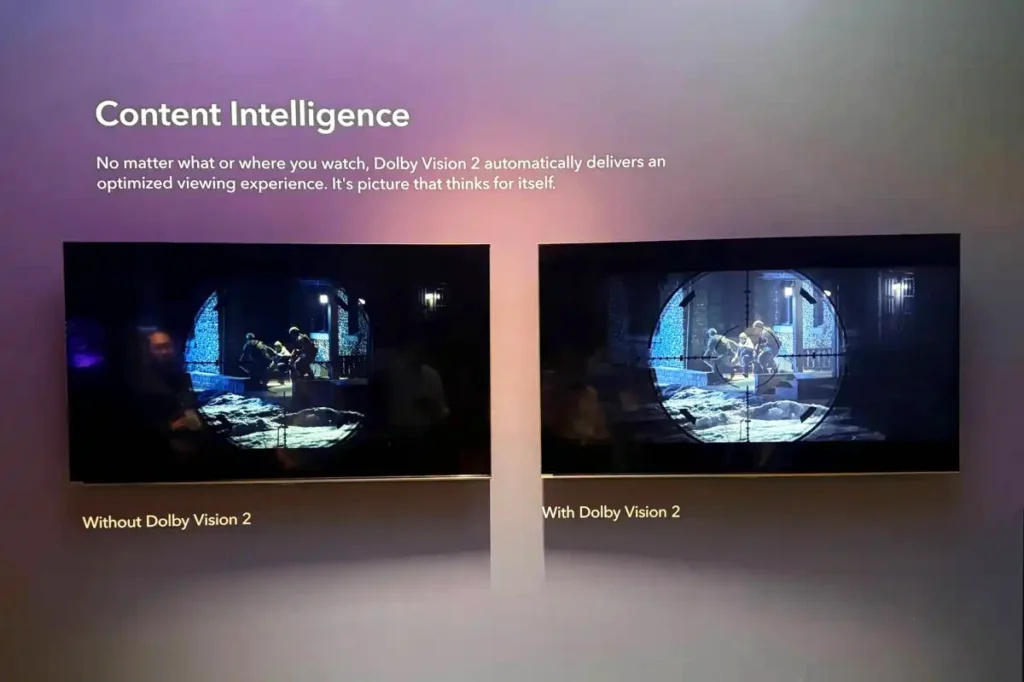
For eleven months Dolby Vision 2 was a specification with a launch date that kept moving. On 6 August 2026 that changed, when Dolby and Hisense confirmed the format was live on shipping hardware, making those sets the first consumer televisions anywhere to run it.
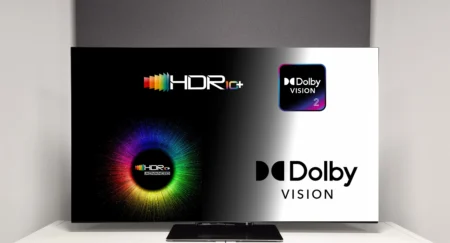
The timing is remarkable, and I doubt it was accidental. Samsung and Prime Video had switched on HDR10+ Advanced, the rival next-generation format, exactly two days earlier. Both technologies spent the year being demonstrated behind closed doors, and both reached living rooms inside the same week.
What makes the Dolby launch more interesting than the specification suggested is that it does something for content that already exists.
Dolby Vision vs Dolby Vision 2 at a glance
| Dolby Vision | Dolby Vision 2 | |
|---|---|---|
| Launched | 2014 | 6 August 2026 |
| Engine | Dynamic metadata, scene or frame level | Content Intelligence |
| Dark scenes | Frequently criticised as too dark | Precision Black |
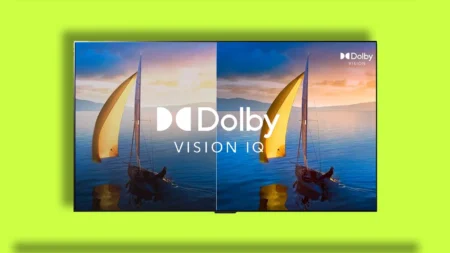
| Ambient adaptation | Dolby Vision IQ, sensor-based | Light Sense 2 |
| Motion | Not addressed | Authentic Motion, Max tier |
| User control | Picture presets only | Intensity slider |
| TV brands | Everyone except Samsung | Hisense, with TCL and Philips to follow |
| Works with existing content | – | Yes, immediately |
What is Dolby Vision?

Dolby Vision has been the premium dynamic HDR format since 2014, carrying metadata that updates scene by scene or frame by frame, supporting up to 12-bit colour, and specified against a 10,000-nit ceiling that no consumer television has approached in the decade since.
It appears on every major brand except Samsung, carries the great majority of 4K Blu-ray releases, and is the default dynamic format on Netflix, Disney+, Apple TV+ and Max, which together makes it about as entrenched as a licensed standard can reasonably get.
Its most persistent criticism, and the one Dolby has clearly been listening to, is that Dolby Vision content can render dark scenes darker than viewers want, particularly in rooms with any ambient light in them.
What is Dolby Vision 2?
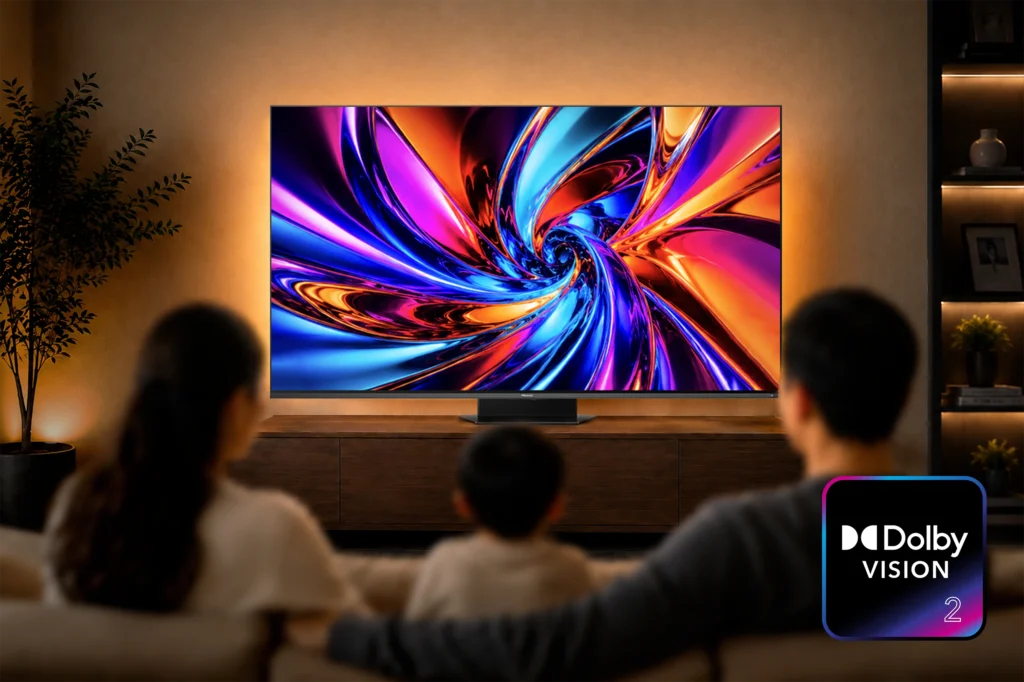
Dolby Vision 2 is built on a redesigned image engine called ‘Content Intelligence‘, which combines the existing metadata with information about the display’s capabilities and the conditions in the room.
Precision Black addresses that dark-scenes complaint directly, which is the change most existing Dolby Vision owners will notice first. Light Sense 2 handles ambient adaptation, working continuously rather than reacting to a single sensor reading. Bi-directional tone mapping lets very bright televisions use their full capability without drifting away from the grade, which matters far more now than it did in 2014, when nothing on sale could get near the ceiling anyway. An intensity slider gives you some control over how much of all this you actually want.
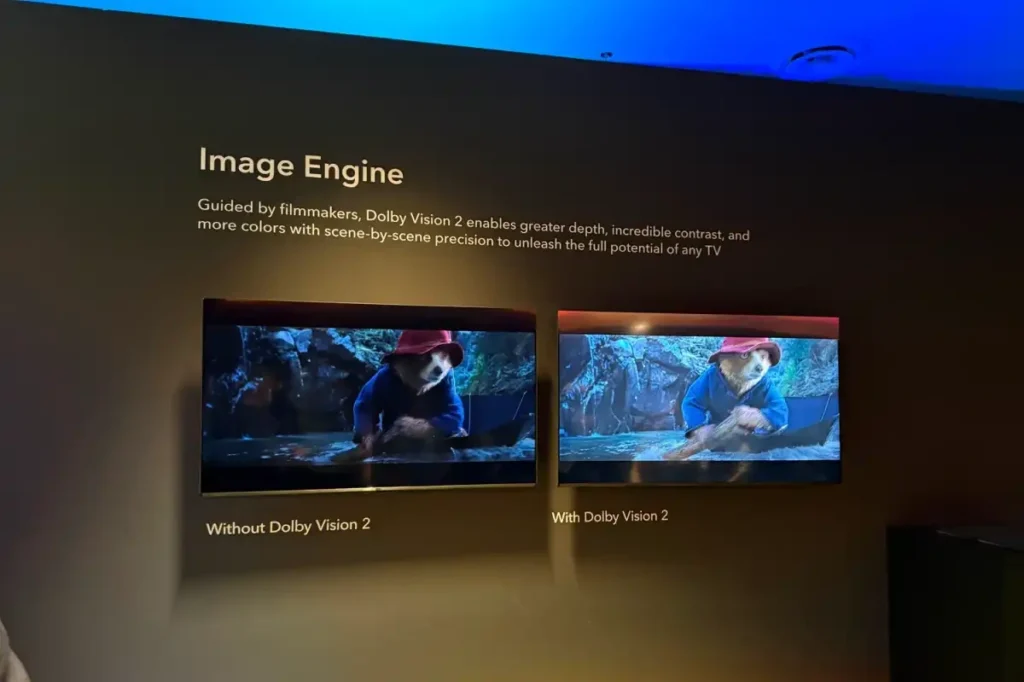
One clarification worth making, because it went round the internet wrongly on launch day. Content Intelligence does not use AI. Engadget ran a correction the same afternoon after Dolby confirmed the system relies solely on metadata for its optimisation, which is a meaningful distinction, because this is instruction-following rather than a set inferring what it thinks you should be seeing.
Which TVs have Dolby Vision 2 right now?
Hisense, and for the moment only Hisense.
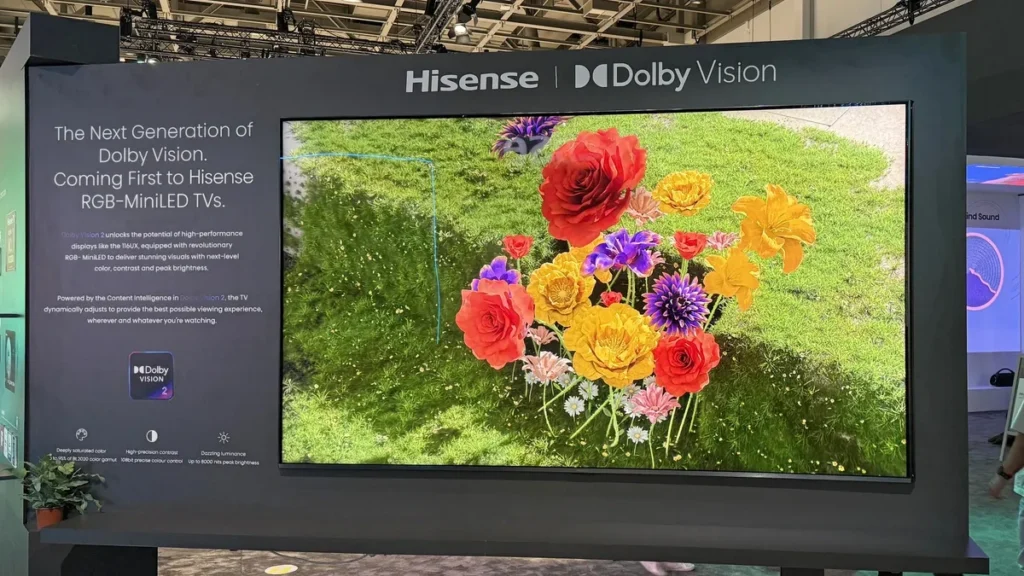
The rollout covers the 2026 UX, UR9, UR8 and U7 series, sold as the U7 Pro in Europe, the Middle East, Africa and Central and South America. It works across both operating systems Hisense uses, so a Google TV set and a VIDAA set both get it, and the update is reaching buyers across North America, Europe and Asia-Pacific with more models due in the coming weeks.
That the U7 is included matters rather more than the flagship UX does, because this is not a format arriving on a single halo television at the top of a range. It has landed on a genuinely mainstream set in its first week.
And TCL and Philips have both committed. TCL confirmed its X QD-Mini LED series and 2026 C-series, while Philips is bringing it to the OLED811, OLED911 and flagship OLED951, with reporting from FlatpanelsHD earlier in the year pointing to Q4 for both.
Dolby Vision 2 vs Dolby Vision 2 Max
There are two tiers, and the split is less restrictive than the announcement implied.
Standard Dolby Vision 2 covers the new image engine, Content Intelligence and the intensity slider. Dolby Vision 2 Max adds Authentic Motion, Light Sense 2 and a set of pro-level picture controls.
I had assumed Max would be held back for flagship televisions, though. In the event, all four Hisense series receiving the update support it, including the U7 – so the more capable tier is not being held back for the most expensive sets, at least not by Hisense.
What changes when the update lands?
This is the genuinely unusual part, and it is what separates this launch from most format launches.
Dolby Vision 2 reprocesses Dolby Vision content that already exists, which means every film, series, game and live broadcast already mastered in the original format gets the new engine applied the moment the firmware installs, with no new discs, no new subscriptions and nothing whatsoever to wait for.
Compare that with how these things normally go: a new format arrives, the hardware supports it, and then everybody waits eighteen months for anything to actually watch. Here the improvement is retroactive, which I cannot remember another display format managing.
The larger gains, meaning content graded natively for Dolby Vision 2 rather than converted from an existing master, are still some way off. TCL Europe’s Marek Maciejewski explained at a launch event in Warsaw that the first phase involves converting existing Dolby Vision titles, with native grading arriving only once production workflows and tools mature. That is realistically a 2027 story.

Is Authentic Motion what people expected?
Not quite, and this is the part of the announcement I found genuinely deflating (which is not a word I use about Dolby very often).
The obvious way to deal with 24fps judder is to increase the frame rate, and plenty of people, myself included, read the early descriptions as pointing that way. What was actually described works within the traditional 24fps limit, applying creator-specified metadata to guide how judder is handled rather than adding frames to smooth it.
That is not nothing. Guided judder control is meaningfully better than a television guessing at it, and Dolby’s framing, which is about reducing judder without the look people associate with aggressive frame interpolation, is a real answer to the soap opera effect problem. On paper, it still doesn’t sound quite like the technological step change I was hoping for.
Can your current TV get Dolby Vision 2?
Only if it is a 2026 model with the right silicon inside it, which rules out a great many televisions.
Dolby Vision 2 depends on newer chipsets, with MediaTek’s Pentonic 800 and its MiraVision Pro engine among the first to integrate it. That is why Hisense’s 2026 range received a firmware update while every Dolby Vision television sold between 2014 and 2025 did not, and will not.
So the format arrives by software, but only onto hardware built to receive it. If you own an older Dolby Vision set, there is no update coming, however many times you go looking for one in the settings menu.
What content supports Dolby Vision 2?
All of it, in the sense that matters most immediately, since the engine improves everything already mastered in Dolby Vision.

For content built specifically around the new capabilities, CANAL+, iQIYI and Peacock have committed. But no movie studio has yet confirmed native Dolby Vision 2 mastering, which for a format built around creative intent remains a conspicuous absence (and the one thing I would still like a straight answer on).
Which brands are sitting this out?
Two large ones, and their absence shapes the whole picture.
LG has declined Dolby Vision 2 across its entire 2026 lineup, which for the brand most associated with OLED and with Dolby Vision support is a genuinely surprising position. Samsung has never supported any version of Dolby Vision and backs the royalty-free HDR10+ Advanced instead.
Of course, both companies can reverse course for 2027, and I would expect at least one of them to. For now, though, buying into next-generation HDR means choosing which ecosystem you want, since no 2026 television supports both formats.
Should you buy a TV for Dolby Vision 2?

Not on its own, no. But the calculation has shifted considerably since last week.
Before the rollout, this was a specification with a slipping date and nothing to watch. Now it is a working feature that improves your existing Dolby Vision library from the day it installs, which is a far more concrete proposition.
If you were already considering a Hisense UX, UR9, UR8 or U7, this is a real bonus rather than a promise. If you are choosing between brands purely on format support, I would still buy on the picture the panel produces today and treat the format layer as a tie-breaker. That has been true of every HDR format so far and this one does not change it.
FAQs
Yes. The new engine improves tone mapping, black levels in dark scenes and ambient adaptation, and it applies to Dolby Vision content you already own.
Hisense 2026 UX, UR9, UR8 and U7 (U7 Pro in some regions), on Google TV and VIDAA. TCL and Philips models are due to follow.
Only on televisions with a compatible chipset. Sets sold before 2026 cannot receive it.
No. The engine reprocesses existing Dolby Vision material immediately. Natively graded content should follow in 2027.
No. Dolby confirmed on launch day that Content Intelligence relies solely on metadata.
The verdict
For most of 2026, Dolby Vision 2 looked like a format that had been announced too early, with three committed manufacturers, no shipping hardware and a date that kept drifting.
It is here now, on real televisions in real living rooms, and it does something that format launches almost never manage: it makes the films you already own look better on the day it arrives. That is worth more than a specification sheet full of features nobody has anything to watch on.
One brand down, and the rest of the industry to convince.