

Dolby Vision IQ is a feature on your television that combines Dolby Vision’s existing dynamic metadata with a reading from the set’s ambient light sensor, adjusting the picture for the brightness of your room. The content is identical either way. All Dolby Vision material works with it, and whether you leave it switched on depends mostly on how much light is in the room.
Dolby Vision IQ is a setting – it is not a format, it does not require its own content, and no film has ever been mastered in it. Understanding that removes most of the confusion in a single sentence, which is more than can be said for the rest of the HDR landscape.
Dolby Vision vs Dolby Vision IQ at a glance
| Dolby Vision | Dolby Vision IQ | |
|---|---|---|
| What it is | An HDR format | A picture feature on the TV |
| Content needed | Dolby Vision masters | None, works with all Dolby Vision content |
| Uses metadata | Yes | Yes, the same metadata |
| Uses a light sensor | No | Yes |
| Introduced | 2014 | Early 2020 |
| Availability | Every brand except Samsung | A smaller subset of those TVs |
Is Dolby Vision IQ a different format?
No, and this is the whole point.
Dolby Vision IQ arrived in early 2020, appearing first on LG and Panasonic televisions, and it changes nothing about how content is made or delivered. Every Dolby Vision film and series already works with it. There is no Dolby Vision IQ catalogue to go looking for, no compatible titles list, and nothing to check on a Blu-ray case.
What changes is the playback. The television takes the dynamic metadata it was already receiving, adds a reading of how much light is in the room you are sitting in, and adjusts its tone-mapping decisions accordingly.
How does Dolby Vision IQ actually work?
Your television’s light sensor measures the ambient brightness of the room. Dolby Vision IQ feeds that measurement into the tone-mapping decisions the set is already making from the content’s metadata, so a scene graded for a darkened grading suite gets rendered differently at two in the afternoon than it does at eleven at night.
And it can also adjust the white point of the picture, applying some content-type awareness on top – Dolby’s own documentation describes different handling for different categories of material, including a mode intended to compensate for the shortcomings of consumer camera footage.

The stated aim is preservation rather than correction: keep the creative intent intact while making it survive a bright living room, rather than simply winding the brightness up until you can make out what is happening on screen.
How is it different from my TV’s normal light sensor?
This distinction matters more than the branding does, and it is the one most people miss.
A conventional ambient light sensor makes a global adjustment, raising or lowering overall brightness across everything on screen regardless of what format the content happens to be in, and it exists at least as much to save power as it does to improve the picture.
Dolby Vision IQ does something narrower and more considered, because it applies the room reading to the tone-mapping decisions themselves rather than to a master brightness control. In principle that preserves the relationship between the darkest and brightest parts of the image instead of flattening it.

What about Dolby Vision Precision Detail?
A related feature, added on top of Dolby Vision IQ in 2022 and first appearing on LG’s C2 and G2 OLEDs, where it needed the processing headroom of the α9 Gen 5 chip to run at all.
Precision Detail adjusts light levels region by region to pull more detail out of the darkest and brightest areas of the picture. It began as something you switched on manually and appears to have since been folded into Dolby Vision IQ as an automatic behaviour – convenient, but it does make it harder to know exactly what your television is doing to the picture at any given moment.
Which TVs have Dolby Vision IQ?
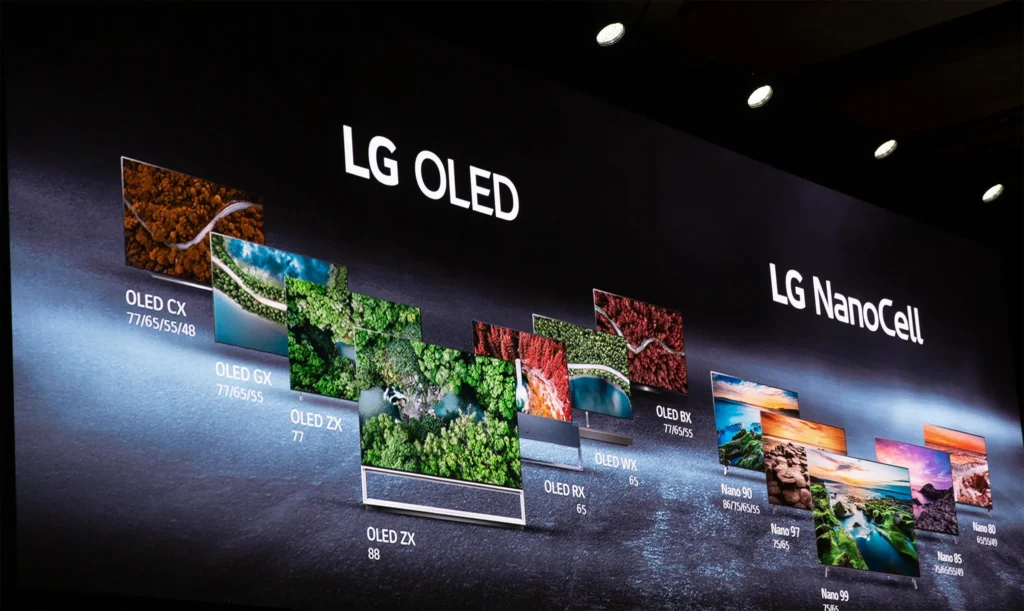
Fewer than support Dolby Vision itself, because the feature needs a suitable ambient light sensor on top of the format support.
LG and Panasonic were first in 2020, with Hisense and TCL following, and more recent reporting adds Sony’s top models to the list (worth checking against the specific set you are looking at, since coverage of Sony’s position has shifted over the years). Philips has gone its own way with a feature it calls Dark Detail Optimisation. Samsung supports no version of Dolby Vision at all, so the question does not arise.
Finding the setting can be needlessly awkward.
On some LG sets you have to select a Cinema Home picture mode and then enable AI Brightness, neither of which mentions Dolby Vision IQ by name, which is a small illustration of how keen manufacturers are to rebrand things they did not invent.
Does Dolby Vision IQ actually work?
Broadly yes, though with a caveat worth taking seriously.
our assessment after extended use is that the feature does what it claims, but that ambient light matching is not always accurate, largely because the sensor itself is often not precise enough or is positioned somewhere that does not reflect what is happening in the room.
And that matches what you would expect from the physics of the thing. A single small sensor on a bezel is being asked to characterise the lighting of an entire room, so if it happens to sit in shadow while a lamp behind your sofa does not, it will reach the wrong conclusion and adjust accordingly. The metadata side of this is sophisticated. The measurement side is a photodiode.
Should you turn Dolby Vision IQ on?
Depends entirely on the room, and I would not be dogmatic about it in either direction.
If you watch in daylight, or with lamps on, or in any room you cannot properly darken, I would leave it on. A picture graded for a blacked-out room genuinely does lose shadow detail in a bright one, and this is a sensible answer to that problem.
But if you watch films at night in a room you can properly darken, switch it off and let the grade stand as it was signed off. There is nothing for it to correct in those conditions, and I would rather see what the colourist actually signed off than what a photodiode on the bezel thinks I ought to be seeing.
Of course, the honest advice is to try both on your own set, in your own room, with something you know well. The sensor variability means this is one of the few picture settings where a general recommendation is genuinely less useful than five minutes of your own testing.
Dolby Vision IQ vs HDR10+ Adaptive
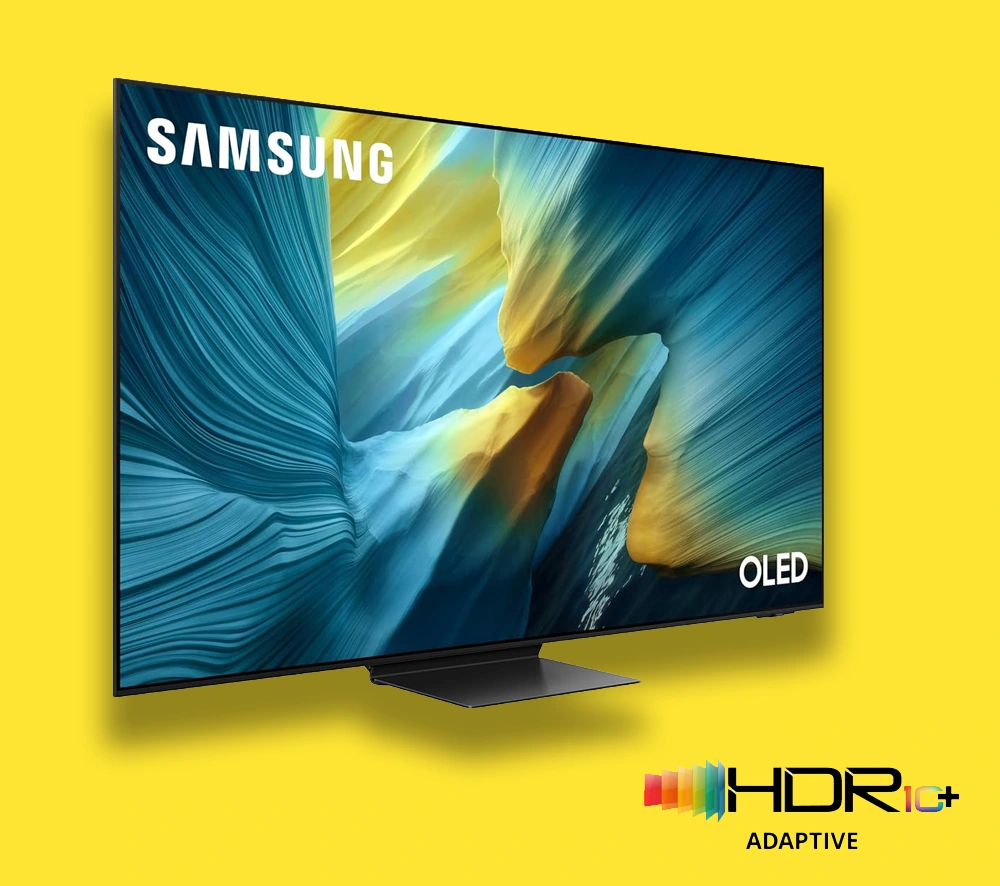
HDR10+ Adaptive is Samsung’s equivalent, introduced in 2021, doing the same job for HDR10+ content. Panasonic’s Intelligent Sensing goes wider still, working across HDR10, HDR10+, HLG, SDR and Filmmaker Mode rather than being tied to one format.
The idea is now standard across the industry, in other words, and only the badges really differ (which is true of a great deal of what appears on a television specification sheet).
What replaces Dolby Vision IQ?
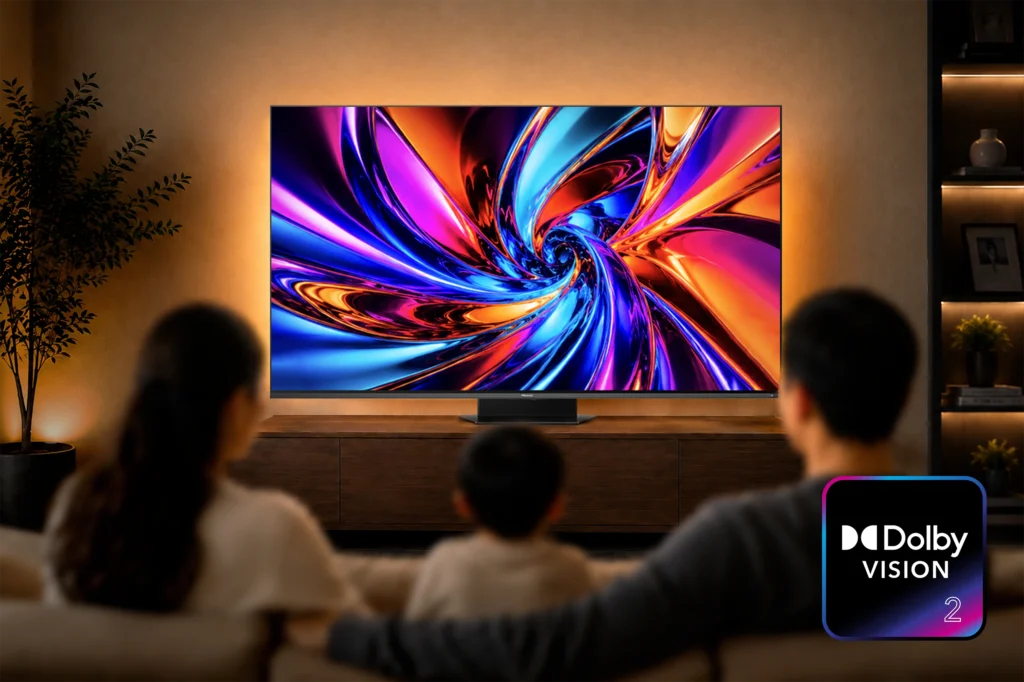
Light Sense, part of Dolby Vision 2, which addresses exactly the weakness described above by using reference lighting data carried in the content itself rather than relying on the sensor reading alone.
So that is the right fix aimed at the right problem, but it requires new hardware rather than a firmware update, so Dolby Vision IQ remains the version you can actually use.
FAQs
It is not a competing format. It is Dolby Vision plus ambient light adaptation, and whether it improves things depends on how bright your room is.
No. All Dolby Vision content works with it, with no separate catalogue or certification.
Select models from LG, Panasonic, Hisense and TCL, with more recent reporting adding Sony’s top sets. Samsung does not support Dolby Vision in any form.
In a dark, controlled room, yes. In a bright room, leave it on.
No. Auto-brightness makes a global adjustment to save power, while Dolby Vision IQ feeds the room reading into tone mapping.
The verdict
Dolby Vision IQ is one of the easier things on a specification sheet to understand, once you accept that it does not belong there at all – it is a setting wearing a format’s clothes.
It solves a real problem, it costs nothing extra, and its weakest link is a small sensor being asked to do a rather large job. Dolby Vision 2’s Light Sense should fix that, eventually.
Until then, I would try it in your own room, with something you know well. That is the only test that counts here.