

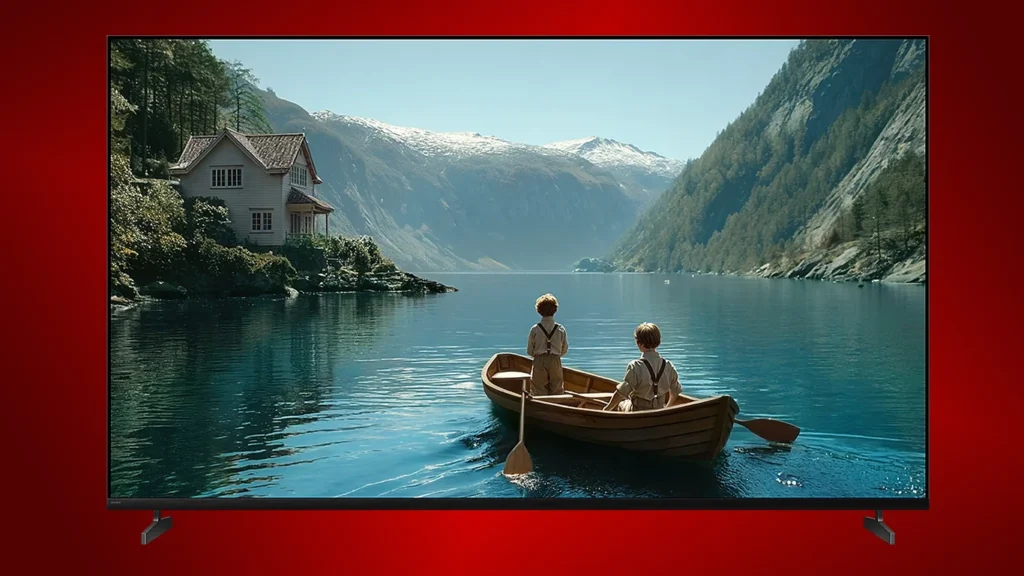
The Bravia 3 II – Sony’s 2026 replacement for the Bravia 3 – arrives with the full XR Processor on board. The same chip that powers the Bravia 8 II. The same processing philosophy that, in my view, sits at the heart of everything that makes Sony’s picture quality consistently the most cinematic on the market. And it’s now available from £599 (or $600 in the US) for the 43-inch model. That is, on paper, a genuinely big deal.
The question, though, is whether the hardware around that processor can do it justice.
The honest answer is: not entirely. And that matters more than it might seem.
Let me start with what the Bravia 3 II does unambiguously well, because the upgrades over its predecessor are substantial enough to deserve proper acknowledgement before we get to the complications.
First and most important: the processor
The Bravia 3 used Sony’s X1 chip – competent, but a long way from the cognitive image processing that the XR Processor delivers. The jump here is not incremental. The XR Processor brings XR Triluminos Pro for wider colour gamut coverage, XR Clear Image for AI-powered upscaling from lower-resolution sources, and – crucially – the same scene-by-scene intelligence that makes Sony’s higher-end models so consistently convincing on mixed content. Getting all of that at this price point is, by any reasonable standard, a significant step forward.
Second: the panel
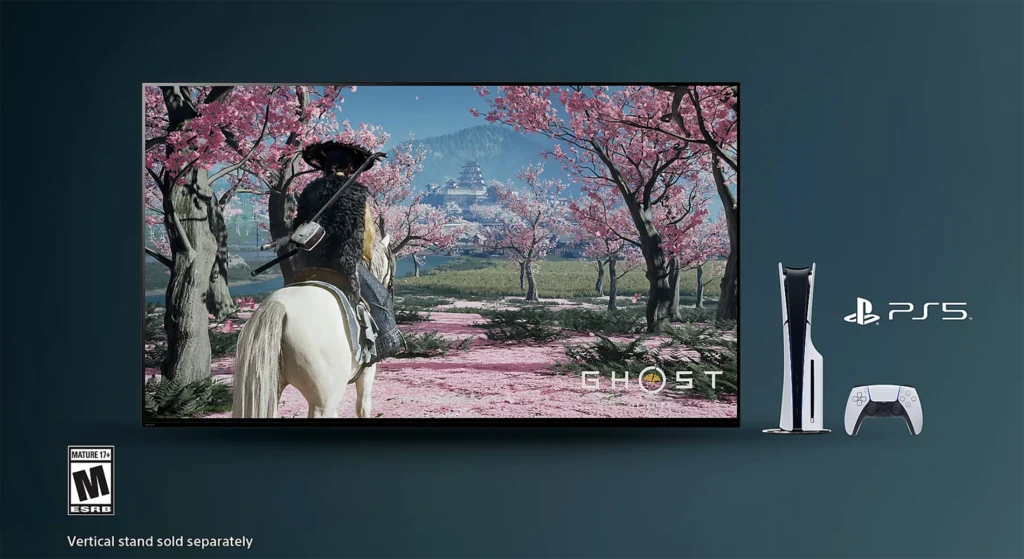
The Bravia 3 was a 60Hz set. The Bravia 3 II runs at 120Hz natively. For anyone with a PlayStation 5 or an Xbox Series X – or, for that matter, Nintendo’s Switch 2 – this changes the picture considerably, and not just for gaming. Smoother motion at 120Hz means Motionflow XR has more to work with, and the result should be cleaner handling of sports and fast-paced film content than the Bravia 3 could ever manage.
Third: the HDMI situation.
This is the one that has had Sony fans complaining for years. The company’s consistent limitation to two HDMI 2.1 sockets – even on flagship models like the Bravia 8 II – has been a recurring frustration that I have noted in every relevant review I have written. The Bravia 3 II, for the first time in a Sony TV, offers all four HDMI ports as 2.1. That means 4K/120Hz from every source, simultaneously, without the cable-juggling that has long been a Sony ownership ritual. It has taken a MediaTek Pentonic 800 chip to get there – the same processor found in last year’s Chinese flagships – but it has arrived. That is worth noting.
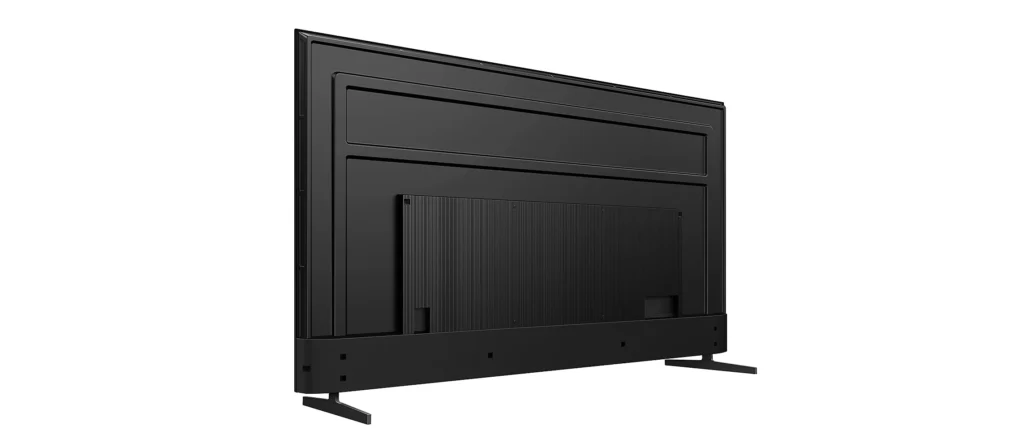
Yes, LG has offered four HDMI 2.1 ports across its range for some time now. And yes, it is mildly galling that Sony has chosen to solve this problem first on a mid-range direct LED set rather than on its QD-OLED flagship. But the upgrade is real, and it matters for the Bravia 3 II’s target audience, which includes a lot of people with gaming setups.
But here is where the complications begin. And they are worth understanding clearly before any purchase decision is made.
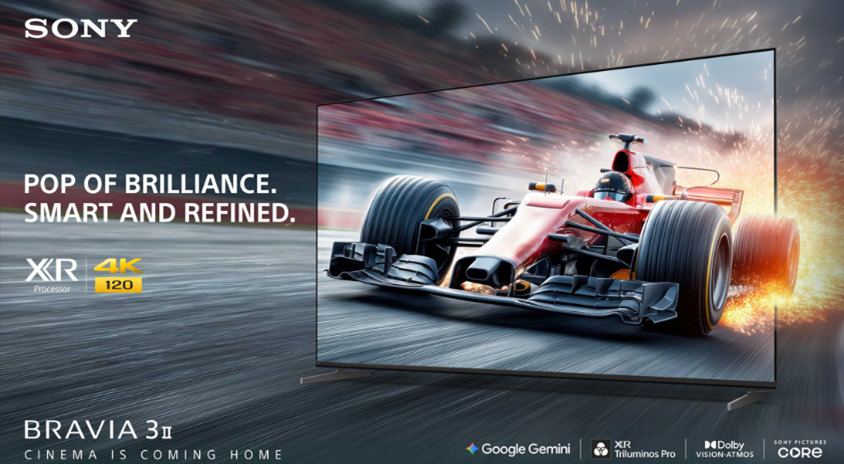
The Bravia 3 II uses a direct LED backlight with no local dimming. No dimming zones at all. The XR Processor – for all its intelligence – is working with a backlight that cannot selectively reduce brightness in dark areas of the picture. It illuminates the entire panel uniformly. This is the fundamental limitation of a direct LED panel, and it is a significant one, because contrast precision is what Sony’s processing philosophy is built around. OLED produces light at a pixel level. Mini LED manages it in zones. Direct LED simply floods the entire screen. The XR Processor can do a great deal with colour accuracy, upscaling, and motion – but it cannot manufacture black depth that the backlight architecture doesn’t support. In a dark room, watching content with bright highlights and deep shadows, the Bravia 3 II will not deliver the kind of image that makes Sony’s processing genuinely sing.
That is not a fatal flaw for a TV at this price. It is, though, a real constraint on what the XR Processor can achieve here, and I think it is worth saying plainly rather than burying in a specification table.
The second issue is more directly Sony’s own doing. At launch, the Bravia 3 II will ship without its Netflix Calibrated, Prime Video Calibrated, and Sony Pictures Core Calibrated picture presets. These modes – which are designed to deliver the most accurate, authentic picture quality from their respective streaming services – were announced as features of the new model, but Sony subsequently confirmed that they will be added via a software update at an as-yet unspecified later date.
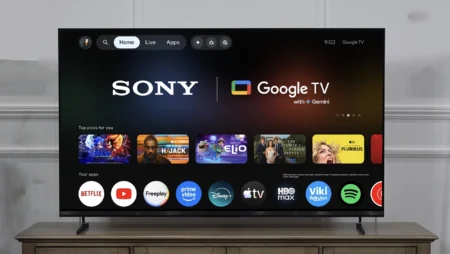
Of course, the Bravia 3 II still launches with Dolby Vision, Dolby Atmos and DTS:X support, alongside the full Google TV platform with Gemini AI integration and VRR and ALLM for gaming. The missing calibrated modes are not the whole picture. They are, though, precisely the modes that give Sony its reputation for cinematic authenticity in the streaming age – and their absence at launch, on a TV being marketed partly on the strength of the XR Processor, is a genuinely odd decision.
So where does this leave the Bravia 3 II versus the Bravia 3?
For most buyers, the upgrade is clear. A more capable processor, a 120Hz panel, four HDMI 2.1 ports, and a size range that now stretches to 100 inches – the Bravia 3 was not capable of any of these things.
If you are choosing between them new, the Bravia 3 II is simply the better television, and the XR Processor alone makes it worth the attention of anyone buying in this price bracket.
The more interesting question is whether the Bravia 3 II represents genuine value against the competition it will actually face in 2026 – which means TCL, Hisense, and an increasingly strong mid-range from Samsung. Several of those rivals now offer Mini LED backlights with local dimming at comparable prices. The Bravia 3 II’s direct LED panel puts it at a structural disadvantage in the contrast department, regardless of what its processor can do.
For the right buyer – someone in a bright room, prioritising upscaling quality, gaming, and the Sony processing ecosystem over absolute contrast performance – the Bravia 3 II is, so far, the most compelling mid-range Sony TV in several years. But it is not a step up on contrast. It is a step up on everything else.
The XR Processor deserves better hardware. One day, perhaps, it will get it – at this price point. For now, though, the Bravia 3 II is the most interesting budget Sony TV we have seen in years. That it comes with catches is, at least, consistent.


3 Comments
Thank you for this review. It helped us decide on a 43 inch Sony Bravia 3 ii and we couldn’t be happier. We have it wall mounted in a dark bedroom. It. is everything you said it was and more. The sound is wonderful and the picture is limited only by the quality of the source. The corners are perfect with no blooming or darkening; the blacks are deep problem free blacks. The XR processor is not wasted on us at all. We stream from both USB and Wi-Fi (Brit Box & Berlin Philharmonic) and love the picture. The XR processor makes every command respond instantly. When looking at selections on a USB stick, there is no noticeable lag between selections. The only issue we had is that the TV is programmed to play one selection and then wait for another command. We got around this by putting the USB stick in our Sony Blu-ray player and then the XR processor plays all the selections in a folder one after another. For $695 US, the TV is a dream come true. Thank you again for your review.
Hi theri agree it’s a very good review. I hope no AI was used. What then is your opinion about the 3Ii v the older Bravia 5? I’m guessing thst this is the better comparison now
Regards
Bravia 5 is better because of the superior Mini LED panel