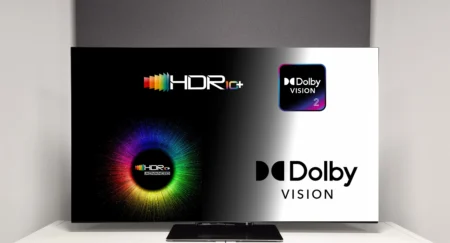

HDR10+ Advanced is the next generation of the royalty-free HDR10+ format, adding Enhanced Overall Brightness, AI-assisted local tone mapping, genre-based picture optimisation and Intelligent Motion Smoothing. It launched in August 2026 on Samsung’s 2026 televisions with Prime Video as the first content source. The upgrade is real, but it reaches beyond HDR into general picture processing, which is a bigger change than the name suggests.
Most format upgrades are dull, incremental things that add a few percent to a specification nobody reads. This one is more interesting than that, and not entirely in the way Samsung would like.
HDR10+ Advanced is not simply HDR10+ with better numbers attached – it steps outside the job HDR10+ was built to do, and once you see where it has stepped, the interesting question stops being whether it improves the picture and becomes whether you want it deciding what the picture should look like in the first place.
HDR10+ vs HDR10+ Advanced at a glance
| HDR10+ | HDR10+ Advanced | |
|---|---|---|
| Launched | 2017 | August 2026 |
| Metadata | Dynamic, scene by scene | Extended statistical metadata |
| Tone mapping | Scene-level | Local, AI-assisted |
| Motion processing | None | Intelligent Motion Smoothing |
| Genre awareness | None | Genre-based optimisation |
| Licensing | Royalty-free | Royalty-free |
| TV support | 22,000+ certified products | Samsung 2026 lineup |
| Content | Prime Video, Netflix, Apple TV+ | Prime Video, select titles |
What is HDR10+?
HDR10+ arrived in 2017, backed by Samsung, Panasonic and 20th Century Fox, and its purpose was narrow and clearly defined: take the HDR10 base and add dynamic metadata so that tone mapping could change scene by scene rather than being fixed once for a whole film.
It stayed royalty-free, which was the entire commercial point and the reason Samsung built it rather than paying Dolby, and the approach has still worked reasonably well – HDR10+ Technologies now counts 183 adopter companies and more than 22,000 certified products.
What HDR10+ never did was touch anything beyond brightness and colour mapping. It told your television how to render the grade, it said nothing at all about how to handle motion, and it held no opinion whatsoever on what you happened to be watching.
What’s new in HDR10+ Advanced?
Four things, and they are not all doing the same kind of work.
Enhanced Overall Brightness uses extended statistical metadata and AI-assisted tone mapping to push capable displays closer to their genuine brightness potential without crushing shadow detail in the process. This is the most straightforwardly HDR-ish of the four, and the most defensible.
Local tone mapping applies those decisions to regions of the image rather than to the frame as a whole – a refinement that should help most on very large, very bright panels, where a single global decision is a fairly blunt instrument.
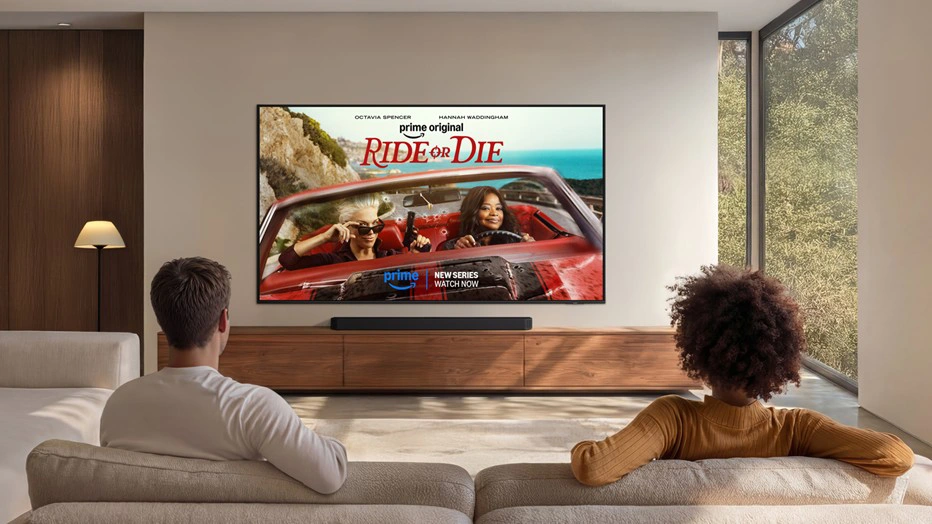
Genre-based optimisation adjusts the presentation depending on whether the content is drama, sport or something else (a feature your television has almost certainly been attempting on its own for years, with mixed results).
Intelligent Motion Smoothing varies motion processing on a scene-by-scene basis rather than leaving it fixed at whatever your television’s motion preset happens to be.
Samsung’s justification for restricting it to 2026 televisions is that the format was designed for modern panels specifically – larger screens, higher peak brightness, greater colour depth and enough processing power to run the thing. When the format was first announced in November, Samsung suggested it might reach the 2025 lineup as well. The actual rollout is 2026 sets only.
Is HDR10+ Advanced really an HDR upgrade?
Two of those four features have nothing to do with high dynamic range, and this is the part I would look at hardest.
Motion smoothing and genre detection are picture processing rather than HDR. They belong to the same family of features that enthusiasts spend their first evening with a new television hunting through menus to switch off, because interpolated motion is what produces the soap opera effect and genre presets are what produce a sports mode that oversaturates everything.
Now, the argument for building them into the format rather than the television is a reasonable one. If the decision travels with the content instead of being applied blindly by a manufacturer’s algorithm, it should be better judged and more faithful to what was shot. Dolby is making an almost identical argument for Authentic Motion in Dolby Vision 2, so this is clearly where both formats are heading.

But there is a difference between a format that describes the grade and a format that decides how the picture is processed, and I would like to see the second demonstrated properly before accepting that it is an unambiguous improvement.
Which TVs support HDR10+ Advanced?
Samsung’s 2026 lineup, and nothing else at the time of writing.
HDR10+ Technologies named MediaTek, Panasonic, Roku, Samsung and TP Vision among the companies backing the format’s development, so support should widen. Samsung is simply the first manufacturer to have confirmed and shipped a consumer rollout, which given that Samsung co-owns the format is roughly what you would expect.
For owners of compatible sets it arrived as a free feature update rather than a paid upgrade or a new product tier, which is worth saying plainly because it is genuinely to Samsung’s credit.
What content is available in HDR10+ Advanced?
Prime Video, and only Prime Video – which became the first streaming service in the world to carry the format when the global rollout began in August 2026, extending a partnership between Amazon and Samsung that dates back to the original HDR10+ launch.
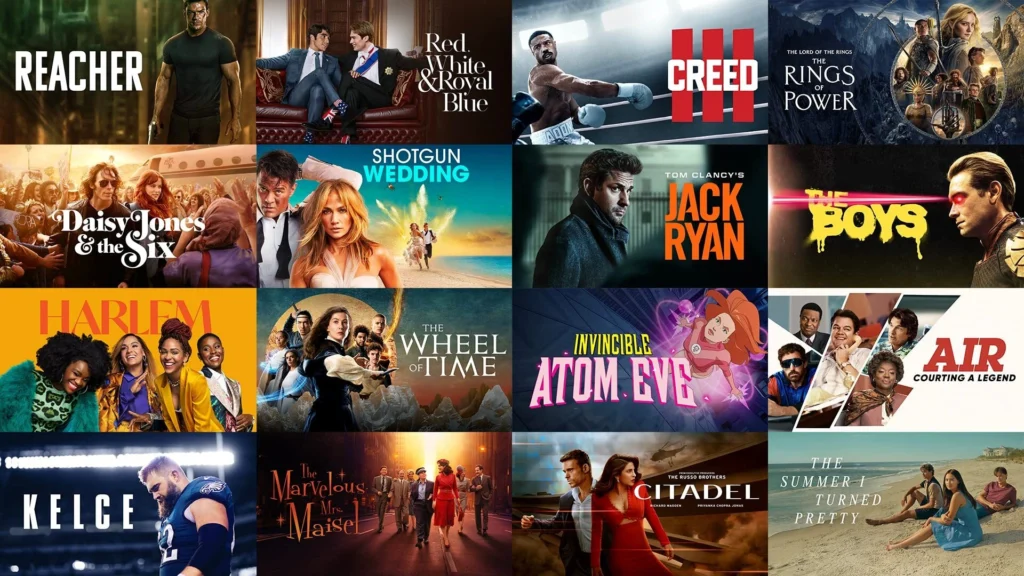
Note the phrasing in the announcement, though: select titles. This is a catalogue that is being built rather than one that already exists, and the same was true of HDR10+ itself in 2017.
Does HDR10+ Advanced work with Filmmaker Mode?
Reportedly not, and if that holds up it is the strangest thing about the whole launch.
Filmmaker Mode exists to switch off exactly the sort of processing that HDR10+ Advanced has just added to the format, so the conflict is at least logically coherent (I would still rather not have to choose). It is also awkward for a format arguing that its processing decisions are more faithful to creative intent than your television’s are.

Of course, if the metadata really does carry the creator’s intentions, the two ought to be reconcilable rather than mutually exclusive. Working that out is presumably a job for the next revision.
Should you care?
If you own a 2026 Samsung and you watch Prime Video, you already have it and it cost you nothing, so there is very little to decide.
If you are shopping, though, I would not let it move you. One manufacturer and one streaming service is not a reason to choose a television, and the underlying panel will still determine far more of what you actually see than any metadata layer will. That has been true of every HDR format so far and there is no sign of it changing.
And if you already own a 2025 Samsung set, you are not getting it, despite the early suggestion that you might.
FAQs
On brightness handling and tone mapping precision, yes. It also adds motion and genre processing, which is a change in kind rather than a straightforward improvement.
Yes. It remains royalty-free for manufacturers and content producers, and reached existing Samsung 2026 sets as a free update.
Samsung’s 2026 range at launch. Panasonic, Roku, TP Vision and MediaTek are among the named supporters, so wider support is likely.
Prime Video, on select titles, from August 2026.
No. Samsung hinted at backwards compatibility when it announced the format, but the rollout covers 2026 models only.
The verdict
HDR10+ Advanced is a genuine improvement on HDR10+, it costs nobody anything, and it beat Dolby Vision 2 to market by a comfortable margin – which is not something many people, myself included, would have predicted a year ago.
But it has also quietly changed what a dynamic HDR format is for. HDR10+ told your television how to render a grade. HDR10+ Advanced tells it how to process a picture, and those are different jobs.
Worth having, then, and worth watching carefully. Just not worth buying a television for.