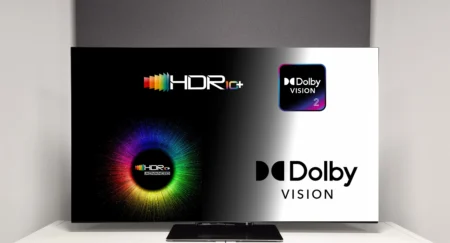

Samsung has confirmed that HDR10+ Advanced does not operate when Filmmaker Mode is enabled. The likely reason is that the new format adds motion smoothing and genre-based processing, which is precisely the sort of processing Filmmaker Mode exists to switch off. Samsung has not published a technical explanation. It is a reversal of the company’s own position on HDR10+ Adaptive, which was explicitly designed to work alongside Filmmaker Mode.
Buried in the footnotes of Samsung’s HDR10+ Advanced launch announcement is a single sentence that has had almost no coverage, and it is the most interesting thing about the entire launch.
HDR10+ Advanced is not supported when Filmmaker Mode is enabled.
So a format marketed on delivering films as they were meant to be seen cannot run inside the picture mode that filmmakers themselves asked for, built to deliver films as they were meant to be seen. You have to pick one. Nobody at Samsung has yet explained why.
What Samsung actually said
The line appears as a footnote on Samsung’s own newsroom page announcing the global rollout, which began on Prime Video in August 2026 across Samsung’s 2026 television lineup. It has been independently reported since, and Samsung has not disputed it or elaborated on it.
Worth noting what else that announcement did not include – no list of supported Prime Video titles, no complete list of compatible television models, and no word on whether older sets will ever receive the format at all. The Filmmaker Mode incompatibility is the most concrete detail in a launch that has otherwise been fairly light on specifics.
What Filmmaker Mode does
Filmmaker Mode was developed by the UHD Alliance in partnership with filmmakers, studios and manufacturers, and Samsung was one of the members that built it. Its job is essentially subtractive.
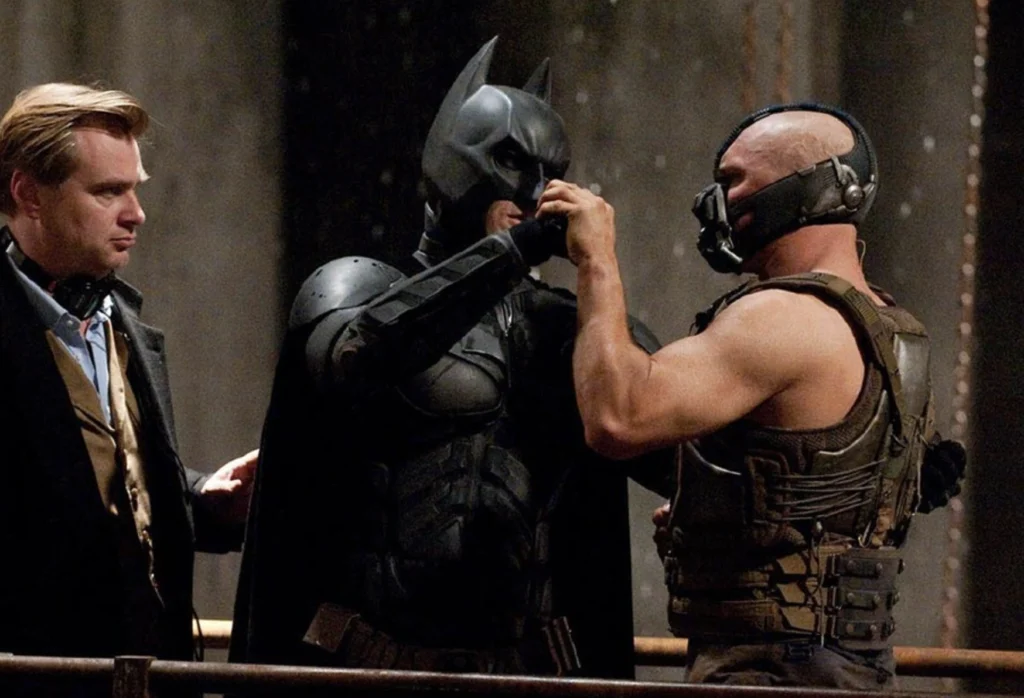
It disables motion interpolation, which is what produces the soap opera effect, sets colour temperature to the D65 reference white point, switches off sharpening, noise reduction and the various enhancement layers a television applies by default because they look impressive under shop lighting – and it preserves the original aspect ratio and frame rate while it is at it.
The philosophy is simple enough: the grade left the studio correct, so the television’s job is to get out of the way rather than improve on it.
What HDR10+ Advanced adds
Four things, and two of them are not HDR at all.
Enhanced Overall Brightness uses extended statistical metadata and AI-assisted tone mapping to push capable displays closer to their genuine brightness potential, while local tone mapping applies those same decisions region by region rather than across the whole frame. Both are recognisably tone-mapping features, and both belong in a conversation about high dynamic range.
The other two are different in kind. Genre-based optimisation adjusts the presentation according to what type of content you are watching. Intelligent Motion Smoothing varies motion processing scene by scene, and Samsung’s own description is that the system can reduce smoothing for films while applying more of it to sport and other fast-moving material.
Read that last sentence again with Filmmaker Mode in mind, and the conflict stops being mysterious.
Why the two cannot coexist
Filmmaker Mode’s entire function is to switch off the processing that HDR10+ Advanced has just built into the format.
Motion interpolation is the single most prominent thing Filmmaker Mode disables, and Intelligent Motion Smoothing is motion interpolation – applied more cleverly and with better information than a manufacturer’s default preset, but motion interpolation nonetheless. Genre detection, meanwhile, is exactly the sort of automatic scene-type adjustment that Filmmaker Mode also strips out.
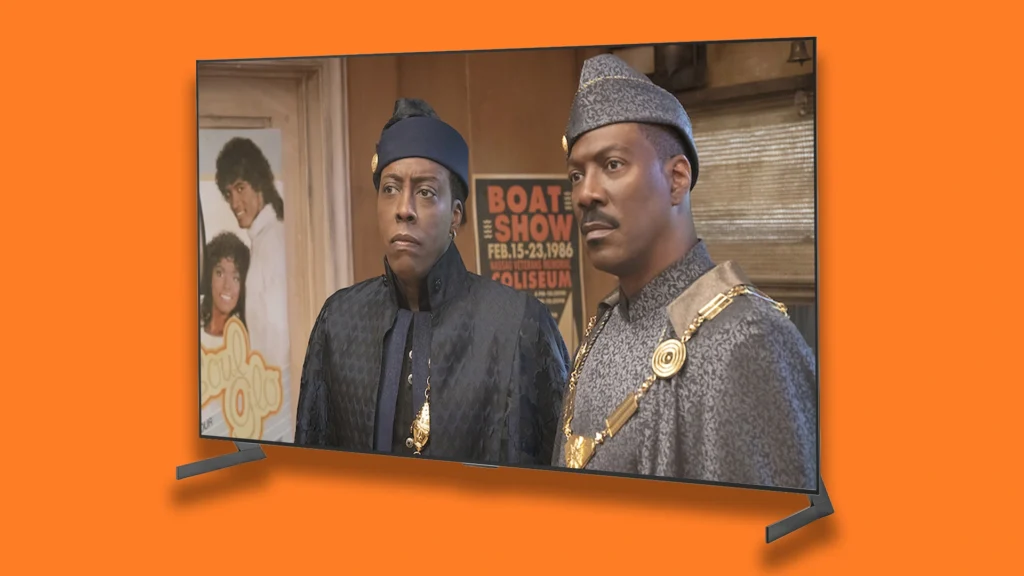
The incompatibility is therefore not a bug or an oversight but two philosophies arriving at contradictory instructions, and no television can follow both sets at the same time.
What I would still like explained is why the brightness and tone-mapping half of HDR10+ Advanced cannot run inside Filmmaker Mode while the motion and genre half sits out. That would be a reasonable compromise, and its absence suggests either a technical constraint Samsung has not described or a decision that the format works as a package or not at all.
Samsung has reversed its own position
Here is the part that makes this more than a technical curiosity.
When Samsung announced HDR10+ Adaptive in December 2020, Filmmaker Mode compatibility was not a footnote – it was the headline. The company’s own press release stated that HDR10+ Adaptive works with Filmmaker Mode to deliver a cinematic experience in any room condition, and went on to describe how Samsung and Amazon had worked together specifically to enable both at once for Prime Video customers (a collaboration presented at the time as a significant achievement).
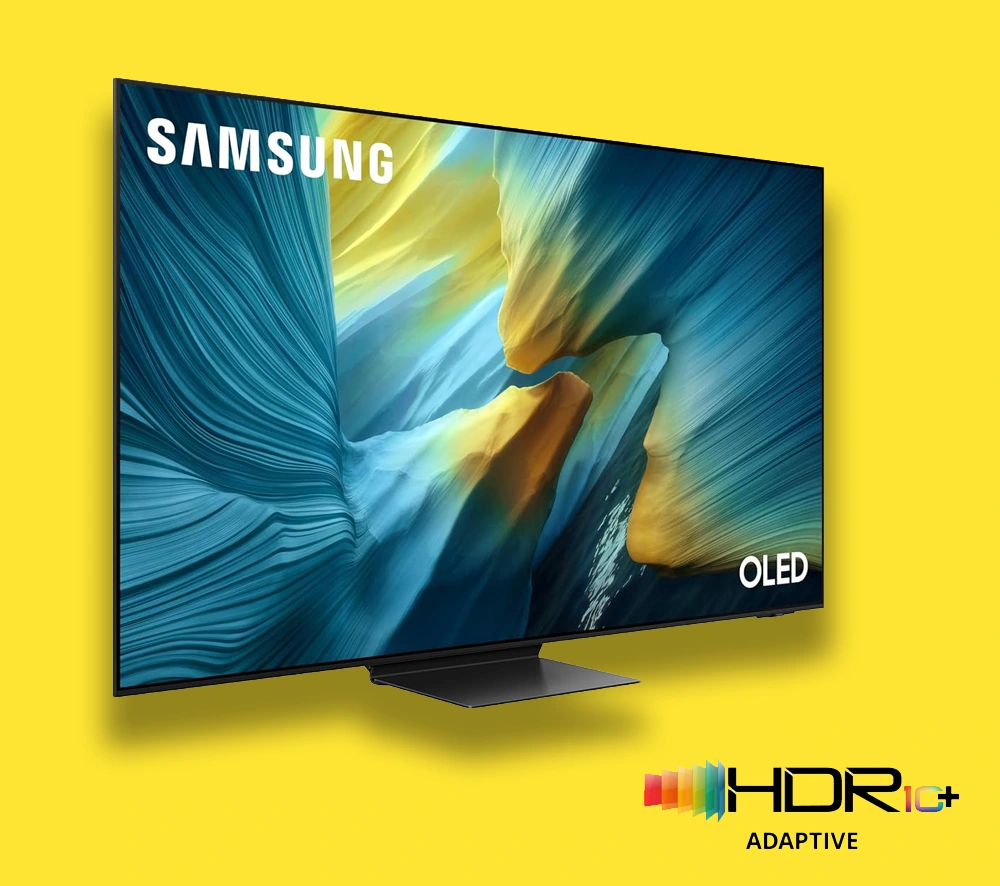
Adaptive did something genuinely similar to what Advanced now does, adjusting scene by scene using the television’s light sensor – and it managed that without asking anyone to abandon the reference picture mode in the process. Samsung was proud enough of that to build the announcement around it.
Six years later, the successor format cannot manage the same trick, and the compatibility that was once a selling point has become a line in the small print.
Two definitions of creative intent
Underneath all of this is a genuine disagreement about what honouring a filmmaker’s intentions actually means, and both sides have a case.
Filmmaker Mode treats intent as fixed: the grade is the artefact, the television’s job is accurate reproduction, and every processing layer applied on top is a deviation from something a colourist already got right.
HDR10+ Advanced treats intent as something requiring active interpretation: the grade was made for a reference monitor in a darkened suite, your living room is neither of those things, and intelligent processing informed by metadata gets closer to the intended effect than a fixed preset ever could.
Of course, that second argument is not unreasonable. A film graded to 4,000 nits and displayed on a 700-nit panel has already been substantially reinterpreted before Filmmaker Mode gets involved, so the question is not whether to process but who decides how.
I still lean towards the first position, though, and for a straightforward reason: Filmmaker Mode’s behaviour is knowable and consistent, while a format that adjusts motion by scene and presentation by genre is a black box making decisions I cannot inspect. Accuracy I can verify beats optimisation I have to trust.
Dolby Vision 2 has the same tension
This is not really a Samsung problem – it is where dynamic HDR is heading generally.
Dolby Vision 2’s Authentic Motion, on the Max tier, gives filmmakers shot-by-shot control over judder rather than leaving it to your television’s preset. The intention is better than Samsung’s, in that the instructions originate with the creator rather than with an algorithm inferring a genre from what it can see. But it is still a format taking control of motion processing, which is territory the older HDR standards never entered.
Both companies have concluded that a dynamic HDR format should govern more than brightness and colour. That is a significant change to what these standards are for, and it deserves more scrutiny than it has had.
So what should you do?
If you own a 2026 Samsung, this is a real choice rather than a hypothetical one.
For films, I would stay in Filmmaker Mode, because the accuracy is verifiable and the behaviour is consistent, and giving that up for a format with an unpublished title list and no technical documentation behind it is not a trade I would make at this stage.
For sport, switch out of Filmmaker Mode and let HDR10+ Advanced do its work, because scene-adaptive motion processing is genuinely useful on fast-moving content and creative intent is a considerably looser concept during a football match (nobody graded the second half).
If you want to know what the format actually does, compare the same Prime Video title in both modes, on your own set, with something you know well. That is the only test that settles it.
FAQs
No. Samsung has confirmed the format is not supported while Filmmaker Mode is enabled.
Samsung has not published an explanation. The most likely reason is that HDR10+ Advanced adds motion smoothing and genre-based processing, which Filmmaker Mode is designed to disable.
Yes. Samsung’s 2020 announcement made compatibility with Filmmaker Mode a headline feature.
For films, I would not. For sport and fast-moving content, it is worth trying.
It has the same underlying tension, since Authentic Motion also brings motion processing inside the format, though Dolby Vision 2 has not shipped so the practical answer is unknown.
The verdict
One footnote, and it tells you more about where HDR is going than the entire press release above it.
HDR10+ Advanced is a real improvement, it costs nothing extra, and it beat Dolby Vision 2 to market by a comfortable margin. But it has quietly redefined a dynamic HDR format as something that processes your picture rather than something that describes a grade, and the price of that is the picture mode filmmakers asked for.
Samsung helped build Filmmaker Mode. It should be able to explain why its newest format cannot live with it.