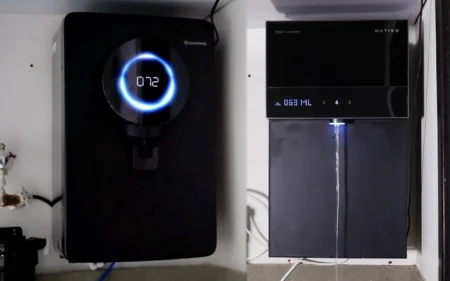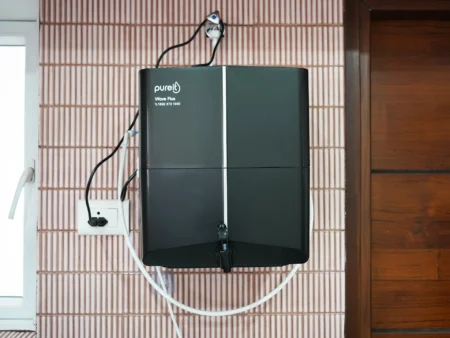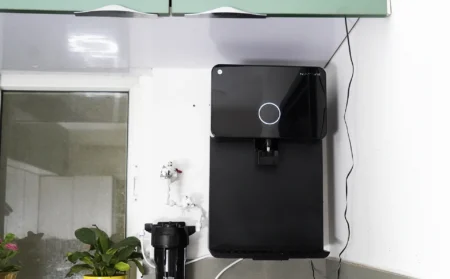


Using TDS controllers in RO water purifiers is generally safe because it re-introduces the lost minerals into the RO-purified water. However, we do not recommend its use when groundwater has heavy metal impurities like arsenic, lead, chromium, mercury, and cadmium because these harmful chemicals can leech onto the water and cause health problems.
Here are some spine-chilling statistics about the toxicity in our groundwater and other water sources. This data was tabled in the Rajya Sabha by the Honorable Minister of State for Jal Shakti in December 2021.
- The percentage of arsenic found in groundwater was more than 0.01 mg/litre in 209 districts spread across 25 states.
- 491 districts across 29 states reported the presence of more than 1 mg/litre of iron in groundwater.
- The proportion of cadmium was more than 0.003 mg/litre in 29 districts spread across 11 states.
- Chromium was present over 0.05 mg/litre in 62 districts across 16 states.
- 152 districts in 18 states had uranium residue of more than 0.03 mg/litre in their groundwater resources.
The Jal Shakti Ministry stated that more than 80% of the Indian population depends on groundwater for domestic water consumption.
Let us go through the IS 10500 (2012) Indian Standards for desirable and permissible levels of heavy metals and other contaminants. It will give you a clear idea of the extent of groundwater pollution in India. The entire list is exhaustive, but we will focus on the critical heavy metal contaminants generally found in our groundwater resources.
A – General parameters concerning substances undesirable in excessive amounts
| Characteristics | Acceptable limits (mg/litre) | Permissible limits (mg/litre) |
|---|---|---|
| Aluminium | 0.03 | 0.2 |
| Calcium | 75 | 200 |
| Chlorides | 250 | 1000 |
| Fluorides | 1.0 | 1.5 |
| Chlorine | 0.2 | 1 |
| Iron | 0.3 | No Relaxation |
| Magnesium | 30 | 100 |
| Nitrates | 45 | No Relaxation |
| Sulphide | 0.05 | No Relaxation |
| Sulphate | 200 | 400 |
| Alkalinity | 200 | 600 |
| Hardness | 200 | 600 |
| Zinc | 5 | 15 |
B – Parameters concerning toxic substances
| Characteristics | Acceptable Limits (mg/litre) | Permissible limits (mg/litre) |
|---|---|---|
| Cadmium | 0.003 | No Relaxation |
| Cyanide | 0.05 | No Relaxation |
| Lead | 0.01 | No Relaxation |
| Mercury | 0.001 | No Relaxation |
| Aromatic hydrocarbons | 0.0001 | No Relaxation |
| Arsenic | 0.01 | No Relaxation |
| Chromium | 0.05 | No Relaxation |
C – Physical parameters
| Characteristics | Acceptable Limits (mg/litre) | Permissible limits (mg/litre) |
|---|---|---|
| Colour, Hazen Units | 5 | 15 |
| Odour | Agreeable | Agreeable |
| pH Value | 6.5 to 8.5 | No Relaxation |
| Taste | Agreeable | Agreeable |
| Turbidity | 1 | 5 |
| TDS | 500 | 2000 |
The maximum permissible TDS levels in drinking water
As per WHO guidelines, water with TDS levels over 600 ppm is unsuitable for human consumption. The Bureau of Indian Standards has stipulated the upper limit of permissible TDS in groundwater at 500 ppm. Generally, our drinking water sources (rivers, lakes, or groundwater) have more than 500 ppm TDS levels. That explains why most Indians have RO water purifiers in their homes.
The Need for RO Water Purification
With these statistics in the background, it becomes easy to understand the need for RO water purification because this process can remove all TDS up to 2000 ppm from the input water sources before distributing water for domestic consumption.
The Drawbacks of RO water purification
The primary drawback of RO water purification is that the process cannot judge between good and bad TDS. For example, calcium and magnesium are essential minerals present in groundwater sources. At the same time, groundwater can contain lead, arsenic, mercury, and other undesirable metal impurities. The RO water purification process does not distinguish between these contaminants. It removes all TDS, including essential minerals. Therefore, the taste of RO-purified water is bland and has little nutrient value.

The Solution to the problem
RO water purifier manufacturers use various methods to replenish the lost minerals from RO-purified water. It includes installing mineralizers, mineral enhancer cartridges, and TDS controllers. Kent uses TDS controllers to restore the essential minerals lost in the RO water purification process. Let us understand how this principle works before discussing whether it is desirable.
TDS Controller Mechanism

Generally, the RO water purification system comprises the following stages.
- Sediment filter to remove large impurities,
- Pre-RO activated carbon filters to remove foul odour and organic impurities,
- Reverse osmosis (RO) membrane to remove TDS,
- Ultra-Filtration membrane,
- Post-RO activated carbon filters remove residual organic impurities eliminate foul odour, and
- Ultraviolet lamp disinfection to eliminate bacteria and viruses.
The output RO-purified water contains no TDS, including essential minerals like calcium and magnesium. Therefore, RO water purifiers use TDS controllers to replenish these minerals in the drinking water to enhance its nutrient value and improve the water taste.
The TDS controller mechanism involves introducing untreated groundwater (from the same source) into the process, bypassing the RO membrane. The untreated groundwater enters the purification mechanism between the RO water purification and the UF membrane. The untreated groundwater containing essential minerals passes through the UF membrane and UV process to increase the TDS levels of the output RO-purified water. As a result, the RO-purified water receives its quota of essential minerals and regains its taste and nutrient value.
The drawback of TDS controllers
The TDS controller mechanism can replenish the lost essential minerals by introducing untreated input water sources into the system. But it can also re-contaminate the RO-purified water with the harmful/toxic metals already existing in the source water for which RO purification became necessary. Since the untreated water does not pass through the RO membrane, the toxic substances can find their way into RO-purified water and contaminate it. The UF membrane cannot remove TDS from water as the RO membrane can.

So, is the Solution good or bad?
It depends on the circumstances and the TDS levels in the input water source before RO water purification. The TDS composition in the input water source is critical. If the TDS includes heavy metals like arsenic, lead, mercury, etc., above acceptable limits, the TDS controller mechanism does not serve its purpose because it re-contaminates RO-purified water by re-introducing the same toxic contaminants the RO purification system was supposed to eliminate.
Therefore, the TDS controller mechanism is not ideally recommended when the groundwater sources contain toxic metal contaminants like arsenic, lead, and mercury. So, people living near industrial areas where the chances of heavy metal contamination are high should not use RO water purifiers using TDS controllers.
People can argue that the TDS controller mechanism can be tweaked to ensure that the output water contains TDS levels up to 150 ppm. However, does it guarantee that the TDS in the output water will not contain harmful/toxic metal impurities? No, it does not.
Verdict
TDS controllers are suitable for replenishing the lost essential minerals if the original input water source does not contain toxic metal impurities. Otherwise, it is like flirting with danger because the water gets re-contaminated. Using TDS controllers in RO water purifier machines in areas where TDS composition includes toxic metal impurities is not recommended.