
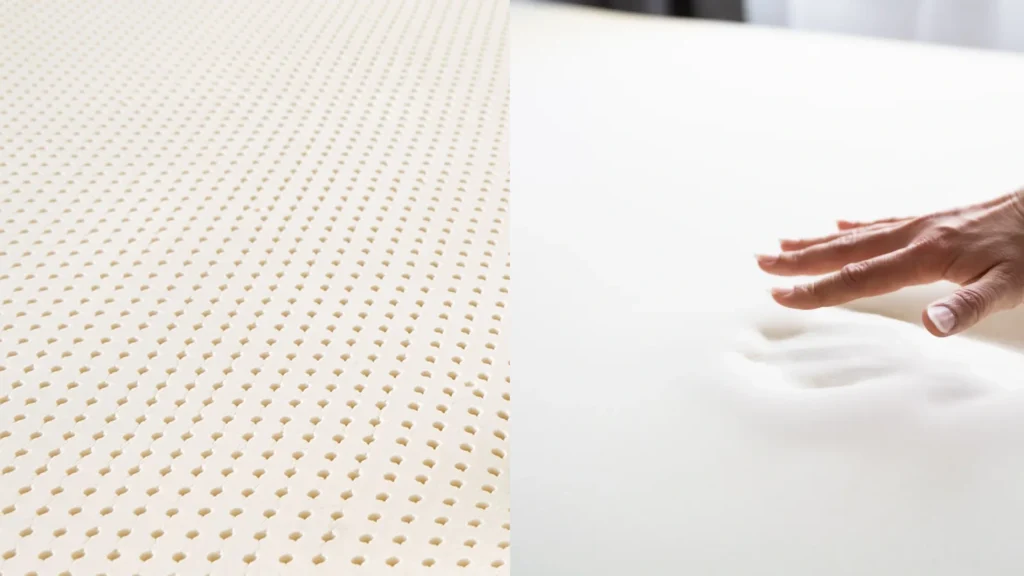
latex is more durable, sleeps cooler, and gives you a responsive, bouncy feel. Memory foam hugs your body, handles motion better, and costs less upfront. Neither is “better” across the board. The right pick depends on how you sleep, how hot your room gets, and what you’re willing to spend. Let’s get into it.
What Is a Latex Mattress?
Latex is made from the sap of rubber trees (natural latex) or from petroleum-based compounds (synthetic latex), or a blend of both. The feel is firm, springy, and responsive. You rest more on top of the surface than sinking into it.
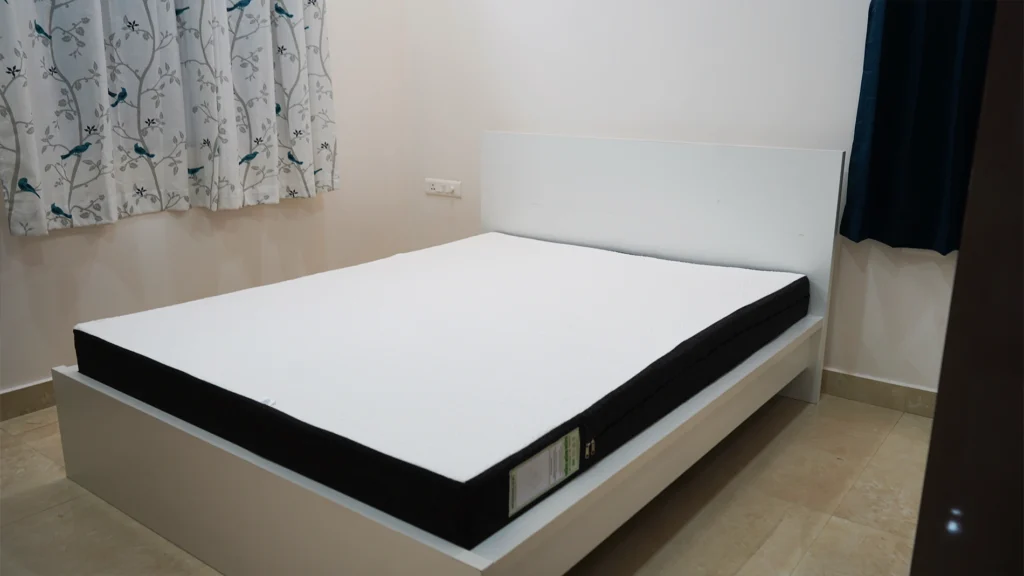
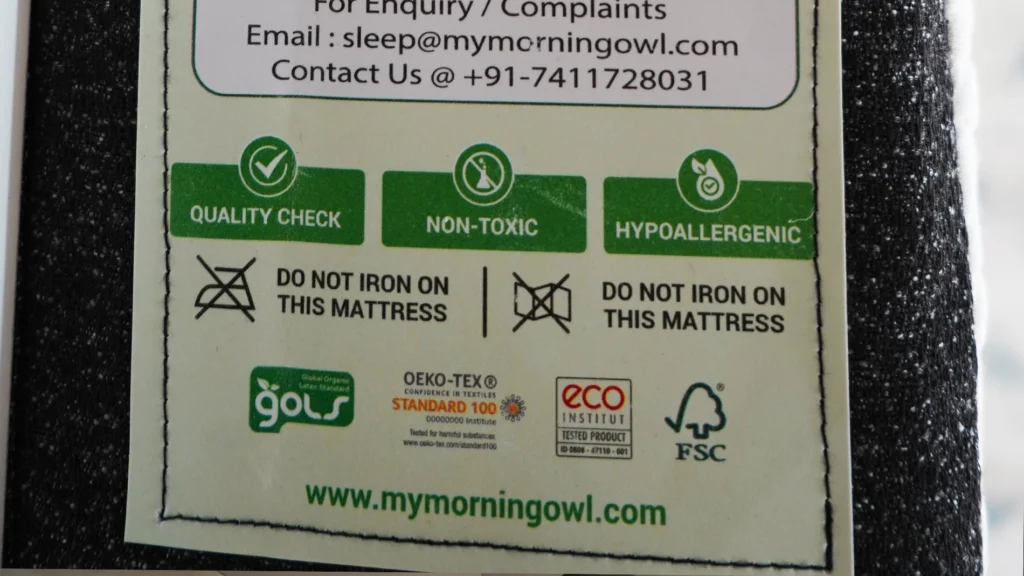
Here’s the catch most buyers miss. “Latex” on a label doesn’t always mean an all-latex mattress. A lot of budget mattresses, like the Wakefit EcoLatex Classic, The Sleep Company, Flo Anti-Gravity, use a thin latex layer on top of a regular foam base and still market themselves as latex. A true latex mattress is built from latex through and through. If purity matters to you, look for a GOLS certification, not just the word “natural.”
What Is a Memory Foam Mattress?
Memory foam is a polyurethane foam that softens with your body heat and moulds to your shape. Brands like Wakefit, SleepyCat, and Sleepwell built their popularity on it. The feel is that classic slow-sinking, “being hugged” sensation.
It’s a synthetic material, so it’s cheaper to make and cheaper to buy. The trade-off comes with heat and lifespan, which we’ll get to.

How They Feel
This is the clearest difference between the two, and for most people it settles the decision on its own.
Memory foam cradles you. You sink in, it contours closely, and it stays put. If you like that cocooned, pressure-melting feel, memory foam delivers it.
Latex pushes back. It’s buoyant and bouncy, supporting you without letting you sink too deep, and it springs back the moment you move. If you hate feeling stuck in your mattress, latex is the one.
In my view, latex feels “alive” and memory foam feels “still.” Neither is wrong, it’s just a specific feel, and you’ll know within a few minutes which camp you’re in.
Cooling: The One That Matters Most in India
In a country where half the year is hot and plenty of bedrooms have no AC, cooling isn’t a nice-to-have, it’s the whole ballgame.
Latex wins on cooling, clearly. Its open-cell structure and pin-core holes let air move through the mattress, so it stays temperature-neutral even through an Indian summer.
Memory foam is the other side of the coin. Its dense, closed-cell structure traps body heat, and traditional memory foam can sleep genuinely hot. Brands fight this with gel infusions, copper, charcoal, and open-cell tweaks, and newer ones are better than the old ones. Even so, a basic budget memory foam mattress in a non-AC room can turn into a warm plate by 2 AM.
If you sleep hot, latex (or at least a latex-topped mattress) is the safer bet.
Latex vs Memory Foam for Back Pain
Both can work for back pain, but they suit different sleepers, and this is where a lot of people buy the wrong one.
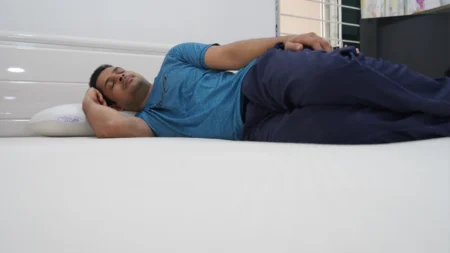
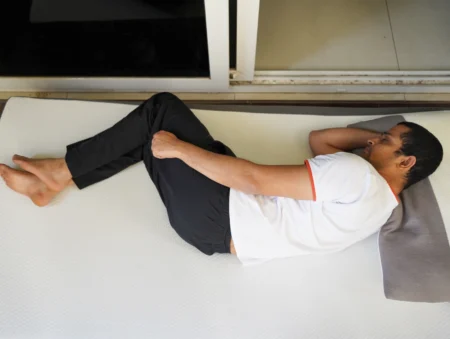
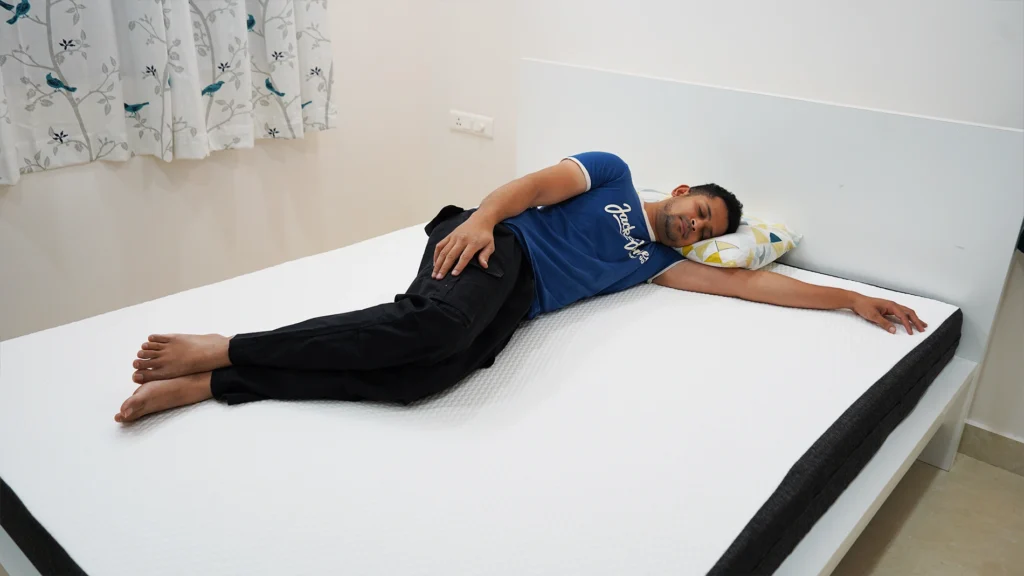
Memory foam is better for side sleepers and lighter people. It cushions the shoulders and hips, the pressure points that ache most on your side, and that’s its real strength.
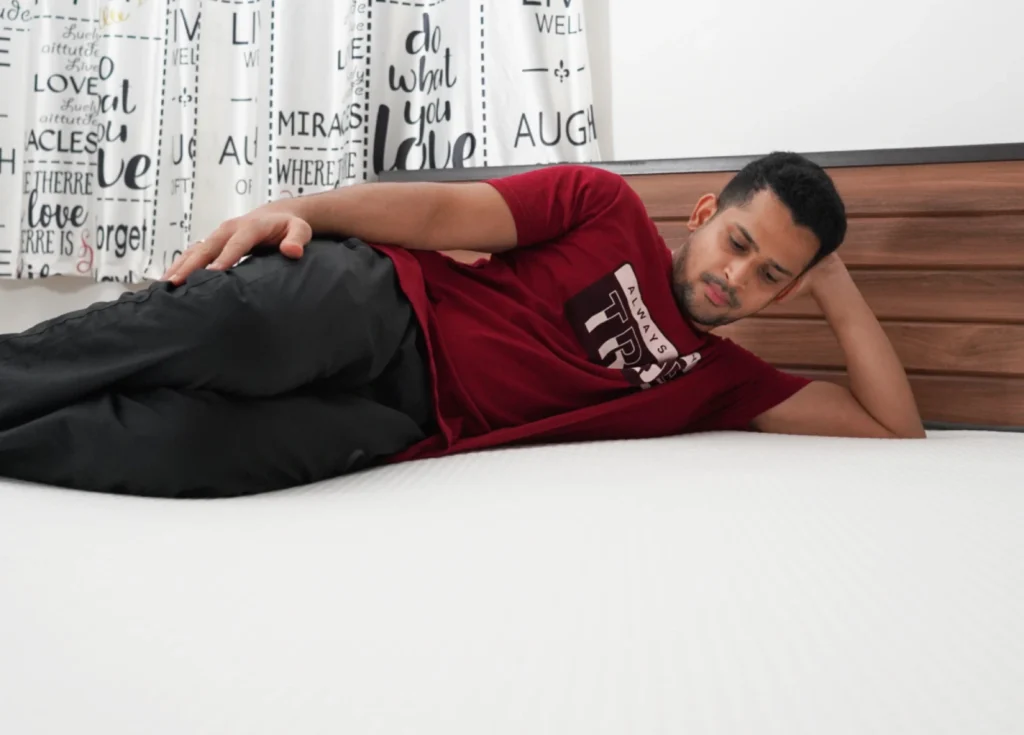
Latex (and firmer surfaces in general) is better for back and stomach sleepers, heavier people, and anyone who needs their spine held in a neutral line without sinking. The firmer, more supportive surface keeps your hips from dropping.
So the honest rule: side sleeper with achy joints, lean memory foam. Back or stomach sleeper, or you simply want firmer support, lean latex. If back support is your single biggest concern and budget allows, a dedicated orthopedic option, like a SmartGrid or a firm natural latex mattress, is worth a look over either.
Motion Isolation: For Couples
Memory foam is the winner here. It absorbs movement, so when your partner shifts or gets out of bed, you barely feel it. For light sleepers sharing a bed, that’s a big deal.
Latex is springier, so it transfers a little more motion. It’s not bad, especially on a dense, well-built latex bed, but memory foam has the edge.
Durability: Which Lasts Longer
This is where latex earns its price. A quality natural latex mattress commonly lasts 12 to 15 years, sometimes more, with minimal sagging.

Memory foam typically lasts around 7 to 10 years before it starts losing shape and developing body impressions. So while latex costs more upfront, you’re often replacing a memory foam mattress sooner. Even so, spread over the years, the gap in cost narrows.
Off-Gassing and Smell
New memory foam mattresses often arrive with a chemical smell from VOCs. It usually fades within a few days to a couple of weeks, and it’s rarely harmful, but it’s there.
Natural latex barely off-gasses at all. Any faint scent is mild and disappears fast. One quick tip: if a mattress sold as “latex” off-gasses strongly for days, that’s a sign it’s mostly foam underneath, not real latex.
Pricing
In general, memory foam is the budget-friendly choice and latex is the premium, long-term investment.
Budget memory foam mattresses sit at the lower end of the market. Natural latex mattresses cost significantly more, often two to three times as much for a comparable queen, because the raw material and manufacturing are pricier. Latex-topped hybrids land somewhere in the middle, giving you a taste of latex without the full cost.
The fair way to think about it: memory foam is cheaper to buy, latex is cheaper to own over time. You’re getting what you pay for on both sides.
Pros and Cons
Latex Mattress Pros
- sleeps cool,
- very durable (12 to 15+ years),
- responsive and bouncy,
- naturally anti-microbial,
- minimal off-gassing.
Latex Mattress Cons
- expensive upfront,
- heavy and hard to move,
- firmer feel isn’t for everyone,
- “latex” labels can be misleading.
Memory Foam Mattress Pros
- Affordable,
- excellent pressure relief for side sleepers,
- best-in-class motion isolation,
- that cushioned hug many people love.
Memory Foam Mattress Cons
- Traps heat (a real issue in Indian summers),
- Shorter lifespan (7 to 10 years),
- Can feel “stuck,”
- off-gasses when new.
So Which Should You Buy?
- You sleep hot or have no AC: Latex, or at least a latex-topped mattress.
- You’re a side sleeper with shoulder or hip pain: Memory foam.
- You’re a back or stomach sleeper, or want firmer support: Latex.
- You share the bed and your partner moves a lot: Memory foam.
- You want it to last over a decade: Latex.
- You’re on a tight budget right now: Memory foam, with the trade-offs above in mind.
There’s no universal winner here, and there’s not supposed to be. It comes down to your body, your climate, and your budget, and once you’re honest about those three, the right pick is usually obvious.
FAQs
Latex, by a clear margin. Natural latex commonly lasts 12 to 15+ years versus roughly 7 to 10 for memory foam.
Yes. Latex is breathable and temperature-neutral, while memory foam tends to trap heat. This matters a lot in hot Indian conditions.
Memory foam for side sleepers needing pressure relief, latex (or firmer support) for back and stomach sleepers.
If you want durability and cool sleep, yes. Over 12 to 15 years it can work out to better long-term value, even though it costs more upfront.
Not always. Many budget options use a thin latex layer over foam. Check for an all-latex build and a GOLS certification if purity matters to you.
The Verdict
Latex and memory foam solve different problems. Latex is the cooler, longer-lasting, more supportive pick that costs more today and rewards you over the years. Memory foam is the affordable, pressure-relieving, motion-isolating pick that suits side sleepers and tighter budgets, as long as you can live with the heat and the shorter lifespan. Match the mattress to how you sleep and where you sleep, and either one can be the right call.